Iron-Rich Foods: How to Support Energy, with foods high in iron
If your energy’s been acting distant, short replies, low enthusiasm, ghosting your usual motivation, it might not be stress, burnout, or you “not doing enough.” Sometimes it’s iron quietly asking for more support.
Iron is a mineral that works behind the scenes, influencing how steady your energy feels, how clear your focus is, and how well your body moves oxygen where it needs to go. When iron intake or absorption slips, your body doesn’t panic. It adapts. And those adaptations can look like fatigue, fog, or feeling off without a clear reason.
This isn’t about fear. Or perfection. Or fixing yourself.
It’s about learning how to give your body enough iron to do what it already knows how to do well.
What Is Iron and Why Is It Important?
Iron is an essential mineral that helps the body produce hemoglobin, a protein found in red blood cells that allows them to carry oxygen throughout the body. When iron levels are low, oxygen delivery slows, which can contribute to fatigue, dizziness, and low energy. Eating foods high in iron and supporting absorption helps maintain steady energy and overall health.
Iron doesn’t shout when it needs support—it whispers. Learning to listen early changes everything.
What Iron Does in the Body (And Why It Matters)
What you’ll get from this section
• A plain-language explanation you can actually remember
• Clarity without medical overwhelm
Iron is a mineral your body uses to produce hemoglobin, the protein inside red blood cells that helps them carry oxygen throughout the body. That oxygen delivery is what supports steady energy, mental clarity, and physical stamina.
That’s the core of it. Everything else, fatigue, focus, endurance, circles back to that relationship between iron, hemoglobin, and oxygen movement.
When iron is supported, things flow.
When it’s not, the system slows down quietly.
Anemia, and Iron Deficiency simplified
What you’ll get from this section
• Understanding without panic
• Clear distinctions that reduce confusion
Anemia is a condition where the body doesn’t have enough healthy red blood cells or enough hemoglobin to move oxygen efficiently. One common cause is iron deficiency, though not all anemia is iron-related.
Iron-deficiency anemia develops when iron levels stay low long enough that hemoglobin production drops. As oxygen delivery slows, energy dips tend to deepen.
Things that can influence iron levels include:
- Blood donations
- Heavy menstrual cycles
- Pregnancy
- Long-term low intake of iron-rich foods
This isn’t about blame. It’s about noticing patterns instead of pushing through symptoms.
Types of Iron and Why Plant-Based Sources Work
What you’ll get from this section
• Clarity around the type of iron
• Confidence in plant-based sources
There’s more than one type of iron, and this is where confusion often starts.
Heme iron comes from meat and poultry.
Non-heme iron comes from plant-based food sources like vegetables, grains, legumes, and fortified foods.
Heme iron is absorbed more easily, but non-heme iron still contributes meaningfully to iron intake, especially when absorption is supported. Pairing, timing, and overall nutrient context matter more than the source alone.
This isn’t about comparing diets. It’s about understanding how your body interacts with different sources of iron.
Iron-Rich Foods to Know
What you’ll get from this section
• Familiar foods reframed as supportive
• Relief from “perfect food” pressure
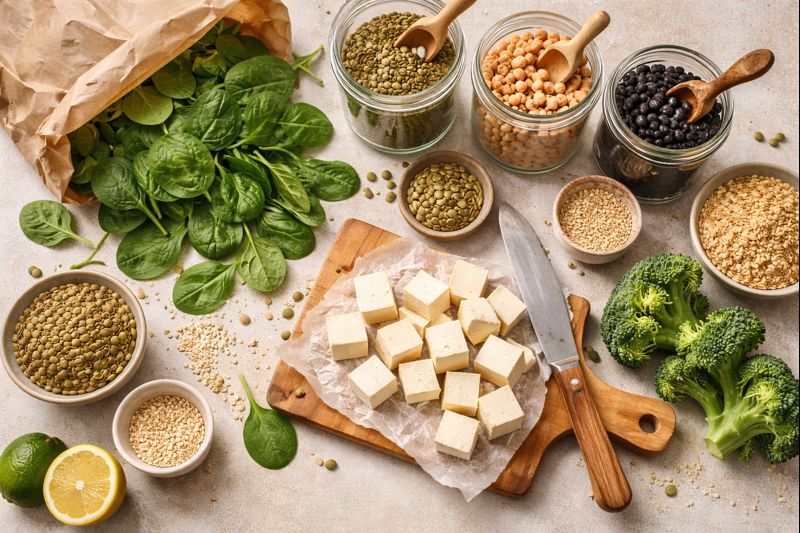
You don’t need extreme portions or obscure superfoods to eat iron-rich foods. Many everyday meals already include foods high in iron—you just haven’t been taught to see them that way.
#What Are the Best Sources of Iron?
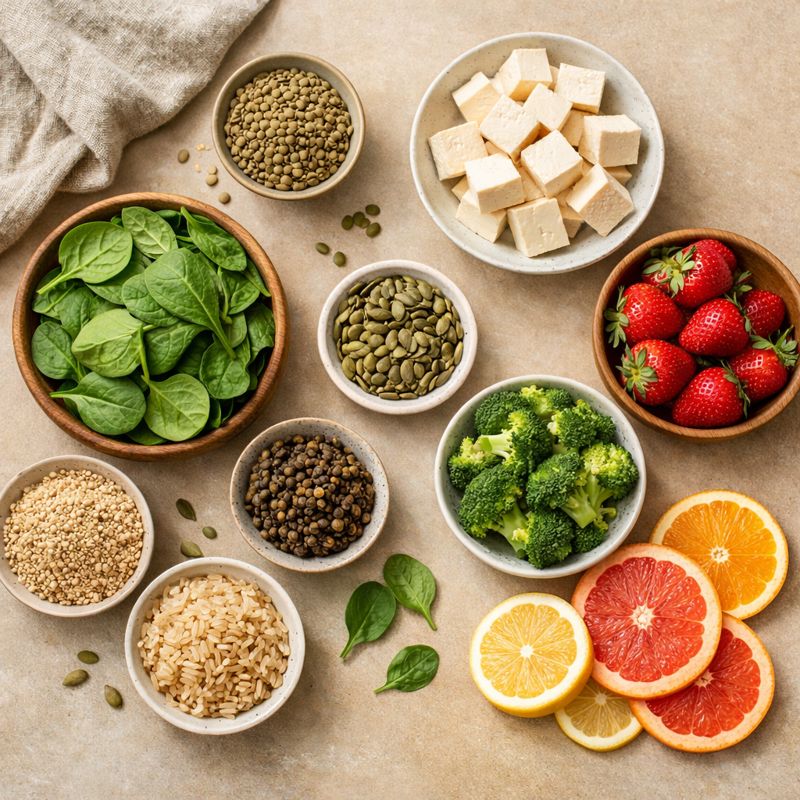
- Leafy vegetables like spinach and broccoli
- Plant-based sources such as tofu and legumes
- Whole grain foods, including fortified cereal
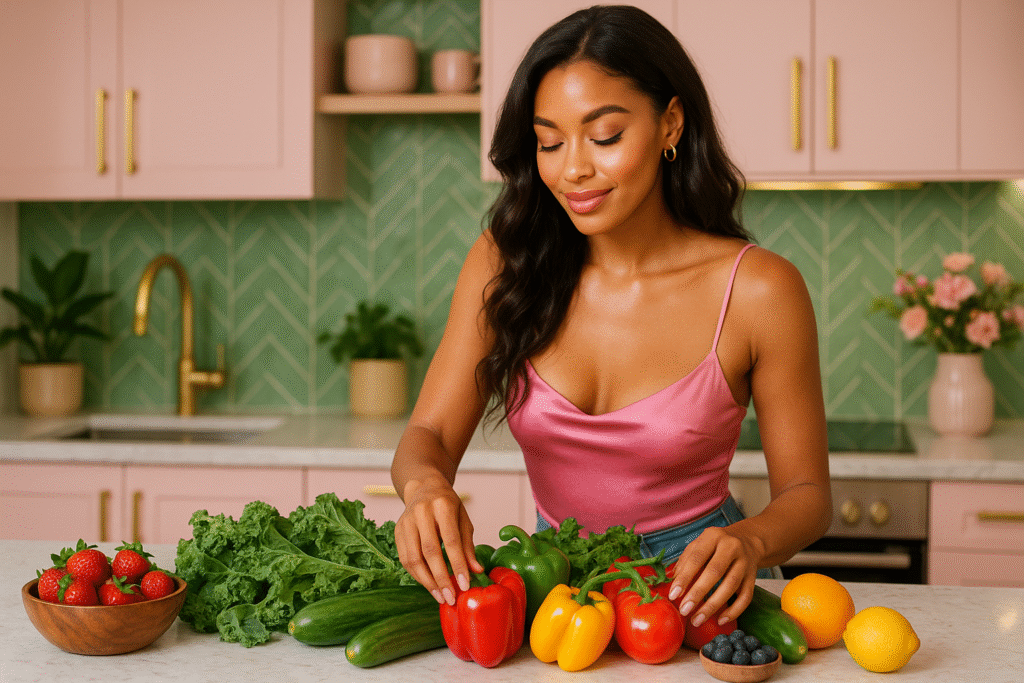
- Vegetables like tomato and other colorful produce
- Foods high in iron paired with vitamin C for better absorption
These foods are accessible, flexible, and realistic. Rotating them regularly supports iron levels without obsession, and many qualify as good sources of iron.
Iron shows up best when you invite the right plus-one.
How to Absorb Iron Better on a Plant-Based Diet
What you’ll get from this section
• Easy pairing strategies
• Less effort, better absorption
Iron intake is only part of the picture. Absorption determines how much iron your body actually uses.
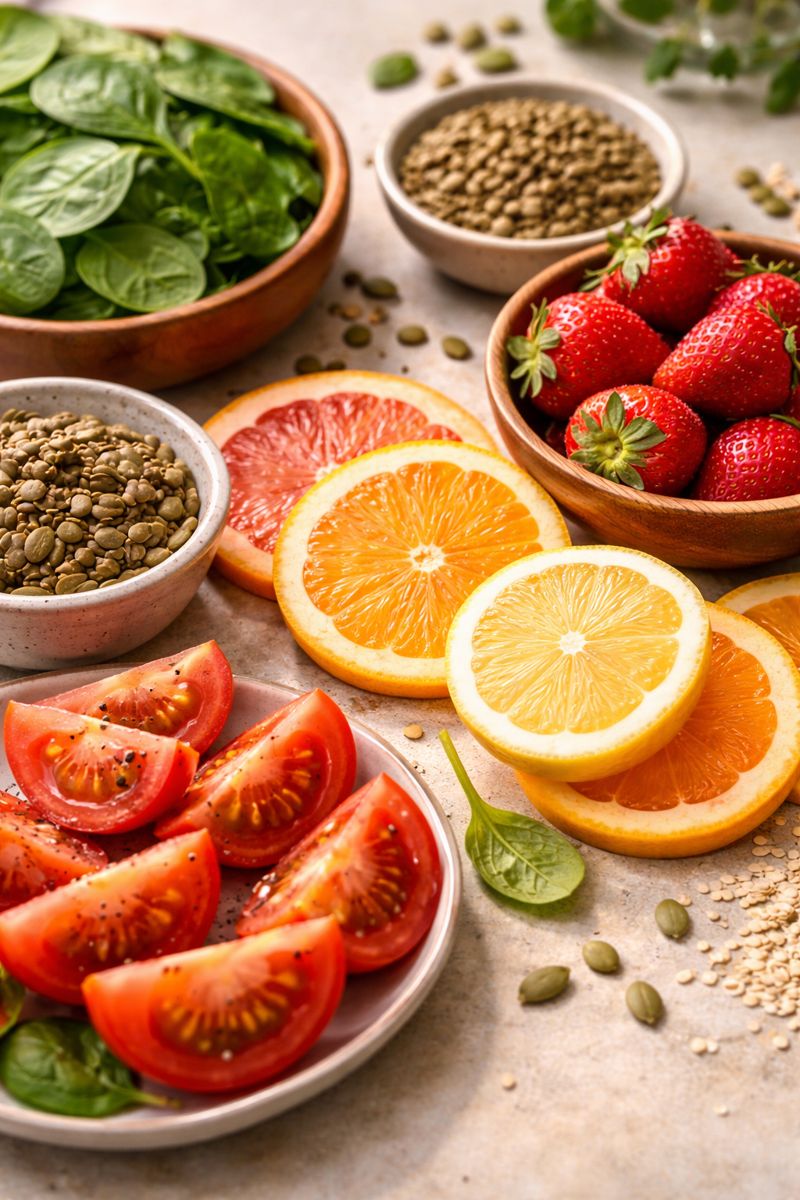
Pairing foods high in iron with vitamin C helps your body absorb iron more efficiently. Vitamin C acts like a bridge, helping iron move from food into the bloodstream.
Simple pairings include:
- Adding tomato to meals
- Including citrus fruits such as grapefruit or citrus juice
- Having a strawberry alongside iron rich foods
This isn’t about perfection. It’s awareness. Some foods can slow absorption temporarily if eaten at the same time, but timing matters more than elimination.
How Much Iron Is Enough?
What you’ll get from this section
• Perspective instead of pressure
• Long-term thinking over quick fixes
There’s no universal number that works for everyone. The amount of iron you need depends on age, health history, lifestyle, and factors like blood loss or donations.
Too little iron can lead to deficiency and eventually anemia. It’s also possible to have too much iron, especially when supplements are used without guidance.
What matters most is consistency over time! not hitting a perfect daily target. Enough iron feels steady, not stressful.
When Low Iron Becomes Anemia
What you’ll get from this section
• Clear distinction between low iron and anemia
• Knowing when testing matters
Anemia occurs when the body doesn’t have enough healthy red blood cells or hemoglobin to transport oxygen effectively. Iron-deficiency anemia is the most common form and often develops slowly.
This is where deficiency moves from subtle to more noticeable, often requiring blood testing to confirm what symptoms alone can’t.
Symptoms may include:
- Chronic fatigue
- Weakness
- Shortness of breath
- Dizziness
- Difficulty concentrating
This is where blood testing matters. Symptoms alone can’t confirm anemia, data does. When energy loss becomes persistent, professional guidance becomes part of care, not failure.
Iron Supplements: Helpful or Overused?
What you’ll get from this section
• Confidence around cautious supplement use
• Reduced risk from guessing
Food should be the foundation, but it’s not the whole story for everyone.
Iron supplements can help restore iron levels when a deficiency is confirmed. Using a supplement isn’t a shortcut or a weakness, it’s support. But it’s also possible to take too much iron, which can cause its own issues.
That’s why supplements work best when guided, not guessed.
The Gentle Way to Increase Iron Without Overthinking
What you’ll get from this section
• Practical support without obsession
• Calm consistency over intensity
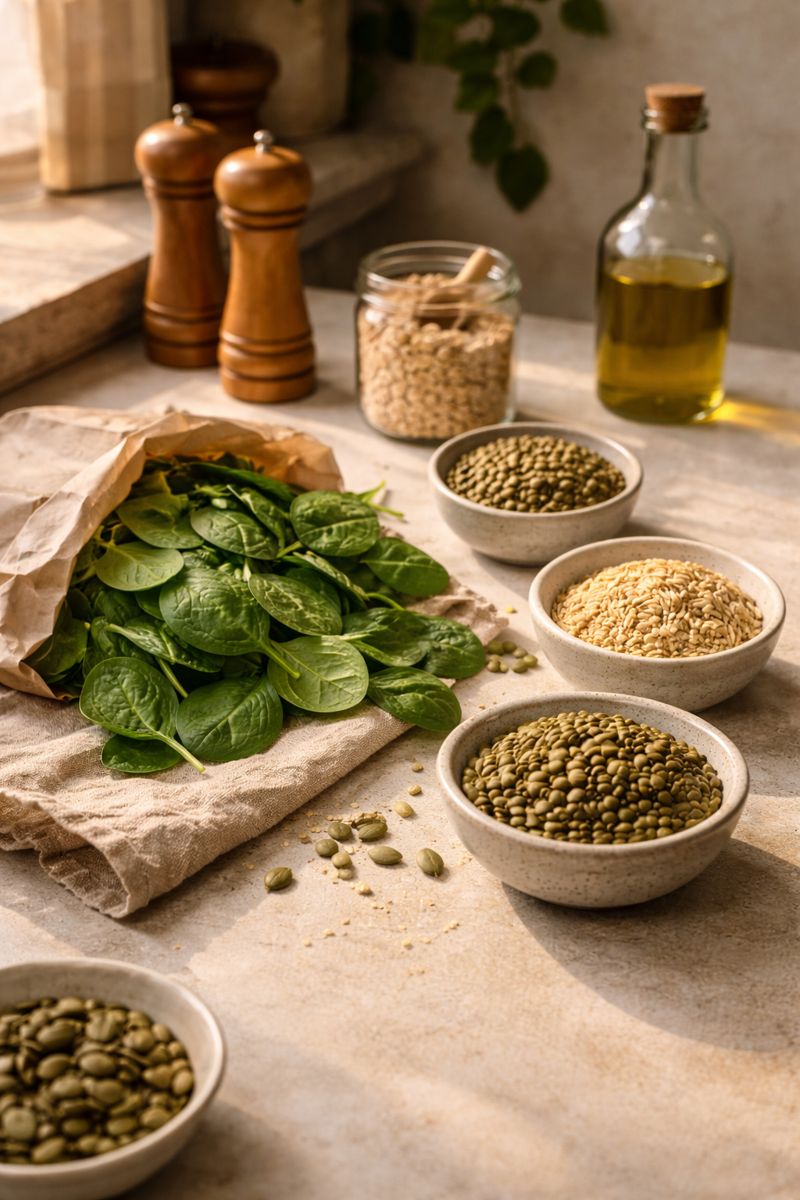
You don’t need rigid rules to increase iron. Small, steady habits matter more.
Supportive habits include:
- Eating a variety of iron-rich foods
- Pairing iron with vitamin C regularly
- Supporting absorption through timing
- Monitoring iron levels if symptoms persist
This is the same calm approach used inside the 7-Day Iron Boost Blueprint, supportive, realistic, and designed for real life.
The Takeaway: What This Really Means for Your Energy
What you’ll get from this section:
A grounded mindset shift
Permission to move at your own pace
Supporting iron doesn’t require obsession, restriction, or fear. It needs attention, balance, and patience.
When you give your body enough iron, energy stabilizes, focus sharpens, and everything feels less like a struggle. That kind of glow-up doesn’t rush—it settles in.
You don’t need to overhaul your life or chase perfection to support iron levels. You need awareness, flexibility, and the willingness to listen when your body whispers instead of waiting until it has to shout.
Iron support can be calm. Grounded. Sustainable.
And that’s the kind of glow-up that actually lasts.
What to Do Next
If this post felt a little too familiar… if iron suddenly feels clearer instead of confusing, that awareness is a gentle invitation.
Start gently.
👀 See If Iron Could Be Affecting Your Energy
A quick, pressure-free way to explore whether iron could be influencing your energy—without food rules, supplements, or overwhelm.
Because when your body whispers, listening early is the softest power move you can make.
Quick. Private. Zero overwhelm.
Love Always, Your Big Sis, The Plant Vixen