Plant Based Diet for Kids: A Beginner Parent’s Guide
A plant-based diet for kids focuses on adding more plant-based foods like fruits, veggies, beans, lentils, whole grains, nuts, seeds, and familiar swaps.
For beginners, it doesn’t have to mean going fully vegan overnight. It can start with kid-friendly meals, easy lunch and dinner ideas, and small changes your family can actually repeat.
You want your kids eating more plant-based, but the second you picture them side-eyeing broccoli, beans, or anything that looks “too healthy,” the whole thing starts feeling stressful fast.
Because let’s be real: kids already have favorite foods, snack demands, and a suspicious little attitude when a new food shows up on the plate.
One minute you’re trying to serve a cute plant-based dinner, and the next minute your child is looking at lentils like they personally betrayed the family.
But starting plant based with kids doesn’t have to mean changing your whole household overnight. It can start with familiar meals, simple swaps, picky eater patience, and grocery-store shortcuts that don’t have you fighting for your life at 6 p.m.
In this post, you’ll learn what a plant-based diet for kids means, how to make it feel kid-friendly, what nutrients parents should pay attention to, and how to start without overwhelming the whole house.
Need a simple starting point? Grab the free Plant-Based With Kids Starter Checklist: Easy Swaps, Lunch Ideas, and Picky Eater Tips so you don’t have to figure out every swap from scratch.
What Is a Plant-Based Diet for Kids?
A plant-based diet for kids means focusing mostly on foods that come from plants. That can include fruits, vegetables, beans, lentils, chickpea dishes, whole grain wraps, nut butter, seeds, plant milks, and familiar food swaps.
For some families, plant-based means fully vegan, with no meat and dairy, eggs, or animal products.
For other families, choosing a plant-based diet simply means eating more plant foods without going all-or-nothing.
And that difference matters.
If you’re a beginner parent, the goal doesn’t have to be:
“Everybody in this house is fully vegan by Monday morning.”
That’s not a glow-up, bae. That’s a setup.
A more realistic approach to plant-based eating might be:
Make one dinner plant-based this week.
Try one kid-friendly lunchbox swap.
Test one dairy-free snack.
See what your kiddos actually like before buying the whole grocery aisle.
Plant-based with kids is not about snatching every familiar food off the plate. It’s about helping the plate get a little glow-up without making dinner feel like a fight.
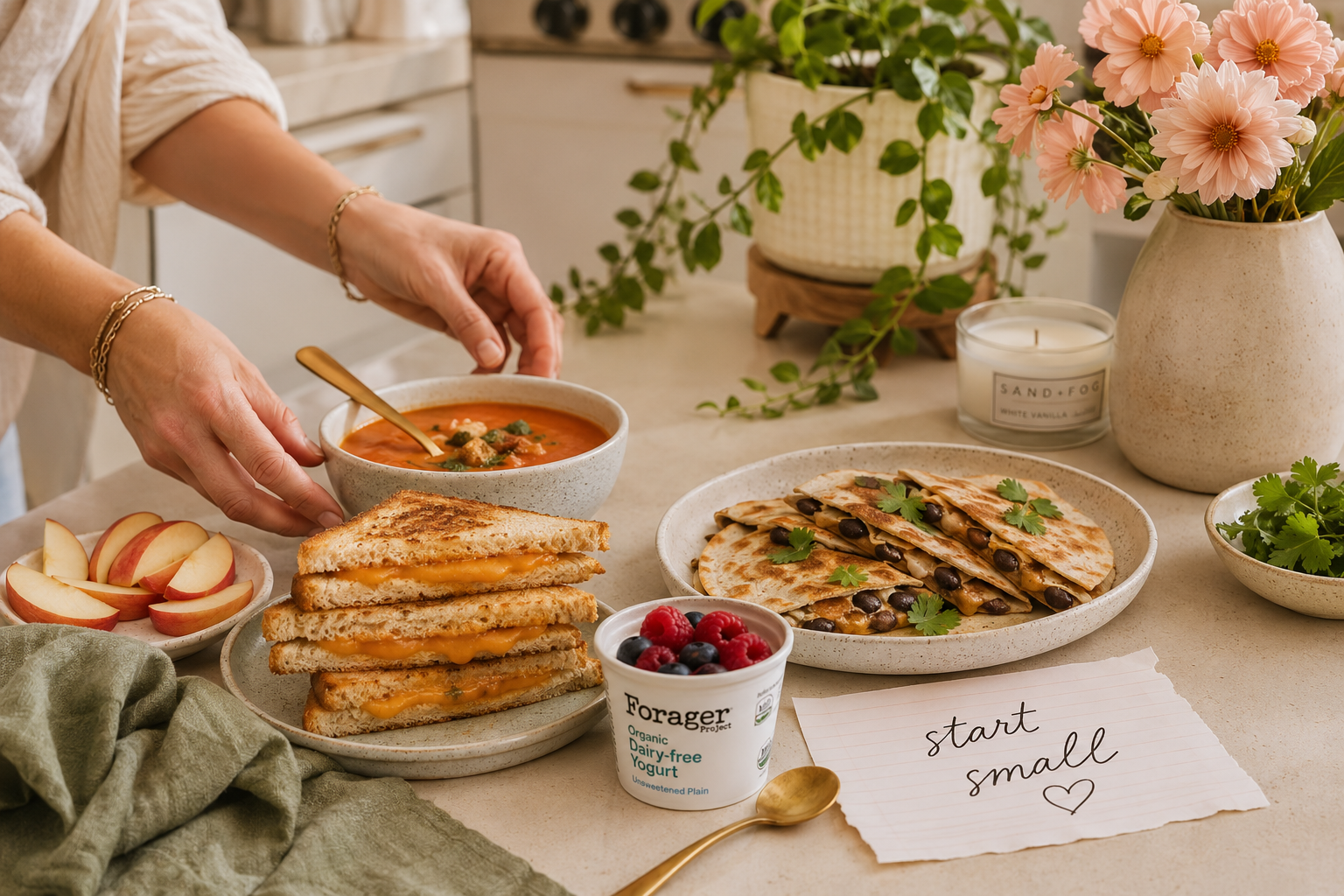
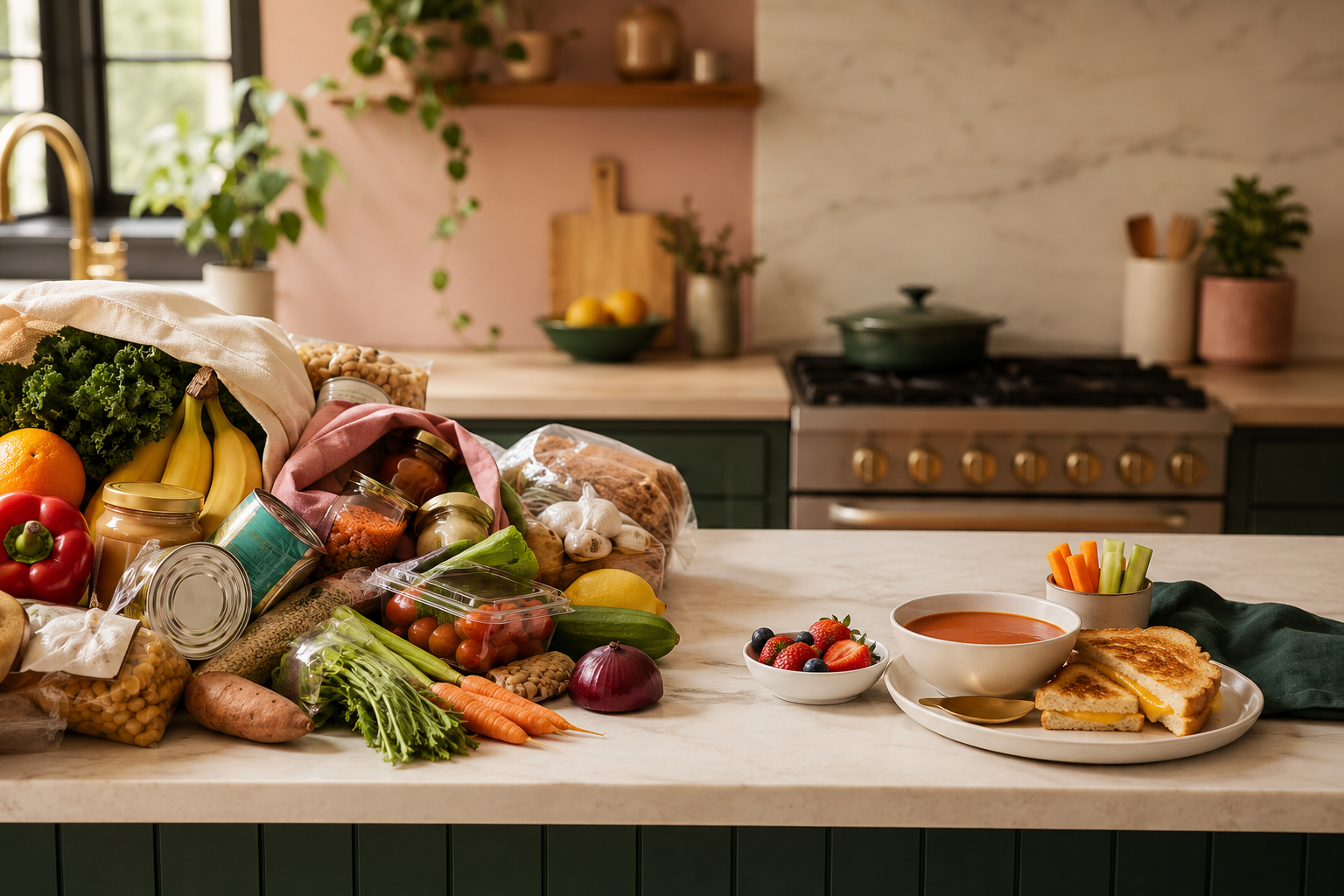
For example, instead of changing every meal, your family might start with one familiar comfort meal per week, like dairy-free grilled cheese with tomato soup or mini bean quesadillas with fruit on the side. Same cozy dinner energy. Just a softer plant-based shift that doesn’t make the plate feel brand new.
You don’t have to become a brand-new family overnight. Start with one green-flag swap and let the confidence build from there. 🌿
Why Plant-Based Eating With Kids Feels Hard at First
Here’s the part nobody tells beginner parents: your kid might not be rejecting plant-based eating. They may just be rejecting food that feels too unfamiliar too fast.
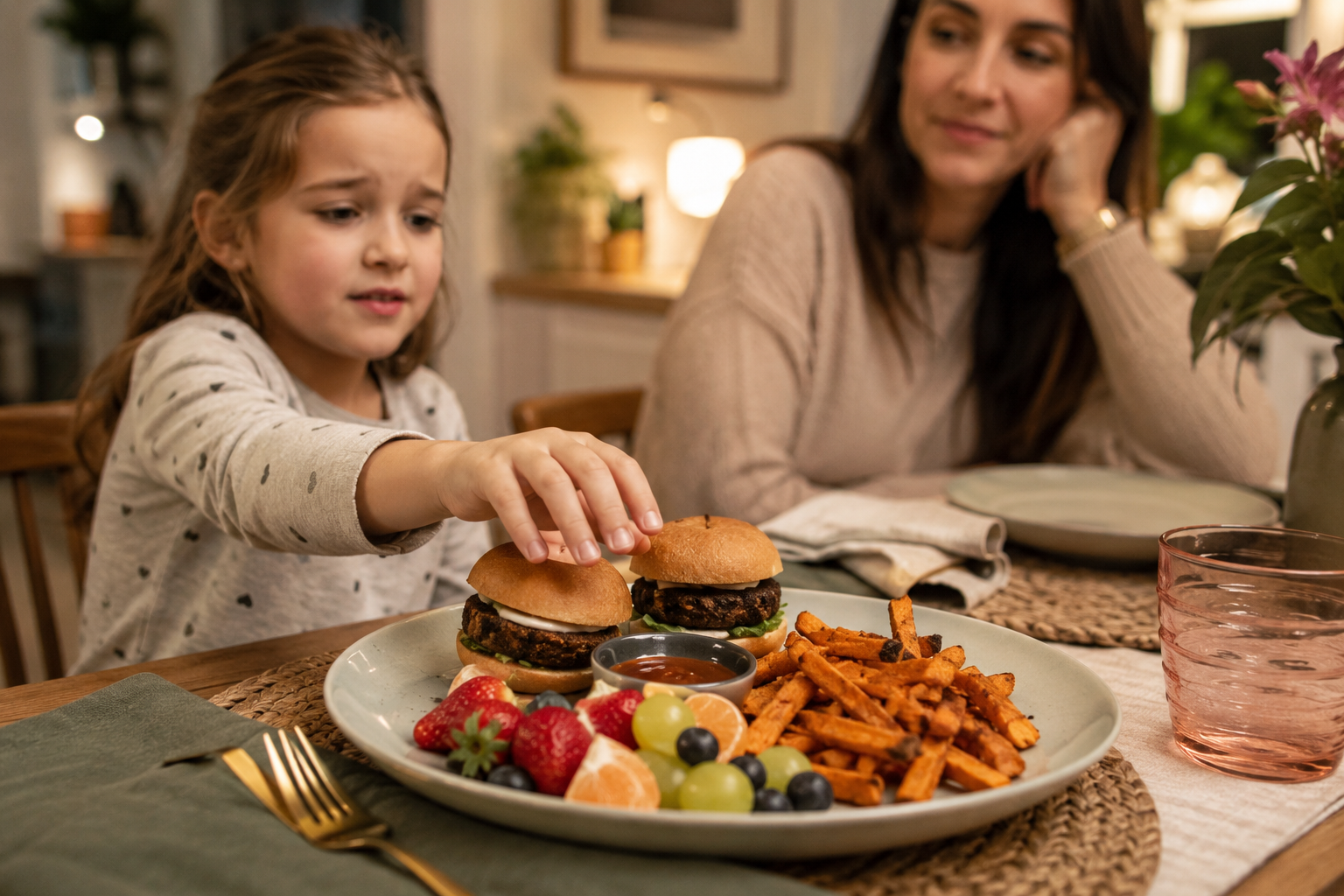
Kids like what they know. They like familiar textures, sauces, shapes, colors, and routines. So when a brand-new veggie bowl shows up looking like it came from a wellness influencer’s dream board, your kid may not be ready to trust it.
Plant-based with kids can feel hard because you’re dealing with:
Picky eaters
School lunches
Grocery confusion
Nutrition worries
Mixed-food households
Busy schedules
Kids who already have favorite meals
And when Life be life-ing, you may not have the energy to convince a toddler that kale is not the enemy.
This is where many parents start feeling like they’re on the struggle bus. They think, “If my kid won’t eat a big bowl of vegetables, this won’t work.”
But that’s not always true.
Your child may refuse a veggie bowl but happily eat crispy sweet potato fries with black bean sliders because it feels familiar. Same plant-based direction. Different presentation. Better chance of acceptance.
The first goal isn’t perfection. The first goal is making plant-based food feel normal.
Ask yourself this:
What meal does my kid already like that could handle one plant-based upgrade?
Maybe it’s soup and sandwich night. Maybe it’s breakfast-for-dinner. Maybe it’s pasta, sliders, snack plates, or build-your-own bowls. Start there.
Your kid doesn’t need to fall in love with kale by Tuesday. Start with familiar food, familiar flavors, and one small move that doesn’t turn dinner into a whole battlefield.
Easy Kid-Friendly Plant-Based Food Swaps
This is where a lot of beginners start doin the most. They try to change the whole plate when one good swap would’ve understood the assignment.
When you’re starting plant-based with kids, food swaps are usually easier than brand-new meals because kids already trust the meal format.
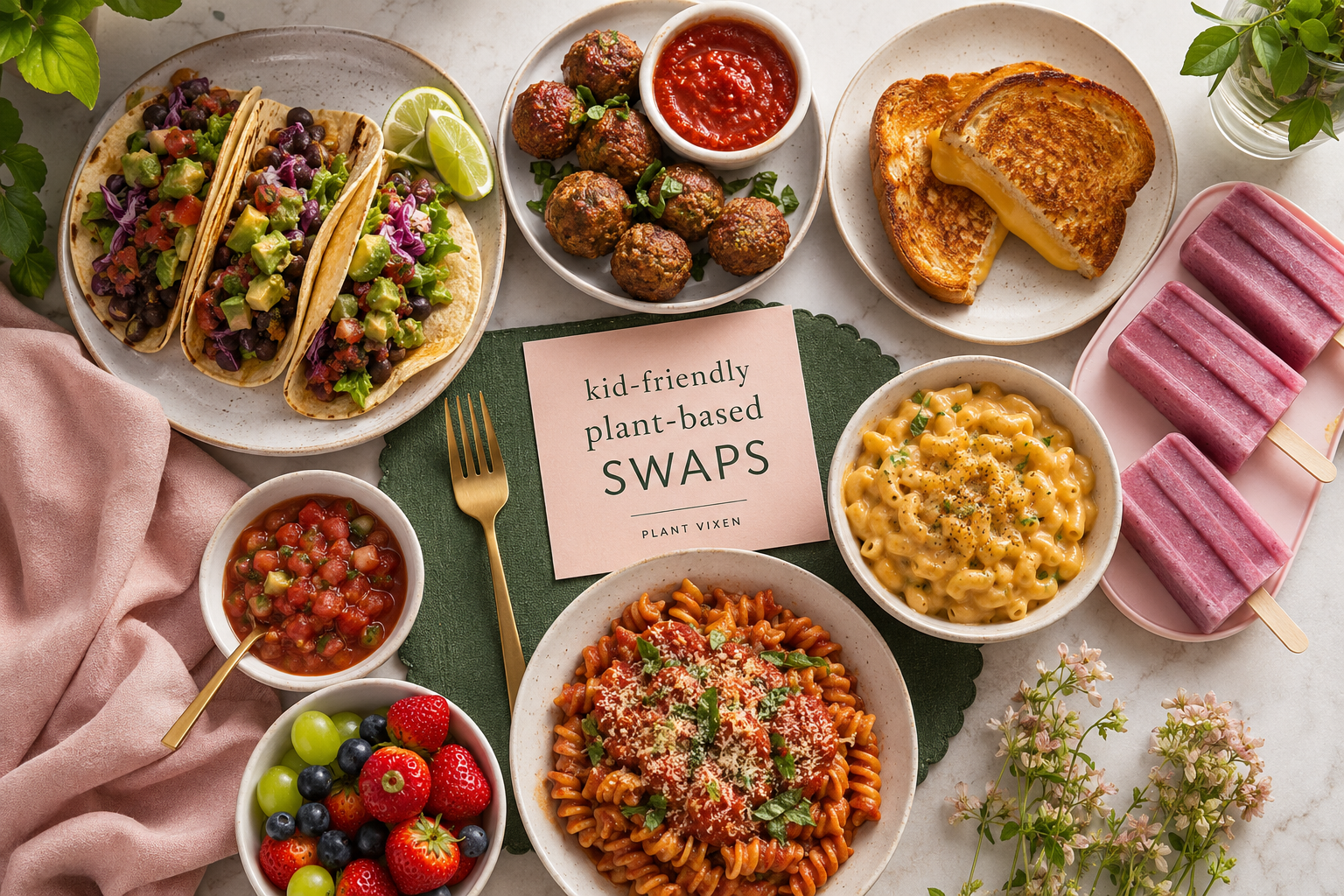
They know tacos.
They know spaghetti.
They know burgers.
They know potatoes.
They know a nugget.
They know wraps.
They know macaroni.
So instead of saying, “Here’s a totally new plant-based dinner,” try saying, “It’s taco night.”
Then quietly let the taco meat get a little plant-based glow-up.
Easy plant-based food swaps for kids
Beef tacos → black bean or lentil tacos
Meat spaghetti → spaghetti with lentils or plant-based crumbles
Chicken nugget meal → plant-based nuggets or crispy cauliflower bites
Ham and cheese sandwich → dairy-free grilled cheese with tomato soup
Meatball sub → meatless meatballs with marinara dip
Breakfast sausage plate → plant-based breakfast sausage with toast and fruit
Macaroni → vegan mac or vegan macaroni and cheese with a familiar texture
Sweet snack → smoothie popsicles, raisin trail mix, or a fudgy brownie made with plant-based ingredients
Now, this doesn’t need to become a full recipe project. You’re not trying to make 25 plant-based recipes this week. You’re helping your child trust new ingredients inside familiar meals.
A chickpea pasta with marinara may feel easier than a chickpea salad. A cashew-based sauce may work better in vegan macaroni and cheese than as a brand-new dip.
Mini bean quesadillas, lentil sloppy joe sliders, or dairy-free grilled cheese can feel safer than a plate full of unfamiliar vegetables.
That’s the kind of realistic transition that keeps parents from quitting by the end of the week.
Don’t change the whole plate just to prove a point. One familiar swap can do more for consistency than a dramatic dinner makeover.
How to Help Picky Kids Try Kid Friendly Plant-Based Foods
This is where your glow-up usually gets tested …when your kid takes one bite and acts like you served a big plate of betrayal.
Picky eating can make plant-based transition feel personal, but it’s usually not. Kids often need repeated exposure before they accept a new food. They may reject something because of its texture, color, smell, name, or simply because it showed up without permission.
The goal is not to force plant-based foods. The goal is to make them less suspicious.
Start by pairing new foods with safe foods your child already likes.
Try:
Mini bean quesadillas with dairy-free cheese
Meatless meatballs with marinara dip
Chickpea “chicken” salad on crackers or toast
Oatmeal cups with fruit, chia, and maple syrup
Smoothie popsicles with almond butter and banana
Dairy-free grilled cheese with tomato soup
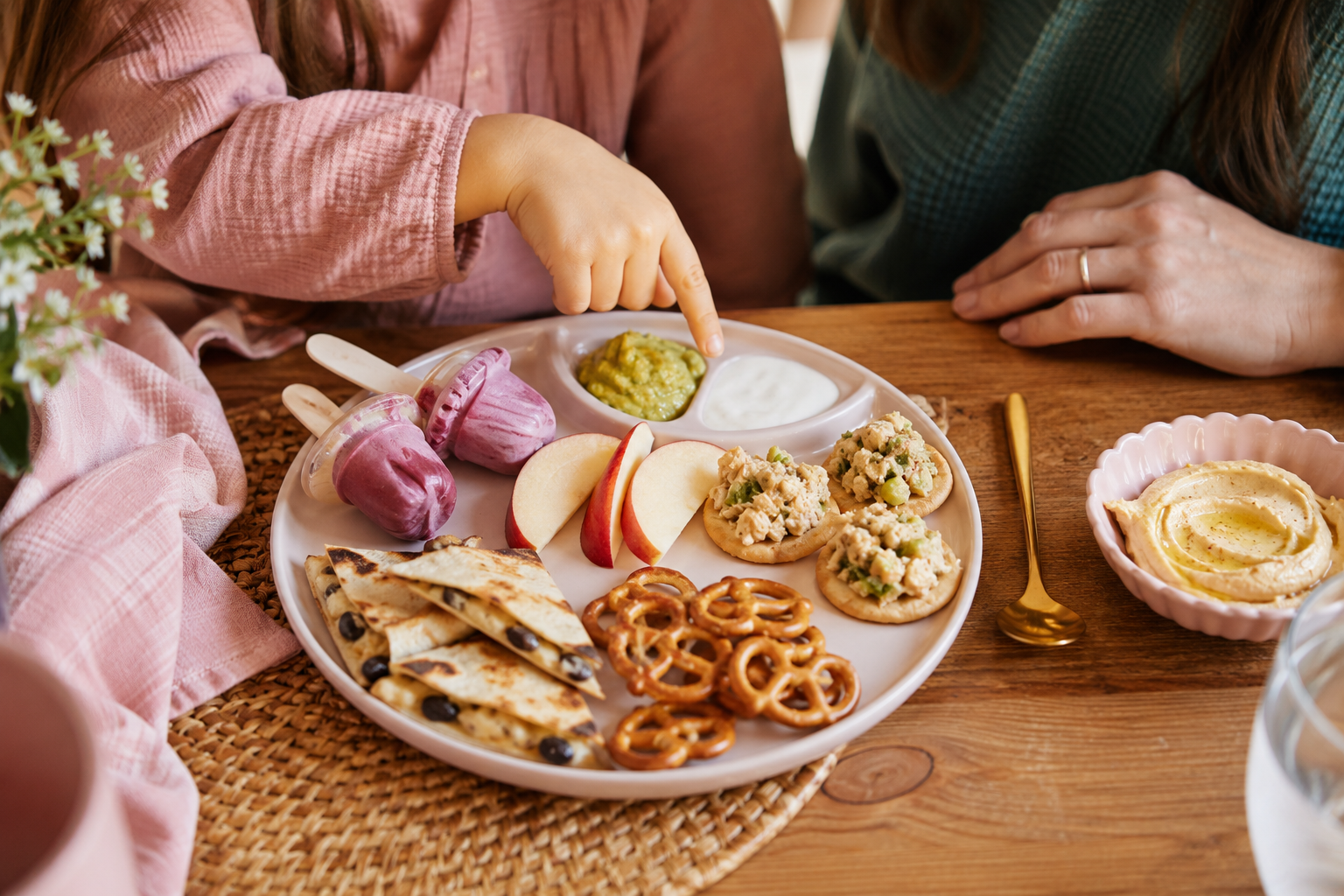
Don’t introduce chickpeas like a blind date with no chemistry. Put them in a familiar situation first.
Also, be careful with how you talk about the food. Sometimes calling something “healthy” makes kids suspicious, like the food just walked in wearing a trench coat.
Instead, describe the food in ways that actually sound good:
Crispy
Creamy
Saucy
Cheesy
Sweet
Crunchy
Warm
Dippable
Because “nutritious lentils” may not hit the same as “saucy spaghetti.”
Ask yourself this
What does my kid already like, and how can I make a plant-based version feel close enough to try?
If your kid likes sandwiches, try dairy-free grilled cheese or chickpea salad on toast.
If your kid likes dipping foods, try meatless meatballs with marinara or hummus with pita.
If your kid likes breakfast foods, try oatmeal cups, smoothie popsicles, or plant-based breakfast sausage.
If your kid likes crunchy snacks, try roasted chickpeas, pretzels with dip, or veggie chips.
Picky eating doesn’t mean you failed. It means you need a softer introduction, a familiar plate, and a little patience. No shame. No food fights.
Plant-Based Lunch and Dinner Ideas for Kids
Cute lunchboxes are nice, but food coming back untouched is not the vibe.
Plant-based lunch and dinner ideas for kids need to be simple, packable, and familiar. This is not the place to test a brand-new food for the first time unless you enjoy opening a lunchbox and seeing your effort still sitting there, judging you.
Try new foods at home first. Then pack the ones your child has already accepted.
Use this simple lunchbox formula:
Main + Fruit or Veggie + Crunchy Side + Protein/Filling Food + Fun Little Extra
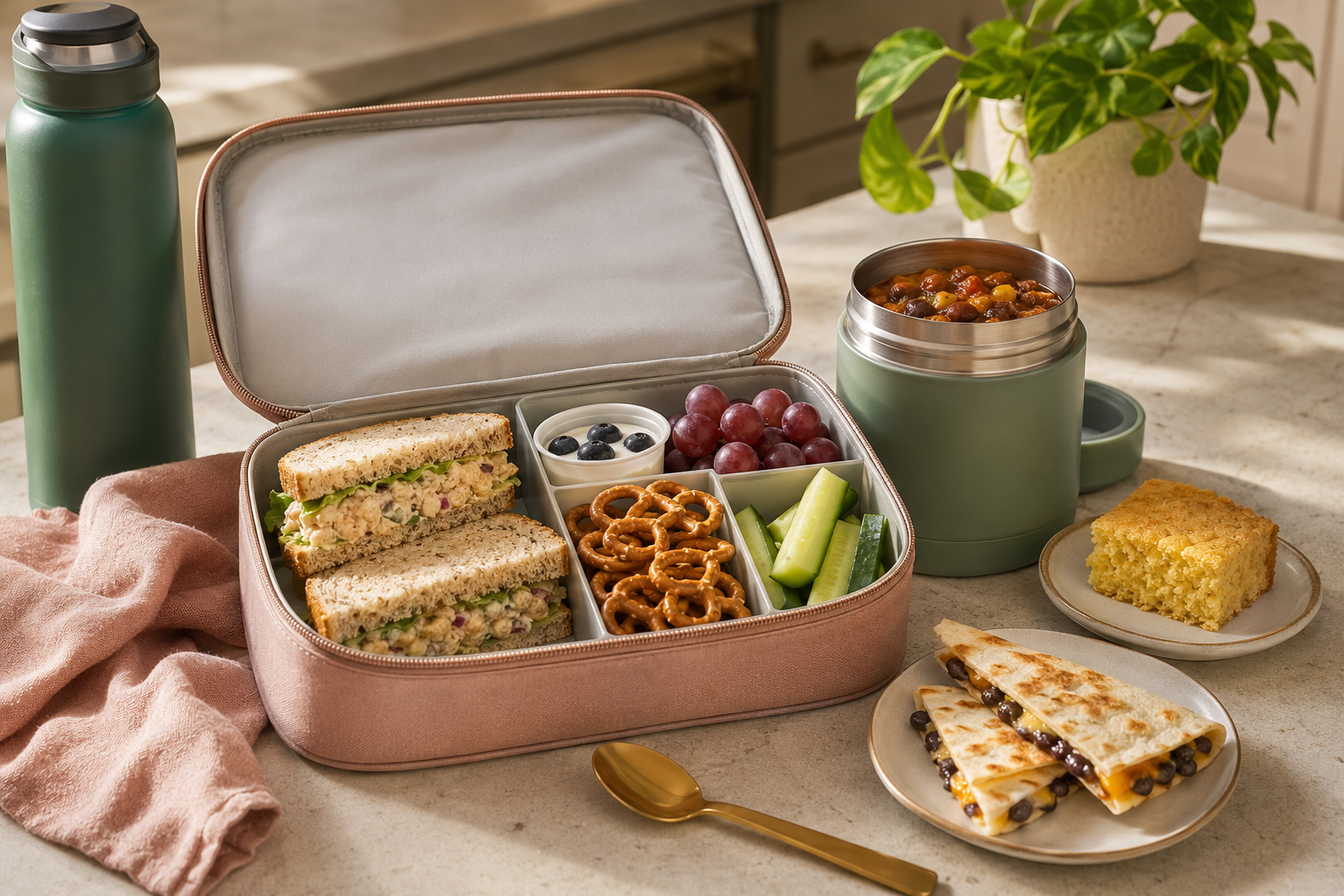
Easy meal ideas for kids
Chickpea “chicken” salad sandwich with grapes and pretzels
Lentil sloppy joe slider with sweet potato fries
Vegan mac with peas and apple slices
Black bean quesadilla triangles with salsa
Oatmeal cup with berries, chia, and nut butter
Bean chili in a thermos with cornbread
Pasta with dairy-free pesto and fruit
BBQ jackfruit slider with cucumber sticks
Helpful shortcuts can include microwave rice, canned beans, frozen vegetables, pre-cut fruit, hummus cups, plant-based nuggets, whole grain wraps, thermos-friendly soups, and dairy-free yogurt.
A plant-based lunch doesn’t have to be fancy to be effective. If it’s familiar, filling, and actually gets eaten, it understood the assignment.
Plant-Based Nutrition for Kids: What Parents Should Know
This is the grown-up part of the conversation. Not to scare you, but because we’re standing on business when it comes to kids’ food and nutrition.
Plant-based eating can work for kids, but it needs planning. That’s especially true if your child is following a vegan diet with no meat, dairy, eggs, or animal products.
The American Academy of Pediatrics’ HealthyChildren.org says an egg- and dairy-free vegan diet can be healthy and complete when key nutrients like vitamin B12, calcium, zinc, vitamin D, and iron are maximized.
That phrase appropriately planned matters.
It means we’re not just freestyling kids’ nutrition off cute social media graphics and vibes.
For plant-based kids, especially fully vegan kids, parents should be mindful of:
Plant-based protein
Iron
Calcium
Vitamin D
Vitamin B12
Zinc
Iodine
Omega-3 fats
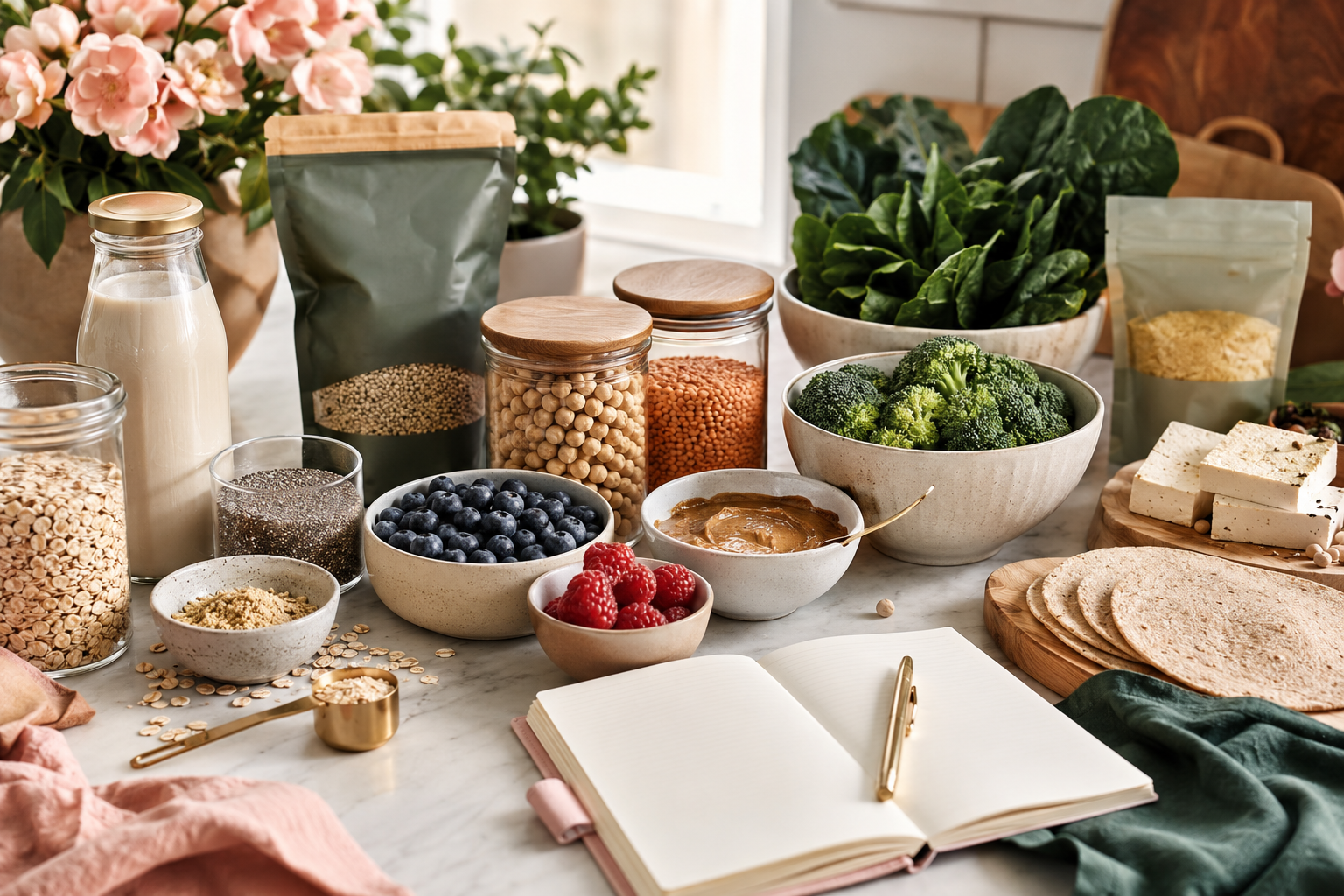
Some beginner-friendly plant-based sources that may help support balanced meals include beans, lentils, chickpeas, nut butter, almond butter, oats, fortified plant milks, soy milk, fortified cereals, green leafy vegetables, broccoli, chia, flaxseed, nutritional yeast, tofu if your family likes it, and legume-based pastas.
For vitamin B12, fully vegan diets usually need a reliable source from fortified foods or supplements. This is one of those areas where you should talk with your child’s pediatrician, a dietitian, or registered dietitian nutritionists instead of guessing.
And if your child has medical conditions, allergies, growth concerns, or a very limited toddler diet, bring in professional support earlier. That’s not being dramatic. That’s being responsible.
Nutrition planning isn’t here to kill the vibe. It’s here to protect the glow-up. We can keep it cute and still take kids’ healthy growth seriously.
Simple Tips and Tricks to Make Plant-Based Easier
Here are the easiest ways to start without overwhelming your family:
Choose one familiar meal to upgrade first.
Start with familiar meals like pasta night, snack plates, breakfast-for-dinner, soup and sandwich night, or build-your-own bowls.
Swap one part of the meal, not the whole plate.
Change the meat, dairy, or snack option first.
Pair new foods with safe foods.
Let your child see something they already trust on the plate.
Test lunchbox foods at home first.
Don’t let school lunch be the first date.
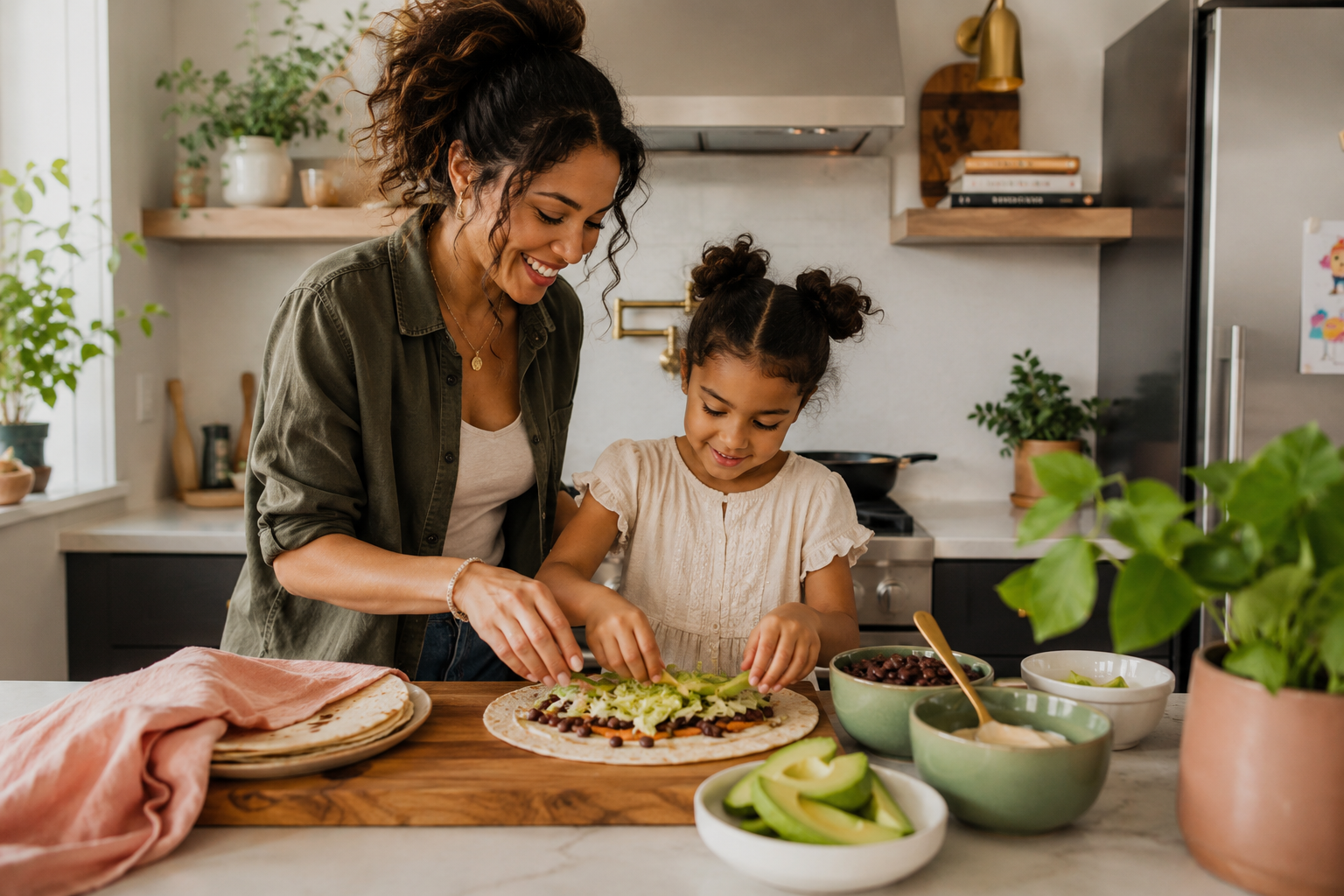
Get kids involved when it makes sense.
Children in the kitchen can rinse fruit, stir sauce, choose toppings, sprinkle nutritional yeast, or build their own wrap. Getting kids involved in the cooking process can make plant-based food feel less suspicious.
Repeat what works.
You don’t need a brand-new meal every day. Repetition builds confidence.
Sometimes the win is not a perfect plate. Sometimes the win is your child helping build a wrap and taking one bite without acting personally offended.
A Simple First Week Plan for Starting Plant-Based With Kids
Don’t try to become a brand-new family too fast. That’s not a glow-up, bae. That’s a setup.
Your first week should be simple. The goal is not to prove anything. The goal is to gather information.
What does your kid accept?
What feels easy?
What gets eaten?
What causes drama?
What could you repeat?
Simple first week framework
Pick one familiar dinner to make plant-based.
Choose one plant-based lunch idea to test at home first.
Buy two easy grocery-store swaps.
Keep one safe meal available.
Notice what your child accepts without making it a dramatic review session.
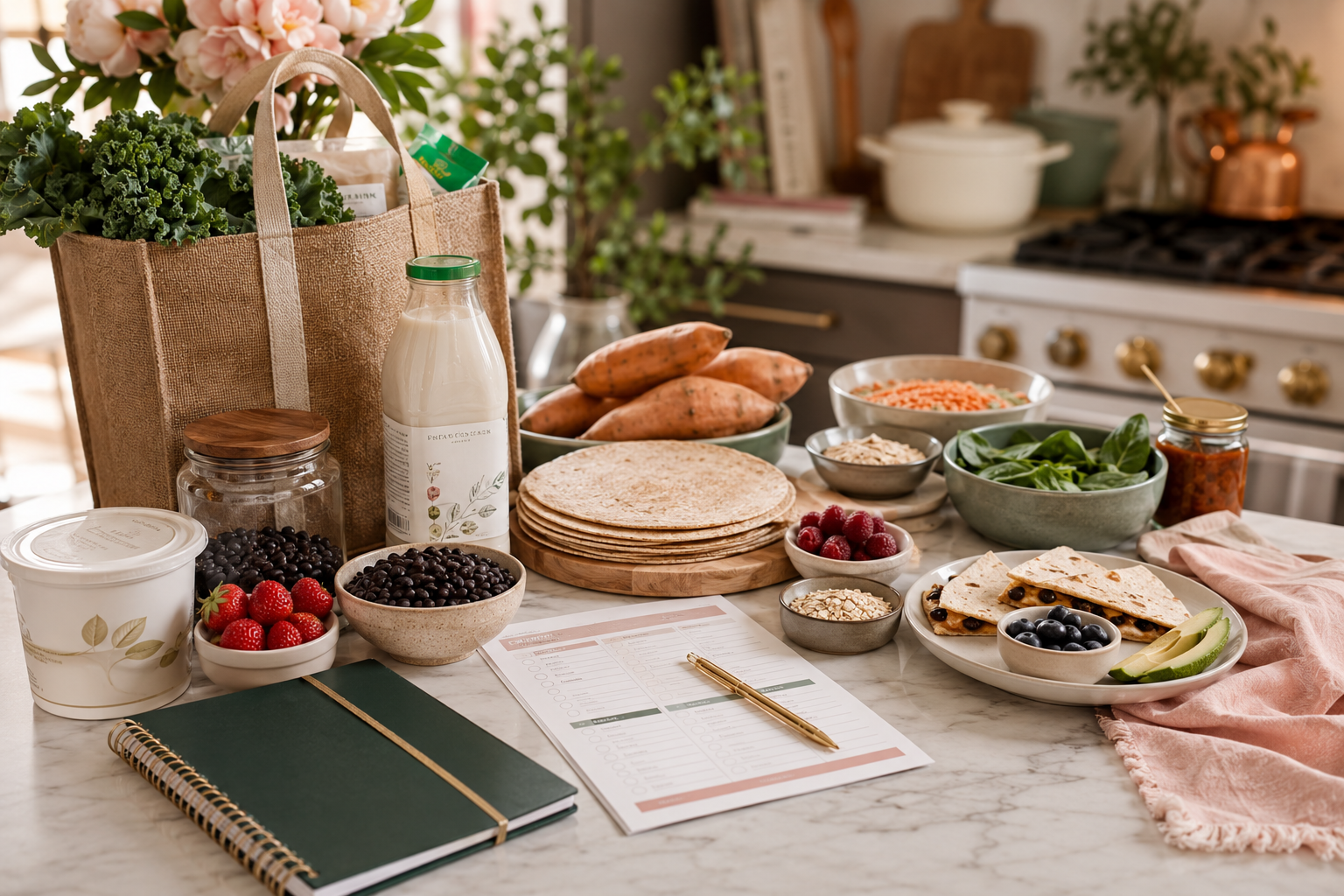
Example first week
Monday: Lentil sloppy joes with fruit
Tuesday: Regular family meal with one plant-based side
Wednesday: Black bean quesadilla triangles
Thursday: Try oatmeal cups with berries, chia, and almond butter
Friday: Dairy-free grilled cheese with tomato soup
Weekend: Repeat the meal that worked best
If you only start with one or two plant-based meals per week, that still counts as progress. The whole point is to make this feel realistic enough to keep going.
Your first week doesn’t need to be perfect. It needs to be repeatable. One small win that fits your real life is worth more than a perfect plan that falls apart by Wednesday.
Common Mistakes Parents Make When Starting Plant-Based With Kids
Now this is where most parents accidentally turn a good idea into a stressful project.
Changing everything too fast
Kids need familiarity. If breakfast, lunch, dinner, snacks, and desserts all change at once, the transition can feel like a food ambush.
Try this instead: Start with one meal or one swap.
Starting with foods that feel too unfamiliar
A giant veggie bowl might be delicious to you, but to a picky eater, it may look like a bowl full of red flags.
Try this instead: Start with familiar meals like soup and sandwich night, snack plates, pasta bowls, breakfast-for-dinner, or build-your-own bowls.
Making it about restriction
If plant-based eating feels like everything fun is being taken away, kids may resist harder.
Try this instead: Focus on what you’re adding: better sauces, fun toppings, crunchy sides, sweet fruit, creamy dips, and familiar comfort meals.
Ignoring plant-based nutrition planning
Plant-based with kids should not be random. Kids are growing, and their meals need structure.
Try this instead: Pay attention to key nutrients, especially if your child is fully vegan, and ask a pediatric professional for guidance when needed.
Vixen Note: The goal isn’t to scare your family into eating plant-based. The goal is to make plant-based feel like a better option they can actually live with.
FAQs About a Plant-Based Diet for Kids
Is a plant-based diet safe for kids?
A plant-based diet can work for kids when it’s thoughtfully planned. Fully vegan diets need extra attention to nutrients like vitamin B12, calcium, zinc, vitamin D, and iron. It’s smart to check with a pediatrician or registered dietitian, especially if your child has health concerns or a limited diet.
What plant-based foods are good for picky kids?
Start with familiar foods like dairy-free grilled cheese, mini bean quesadillas, smoothie popsicles, oatmeal cups, chickpea salad sandwiches, lentil sloppy joes, meatless meatballs, pasta with marinara, snack plates, and plant-based nuggets.
Are there kid-friendly vegan recipes that still feel familiar?
Yes. Start with familiar formats like vegan macaroni and cheese, lentil sloppy joes, meatless meatballs, chickpea salad sandwiches, dairy-free grilled cheese, smoothie bowls, bean quesadillas, and even a decadent, fudgy brownie made with plant-based ingredients.
Do kids need supplements on a vegan diet?
It depends on the child and the type of diet. Fully vegan kids usually need a reliable vitamin B12 source through fortified foods or supplements, and other nutrients may need attention too. Ask a pediatrician or registered dietitian for guidance before guessing.
Final Thoughts: Plant-Based With Kids Can Start Small
Plant-based with kids doesn’t have to be perfect, strict, or stressful.
You don’t have to flip your whole household overnight. You don’t have to serve fancy meals your kids don’t recognize. You don’t have to turn every dinner into a nutrition lecture with a side of guilt.
Start with one familiar meal.
One easy swap.
One calmer lunchbox.
One grocery shortcut.
One repeatable family win.
That’s how plant-based starts feeling doable.
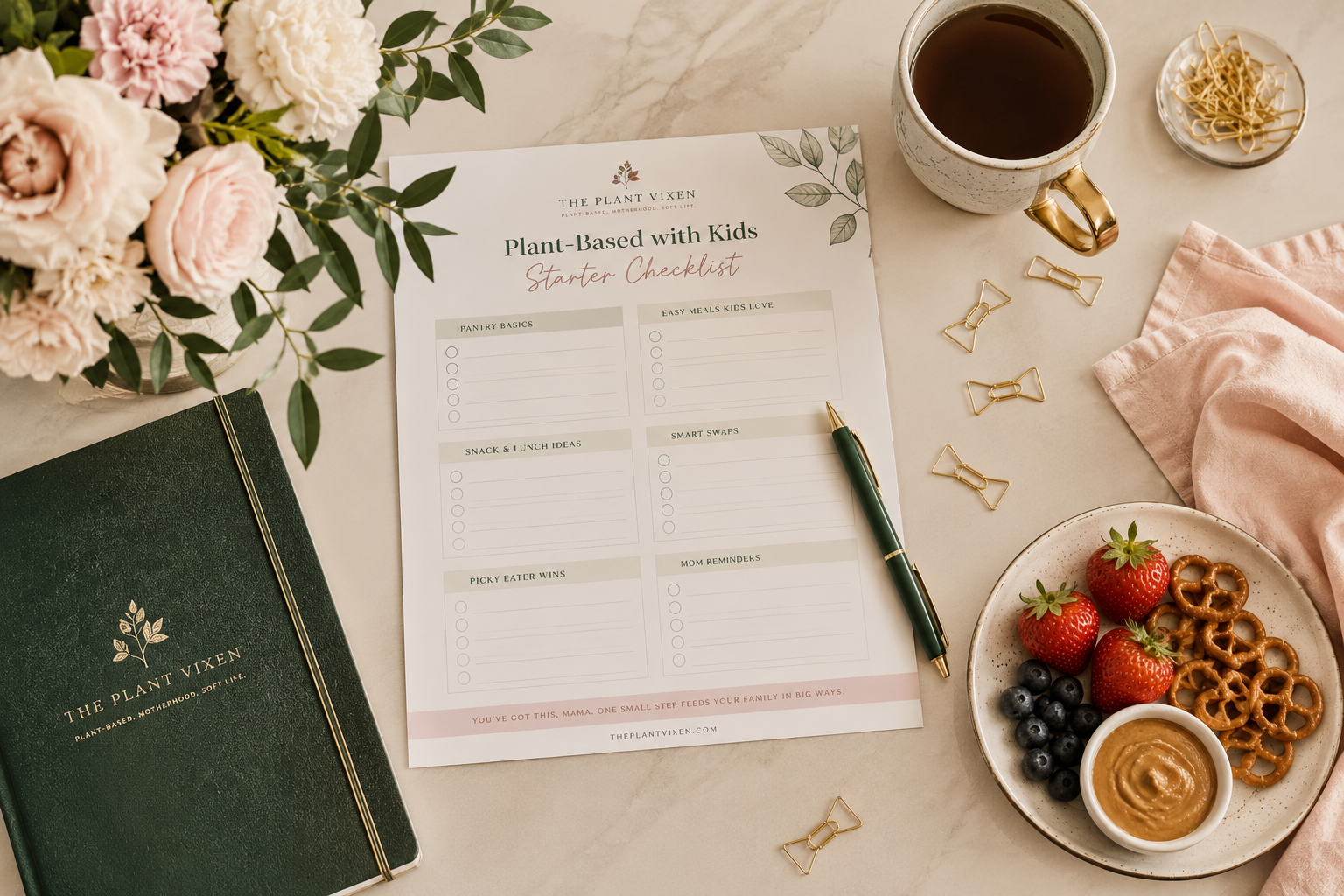
And if you want help taking that first step, download the free Plant-Based With Kids Starter Checklist: Easy Swaps, Lunch Ideas, and Picky Eater Tips.
It’ll help you start with simple swaps, realistic lunch ideas, and picky eater moves that don’t have you fighting for your life at the dinner table.
Plant-based with kids doesn’t have to be a dinner-table drama. Start small, keep it familiar, and let the glow-up meet your family where they actually are. That’s how you stand on your plant-based business… picky eaters and all. 🌿✨
Keep learning, keep glowing up, and keep choosing the plant-based life that loves you back.
— The Plant Vixen