You decided to eat more plant-based. You found a milk you like. Breakfast is handled. You can even walk past a burger without feeling tempted.
Then pizza enters the room.
Or somebody pulls apart a hot, melty sandwich. Maybe even macaroni and cheese starts calling your name after a long day. Now all of a sudden, you’re wondering why cheese still has this kind of hold on you.
Before you let “Why am I craving cheese so much?” turn into “Maybe I can’t do this,” take a breath. The craving doesn’t mean you’ve failed. It doesn’t prove you can’t maintain a plant-based lifestyle either.
It might mean your current replacement isn’t giving you what the original brought to the table. And I’m not talking about one magic nutrient or one perfect vegan product.
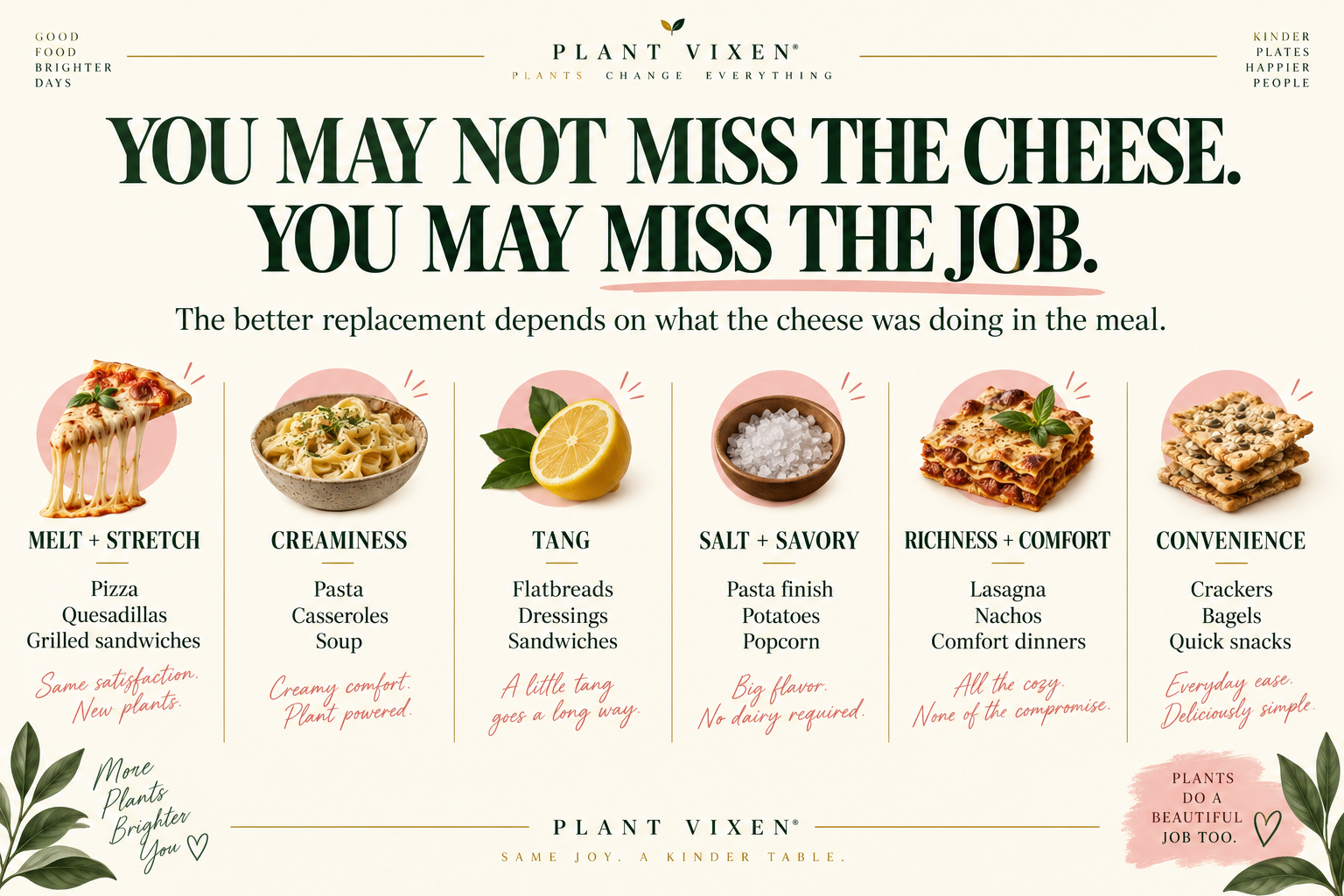
Here’s what I want you to notice: the craving may be less about cheese itself and more about what it brought to the meal. So the better question is this: Do you miss the ingredient itself, or do you miss the experience it created?
Why Do I Crave Cheese So Much?
You can crave cheese for more than one reason. Familiar routines matter. So do taste, texture, convenience, comfort, and the way a meal makes you feel.
Maybe Friday night has meant pizza for years. Maybe cheese and crackers were your easy snack when you didn’t want to cook. Maybe a bubbling pan of baked ziti belongs at family gatherings in a way that a random bowl of vegetables simply does not.
Your brain notices those patterns. Food cues, places, smells, and routines can become connected to wanting a particular food. Research on food cravings also suggests that strict deprivation can make a wanted food feel even louder for some people.
Why Does Cheese Feel So Addictive?
You may have heard that casein, a protein found in dairy, makes cheese so addictive that giving it up works like quitting a drug. That claim gets repeated with plenty of confidence, but it skips important context.
Foods you love, especially the ones tied to comfort and familiar routines, can connect with the brain’s reward system, which includes dopamine. That helps explain why the smell of pizza or even the thought of an old favorite can bring the craving right back.
Feeling addicted to cheese isn’t the same as receiving a medical diagnosis. Notice the pattern instead.
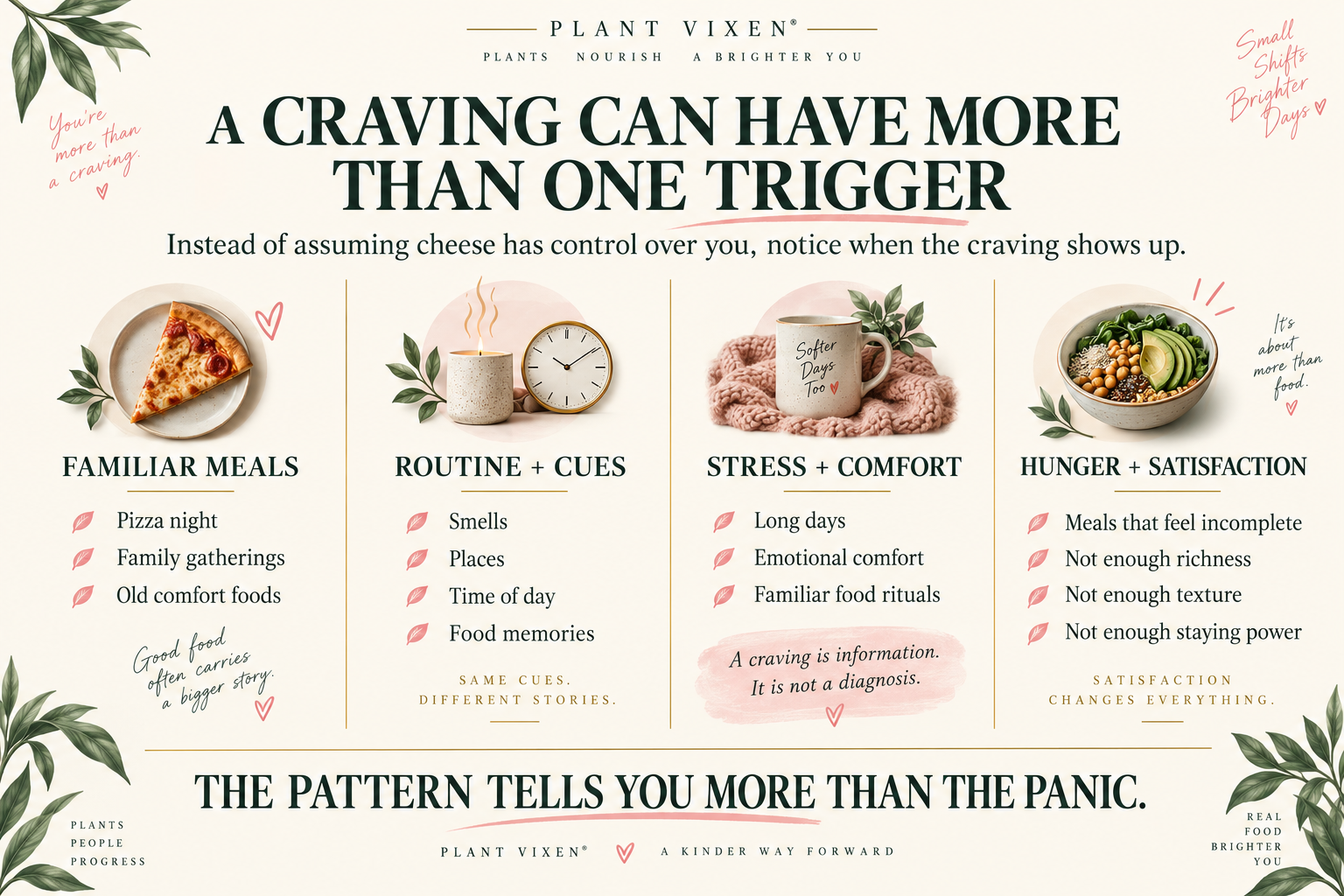
Do you crave it with certain meals, during stress, or when a plant-based option leaves you hungry?
Those clues are more useful than assuming one ingredient has taken control of you.
What a Cheese Craving May Actually Mean
Sometimes the issue is simpler: your plant-based meal isn’t satisfying enough.
If you remove the filling from a sandwich and replace it with nothing, you might also remove richness, salt, moisture, texture, and the part that made the sandwich feel complete.
Of course the new version feels disappointing. You took out the part doing most of the heavy lifting without replacing what it brought to the meal.
All-or-nothing thinking can add another layer. Telling yourself you can never have a familiar food again may make it feel more important, not less.
A flexible transition with meals that actually satisfy you is easier to stick with than fighting every craving like it shouldn’t be happening. If consistency is the part giving you trouble, these real-life tips for staying plant-based can help.
So before you buy another plant-based package and hope for the best, let’s get to the real tea.
Before You Pick a Plant-Based Cheese, Ask What Job It Needs to Do
I’d rather help you figure out whether you’re missing the melt, the creaminess, the tang, or the comfort that came with it. Here’s the reveal that changes the whole conversation:
Sometimes you don’t miss cheese as one ingredient. You miss the job it performed in the meal.
It doesn’t do the same job everywhere.
Mozzarella on pizza melts, stretches, browns, and holds the toppings together. Parmesan adds a salty, savory finish to pasta. A creamy spread cools and softens a toasted bagel. Queso turns plain chips into a whole situation.
Those aren’t identical cravings, so they shouldn’t get identical answers.
I’m not going to tell you to sprinkle nutritional yeast on everything and pretend the craving has been handled. That’s like wearing one pair of shoes to the gym, a wedding, and the beach. Yes, your feet are covered. But sis, you know one pair can’t do every job.
When a craving hits, name the exact food you want. Then ask what the missing ingredient was doing in it:
- Was it giving you melt or stretch?
- Did it make the food creamy?
- Did it add tang or salt?
- Did it make the meal feel rich and filling?
- Was it holding something together?
- Did it turn an ordinary meal into comfort food?
Once you know the job, choosing what to eat gets much easier.
What to Eat When You’re Craving Cheese
The right answer depends on the experience you’re trying to recreate. Use these as clues for matching the craving to the food.
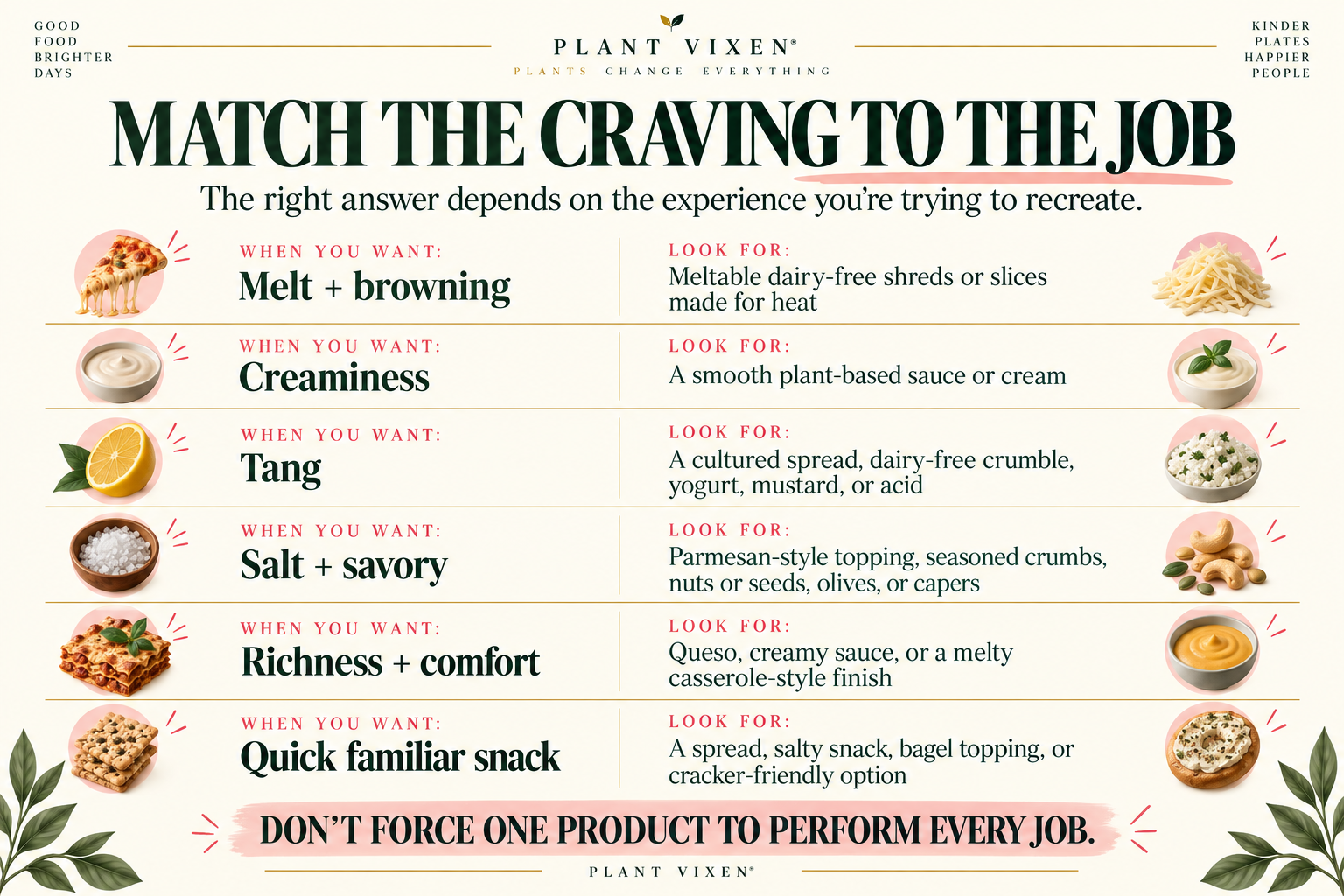
When You Want Melt and Browning
Pizza, quesadillas, grilled sandwiches, and casseroles need a replacement made for heat.
Look for a dairy-free option labeled for melting, then use it where it works best.
Preparation matters too. Shreds may melt better when covered for part of the cooking time. For a grilled sandwich, lower heat gives the filling time to soften before the bread gets too dark.
If stretch is the main event, a cold spread won’t satisfy it, no matter how good it tastes on a cracker. Match the form to the food.
When You Want Creaminess
For creamy pasta, scalloped potatoes, broccoli casserole, or a rich soup, you may want sauce more than slices.
A smooth sauce can start with cashews, sunflower seeds, white beans, or a store-bought plant-based cream. Each brings something different.
Cashews add richness. Sunflower seeds offer a nut-free path when appropriate. White beans add body with a milder finish. A prepared cream keeps things easy on a busy night.
Season the sauce for the meal instead of expecting the base ingredient to taste cheesy on its own.
Salt, garlic, mustard, miso, lemon, or a small amount of nutritional yeast can build depth. You don’t need all of them. Choose the flavors that make sense for the dish.
When You Want Tang
Sometimes the missing piece isn’t richness. It’s that sharp little bite.
Try an unsweetened plant-based yogurt in a creamy dressing or sauce. Lemon juice, pickle brine, mustard, or a cultured spread can also add brightness.
For a feta-style moment on flatbread or in a hearty sandwich, a tangy dairy-free crumble may fit better than a mild melting shred.
Tang keeps rich food from tasting flat. If your homemade sauce feels heavy but still doesn’t satisfy, this may be the piece it needs.
When You Want Salt and Savory Flavor
Parmesan cravings are often about the finish. You want that salty, savory hit that wakes up pasta, roasted potatoes, or popcorn.
Try a verified parmesan-style topping, seasoned breadcrumbs, crushed salted nuts or seeds, olives, capers, or a light swipe of miso worked into a sauce.
Nutritional yeast can help here too, but it works best as part of the seasoning, not as fairy dust expected to transform every dish.
This is also where texture matters. A crisp, salty topping can make a soft pasta dish feel more complete even when it doesn’t imitate cheese exactly.
When You Want Richness and Comfort
Some cravings are really asking, “Can dinner please feel good tonight?” If that’s the mood, these vegan comfort food ideas can help you recreate the whole experience.
That may call for gooey lasagna, loaded nachos with queso and beans, or a melty sandwich with tomato soup.
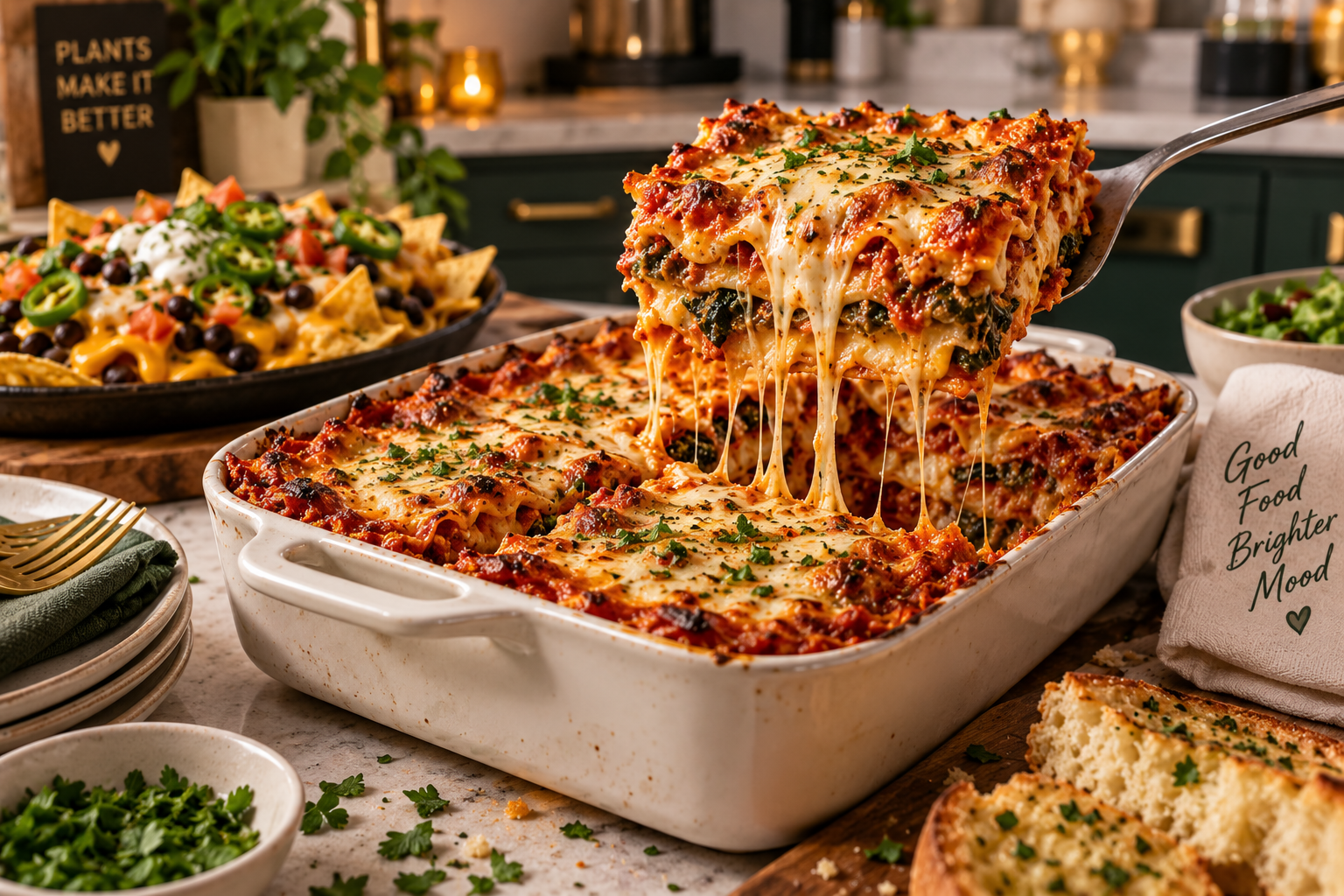
Don’t turn every comfort craving into a wellness makeover. If you want something warm, creamy, and indulgent, a cold salad with a few avocado cubes isn’t the same experience wearing a healthier outfit.
Recreate the whole experience: the warm sauce, the tender pasta, the browned top, and the generous scoop.
When You Want a Quick, Familiar Snack
If you used to eat cheese as your grab-and-go answer, convenience may be the real job.
Keep one easy option ready:
- Crackers with a dairy-free spread
- Apple slices with a savory nut or seed butter
- Popcorn with a salty seasoning
- A toasted bagel with a cultured plant-based spread
Choose something you already know you’ll eat.
A homemade sauce that takes an hour isn’t a backup plan when you’re hungry right now. Your replacement needs to fit the moment, not just the ingredient list.
Why Vegan Cheese Sometimes Doesn’t Hit the Same
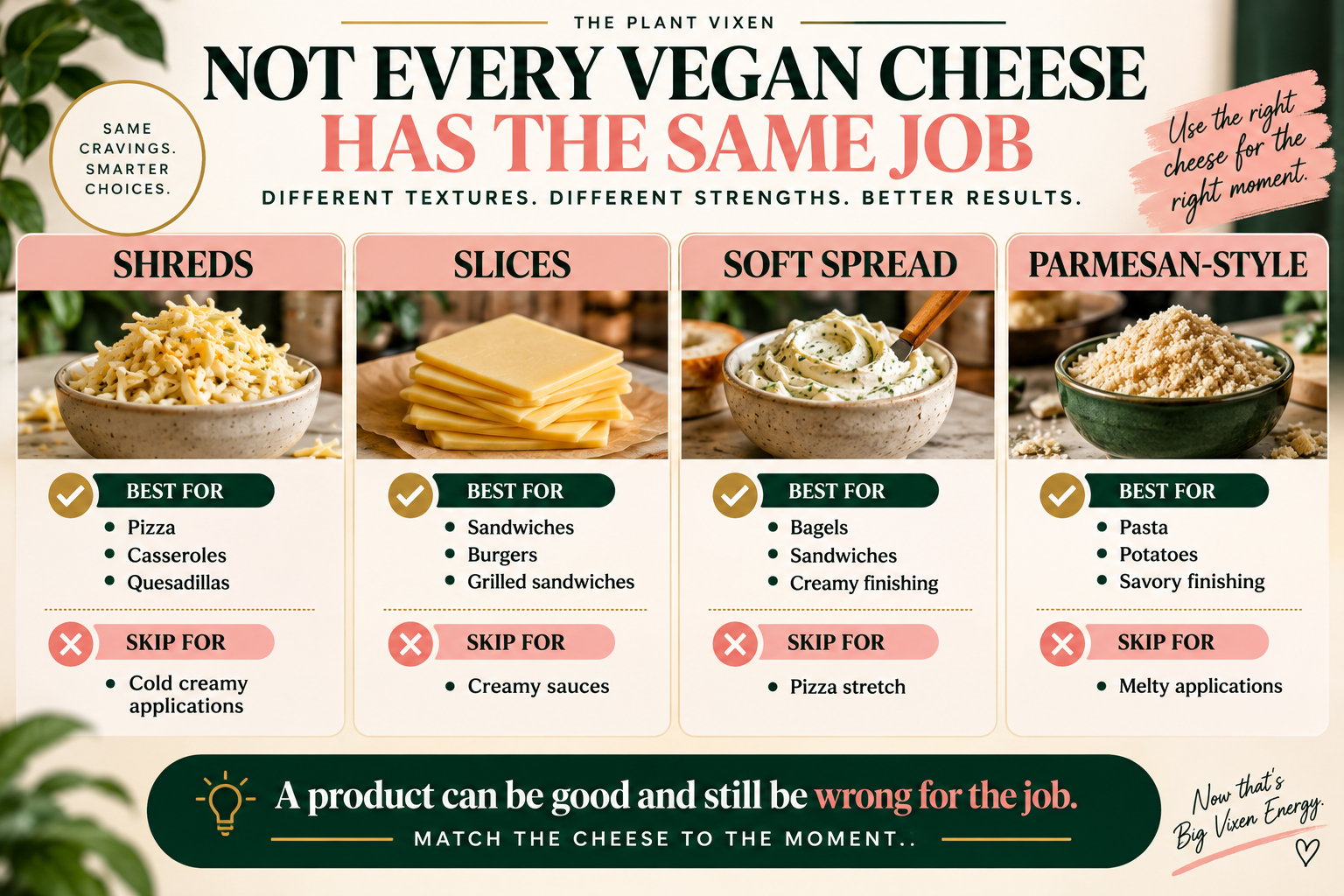
You’ve probably tried at least one plant-based option that made you side eye the package like it left out a few important details.
That doesn’t mean every option is bad. It may mean the product was used for the wrong job.
Some varieties are good cold but don’t melt well. Some melt but have a mild flavor. A firm block may grate beautifully over pasta but disappoint inside a gooey sandwich. A soft spread may be perfect on a bagel and completely wrong for pizza.
Expectations matter too.
If you compare a new product with something you’ve eaten since childhood, it has a very specific memory to compete with. Give the alternative a fair chance.
Test it in the food it’s designed for, prepare it correctly, and judge the full meal rather than nibbling one cold shred over the sink.
You can also build the experience instead of making one product carry the entire plate.
On pizza, the crust, sauce, herbs, toppings, browning, and melty layer work together. For nachos, queso needs help from seasoned beans, salsa, jalapeños, and crunchy chips.
The goal isn’t simply to prove a substitute exists. It’s to make the food worth eating.
How to Stop Eating Cheese Without Losing the Experience
If your goal is to stop eating cheese, you don’t have to erase every meal and memory connected to it.
Find one meltable option for pizza, one creamy sauce for pasta, and one easy snack. A few dependable answers can protect the experience while helping you learn what works.
Build Your Dairy-Free Craving Backup Plan
Cravings are much easier to handle when you already know what you’re eating before you get hungry.
Use this five-step check:
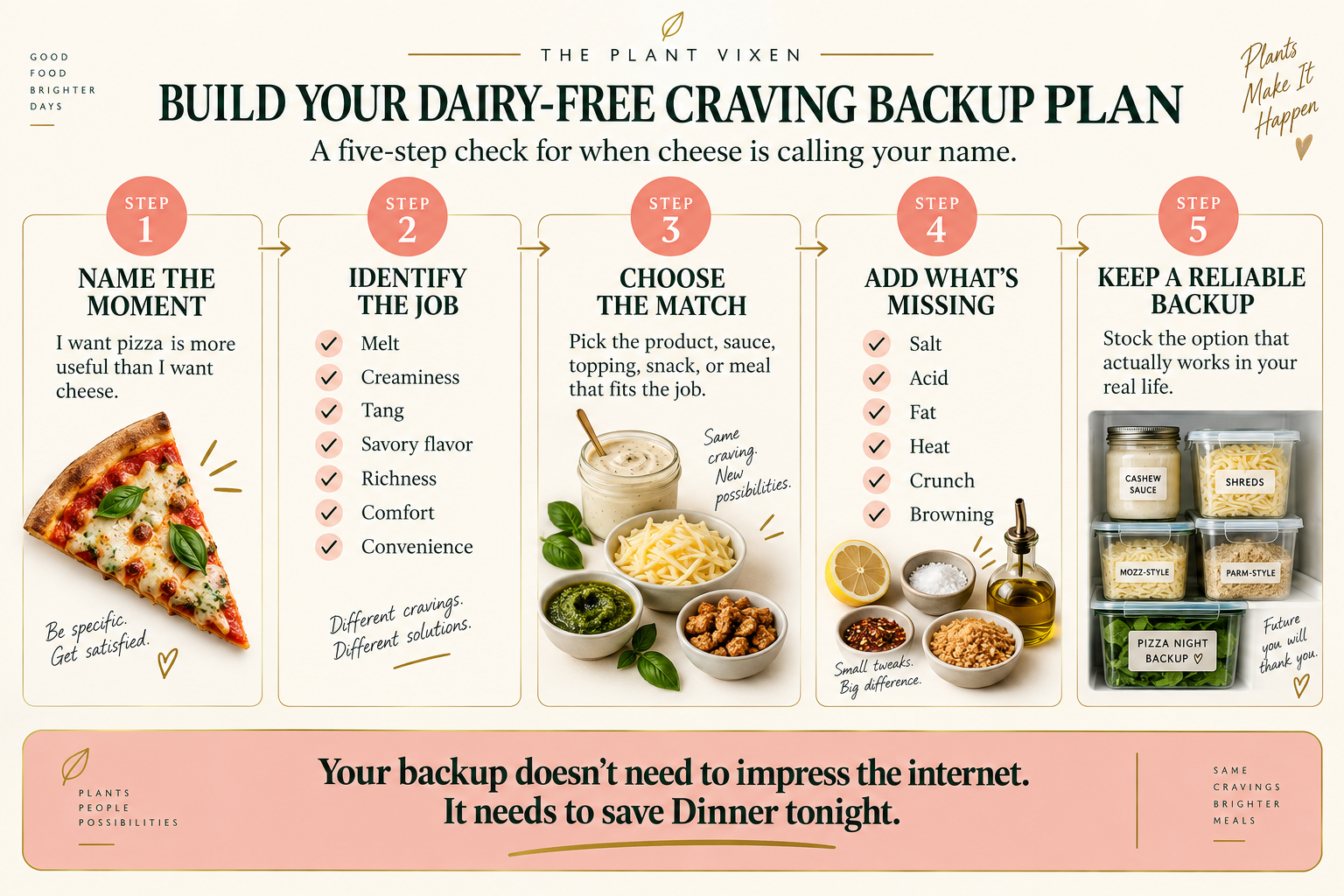
- Name the exact food or moment. “I want pizza” is more useful than “I want cheese.”
- Identify the job. Are you after melt, creaminess, salt, tang, richness, convenience, or comfort?
- Choose a matching answer. Pick a meltable product, creamy sauce, sharp finish, quick snack, or full comfort meal.
- Add what’s still missing. A little salt, acid, fat, heat, crunch, or browning may complete the experience.
- Keep one reliable backup available. Stock the option you know works for your real life.
Your backup doesn’t need to impress the internet. It needs to save Tuesday night when everybody is hungry.
Start with one craving you have often. Find one answer that satisfies it, then build from there. You don’t need a refrigerator full of expensive experiments.
When a Craving Deserves More Attention
Most food cravings can be approached with curiosity instead of panic. Still, an article can’t tell you what is happening in your body or what your body needs.
Talk with a qualified healthcare professional or registered dietitian if cravings feel persistent or extreme, if your appetite changes sharply, if you’re heavily restricting food, or if the cravings come with other symptoms that concern you.
They can look at your overall eating pattern, health history, medications, and symptoms instead of guessing from one food.
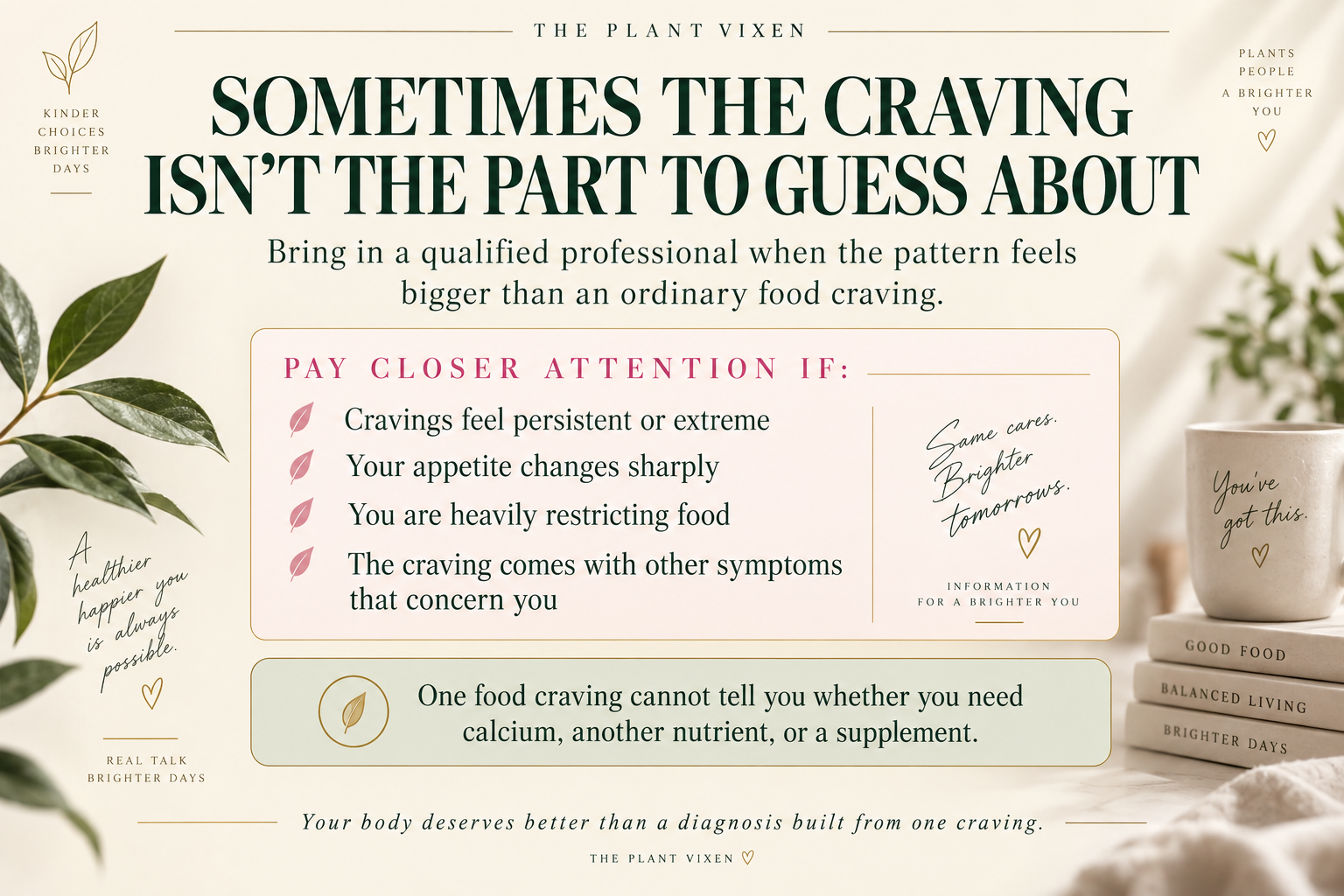
Some foods contain nutrients associated with functions such as maintaining strong bones, but wanting one food doesn’t prove your body is asking for calcium or any other single nutrient.
Please don’t start supplements because the internet diagnosed you based on one craving. A search can give you possibilities, but it can’t tell you what’s actually going on with your body.
You Don’t Have to Give Up the Cheesy Experience
When you crave cheese, it doesn’t mean you’re bad at eating plant-based. It may be useful information.
Maybe you miss the stretch on pizza. Maybe your pasta needs a richer sauce. Maybe you need a salty snack in the refrigerator that doesn’t require a recipe.
Or maybe a grilled sandwich with tomato soup has always felt like comfort, and you want that whole moment back.
Once you identify the job it was doing, you can stop throwing random substitutes at the craving. You can choose something made for the experience you actually want.
That’s what I mean when I say we’re not just replacing an ingredient. We’re recreating the whole experience,
So you can enjoy the whole cheesy experience without feeling like something’s missing.

You deserve the whole experience, sis.
With love and Big Vixen Energy,
The Plant Vixen 💕🌿