Plant-Based Food Swaps for Kids: Easy Swaps for Picky Eaters and Busy Families
Plant-based food swaps for kids are simple food changes that help children try more meatless, dairy-free, and veggie-forward meals without flipping the whole family menu upside down overnight.
These swaps can include plant milk, dairy-free yogurt, meatless nuggets, veggie burgers, pasta nights, snack plates, and familiar meals made with kid-friendly ingredients.
Trying to get kids to eat more meatless meals sounds cute until your child side-eyes the new nuggets like you just betrayed the whole household.
And let’s be real… when kids already have favorite snacks, favorite sauces, favorite cups, and a personal relationship with one very specific brand of nugget, introducing something new can feel like a full negotiation.
The smoother move is this: start with foods your kids already know, then make one small switch at a time.
This post will walk you through easy plant-based food swaps for breakfast, snacks, dairy, dinner, and picky eater moments without making the whole thing feel like a struggle plate.
And if you want a simple starting point while you read, grab the free Plant-Based With Kids Starter Checklist so you’re not trying to freestyle the whole kitchen.
Why Plant-Based Food Swaps for Kids Can Feel So Hard
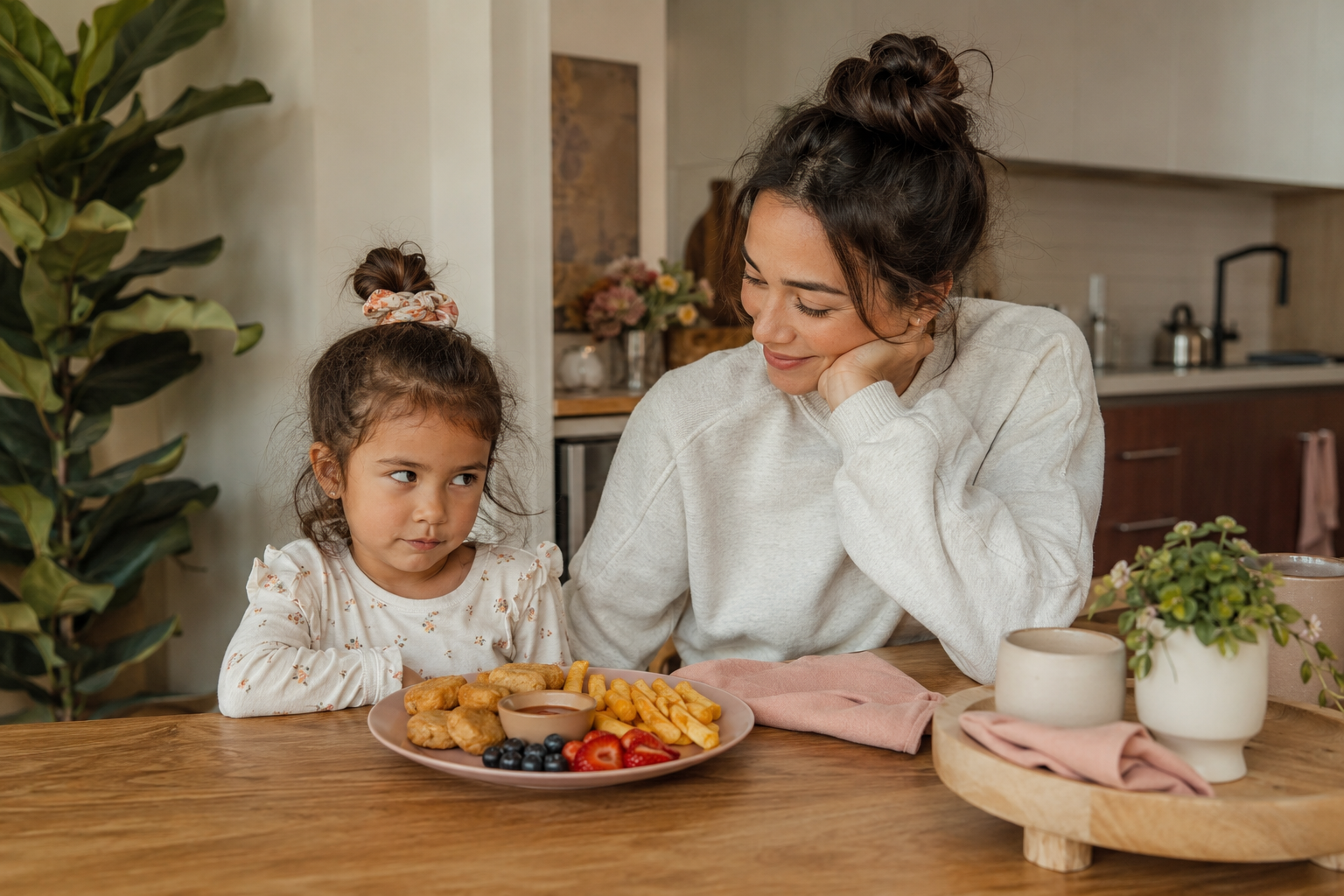
Kids don’t just eat based on nutrition facts.
They eat based on routine, texture, smell, color, shape, comfort, and whether something looks “wrong” before they even taste it. That means a healthier option can still get rejected if it feels too unfamiliar.
This is where parents get frustrated. You buy the new plant-based milk, the dairy-free yogurt, the meatless nuggets, the cute snack, and then your child looks at it like, “What’s really going on?”
It doesn’t always mean your child hates the food. Sometimes the change just moved too fast.
A child’s diet is built around trust. If they’re used to a certain nugget, sauce, and side, changing all three at once can feel like too much, especially for picky eaters.
So instead of changing the whole plate, start smaller.
Try the new item with the same dip. Keep the familiar side. Use the same bowl, the same lunchbox, the same shape, or the same meal routine.
The swap may not be the problem. The rollout may not have understood the assignment.
One rejected bite is not the end of the glow-up, bae. It’s just feedback.
Start With Plant-Based Meals Your Kids Already Like
The easiest way to get kids curious is to begin with meals they already recognize from real life.
Not the most Pinterest-perfect dinner. Not the “look how advanced we are” plate. Start with the foods already showing up in your weekly rotation.
Think pizza night, nuggets and fries, burgers, pasta, tacos, snack plates, and messy little comfort meals that already feel normal at home.
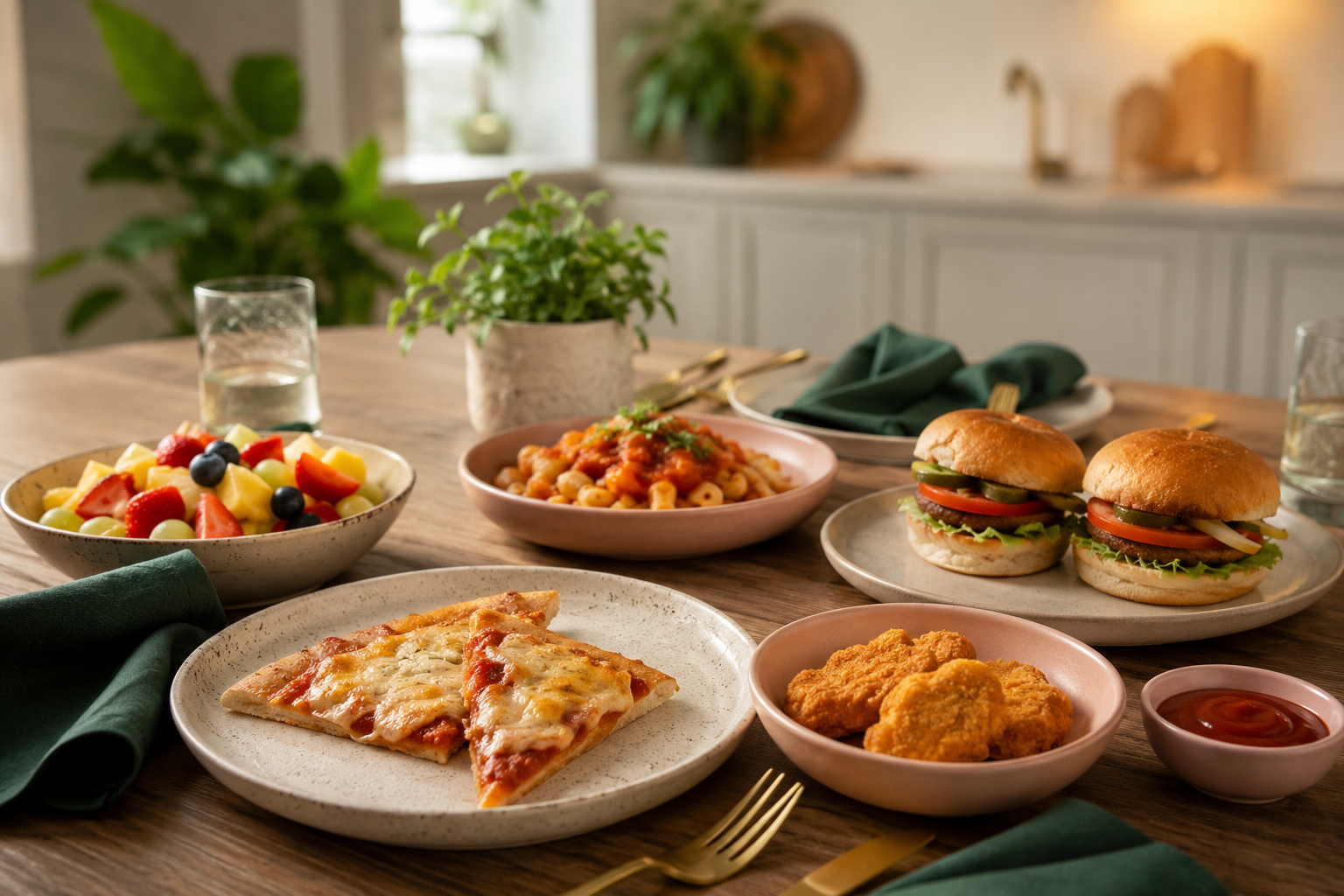
These meals already feel familiar, which makes the transition to plant-based eating less dramatic.
The goal is to change one part of the meal, not the whole plate.
Try:
- Regular pizza → pizza with dairy-free cheese or extra veggie toppings
- Chicken nuggets → meatless nuggets with the same favorite dip
- Beef tacos → bean tacos or plant-based crumble tacos
- Spaghetti with meat sauce → spaghetti with marinara and meatless meatballs
- Cheeseburger → veggie burger with familiar toppings
You’re not asking your child to embrace a whole new lifestyle on a random Tuesday night. You’re giving them something they already recognize with one gentle upgrade.
Because honestly? Most kids don’t need a brand-new plate with a whole personality change. They need familiar food with one quiet switch that doesn’t make dinner feel suspicious.
Want a simple place to start? Grab the free Plant-Based With Kids Starter Checklist so you can choose your first few swaps without guessing.
Easy Kid-Favorite Plant-Based Swaps to Try First
The best first swaps are usually the ones that feel close to what your child already eats.
That’s why plant-based alternatives can help early on. They give you a bridge before you introduce bigger changes.
Instead of starting with a plate that looks completely new, try one familiar upgrade.
Maybe that’s meatless nuggets with fries. Maybe it’s a veggie burger with the same bun and toppings. Maybe it’s plant-based crumble in taco night. Maybe it’s dairy-free cheese on a mini pizza.
The point is not to trick your child.
The point is to make the new food feel less random.
Here are a few simple places to start:
Chicken nuggets → meatless nuggets with the same dipping sauce
Cheeseburger → veggie burger with familiar toppings
Beef tacos → bean, lentil, or crumble tacos
Regular mac and cheese → vegan mac or dairy-free mac
Meatball sub → plant-based meatball sub
Loaded baked potato → potato with beans, broccoli, salsa, or dairy-free cheese
Need help choosing beginner-friendly meat swaps? Read What to Eat Instead of Meat: Best Plant-Based Meat Alternatives for Beginners next so you know which plant-based meat alternatives make sense for burgers, tacos, pasta, and nuggets.
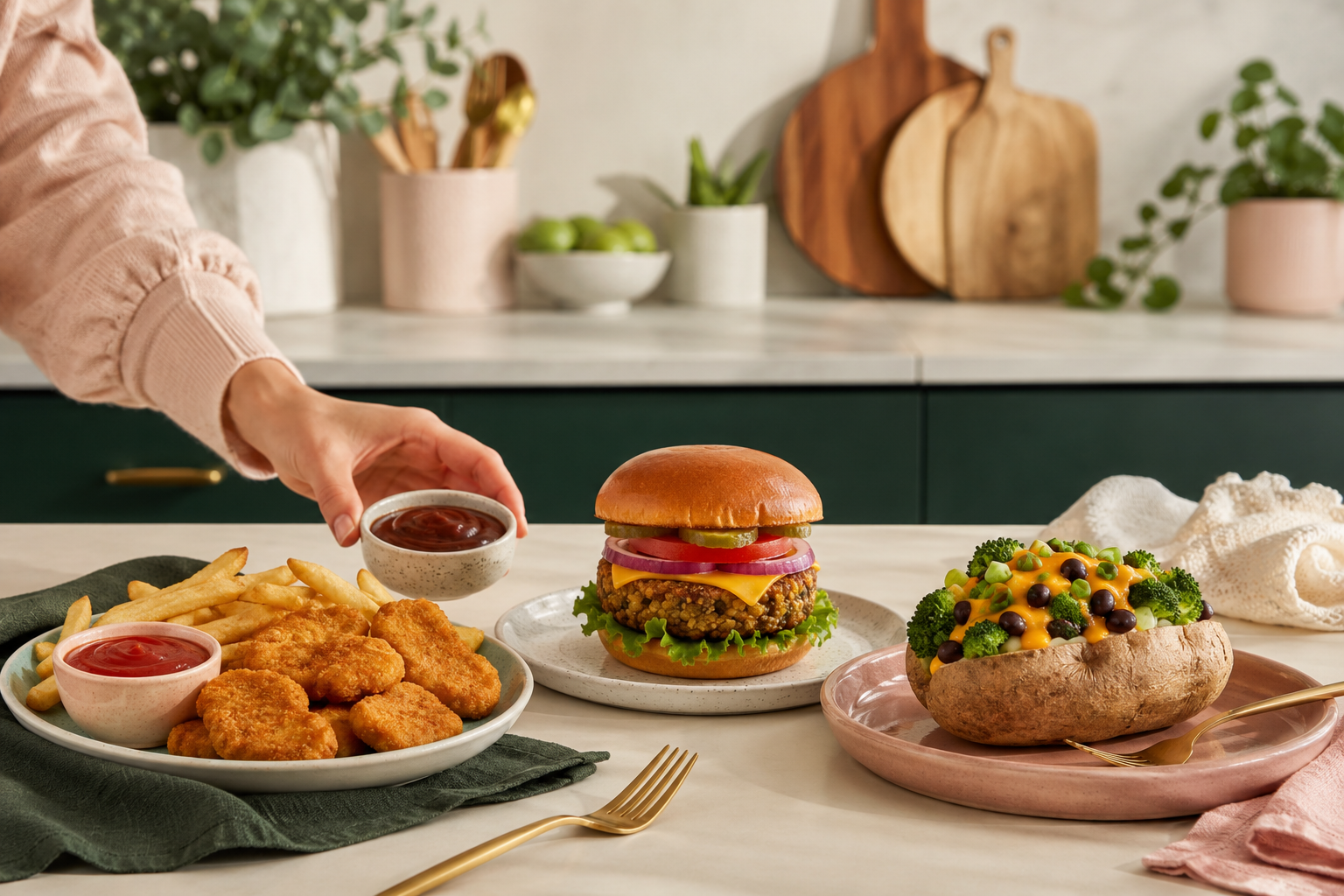
And no, tofu doesn’t have to be the star of every plate.
Tofu can be useful, but it doesn’t need to be the default answer every time. Sometimes the better beginner move is something your child already understands: a pasta bowl, a taco plate, a crispy sandwich, a loaded potato, or a snacky lunchbox situation.
Here’s the sneaky little truth: sometimes the sauce does half the work.
If your child already likes ketchup, barbecue sauce, salsa, guacamole, vegan ranch, or a favorite dip, keep that part familiar.
That’s not trickery.
That’s strategy.
Breakfast, Dairy, and Plant Milk Swaps Without Doing Too Much
Breakfast is a good place to start because the changes can be small.
But dairy swaps? Those need a gentle entrance.
A lot of kids notice milk changes quickly. The flavor, thickness, color, and smell can all feel different. So if your child is picky, don’t start by pouring a full glass of plant milk and expecting love at first sip.
Let it soft-launch first.
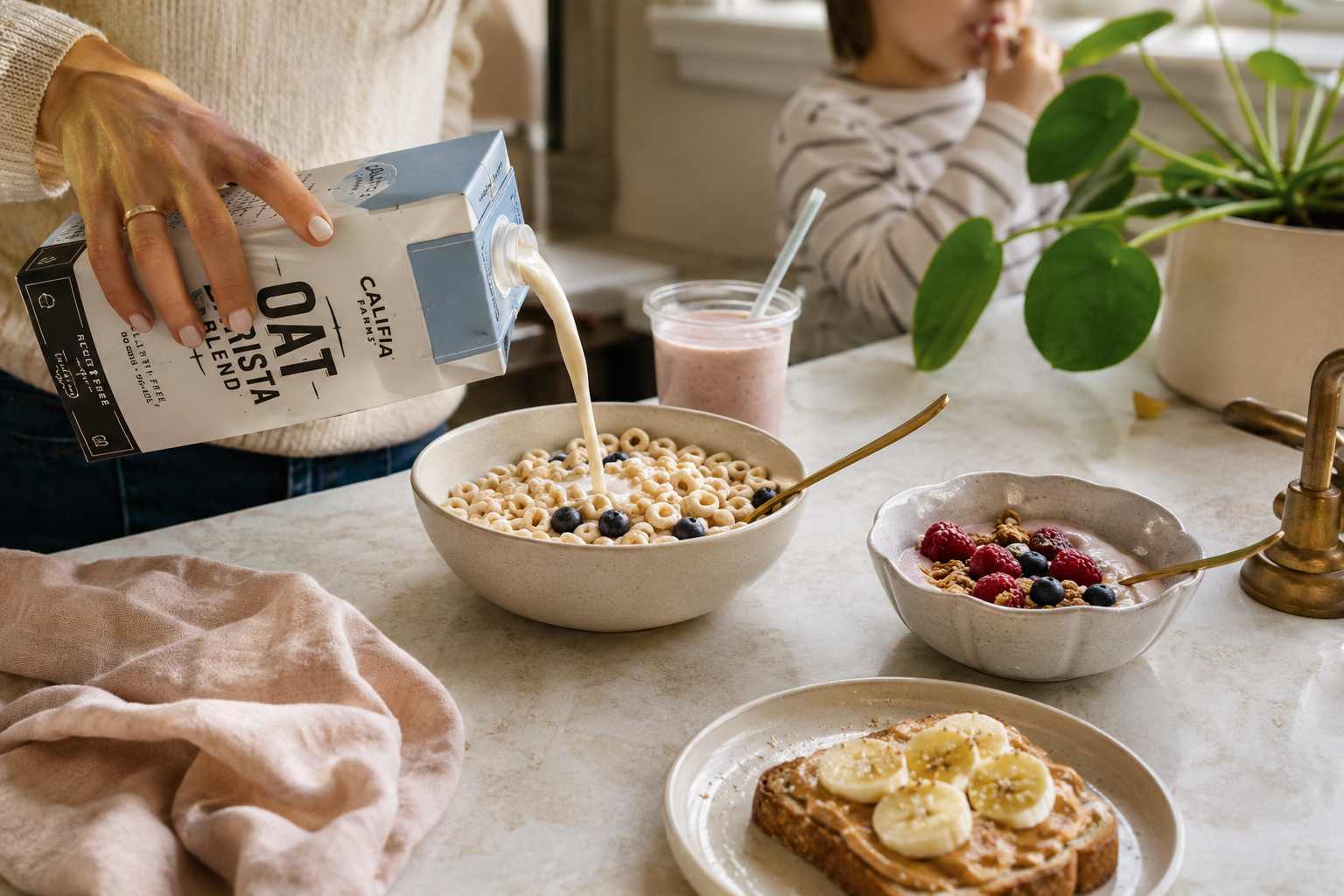
Try plant milk in cereal, oatmeal, pancakes, smoothies, or simple breakfast bakes before serving it plain.
Some families try oat, soy, almond, or pea protein options. Fortified plant milks can also help provide nutrients like calcium and vitamin B12. Check labels because not all plant milks are fortified the same way, and young children may have different nutrition needs.
Vitamin B12 needs special attention in vegan diets because reliable sources usually come from fortified foods or supplements.
Simple breakfast swaps:
Dairy milk in cereal → oat, soy, almond, or pea protein milk
Dairy yogurt → dairy-free yogurt with berries or granola
Scrambled eggs → tofu scramble, chickpea scramble, or egg-style plant-based alternatives
Buttered toast → toast with vegan butter, avocado, peanut butter, or sunflower butter
Regular pancakes → pancakes made with plant milk
Sweet breakfast plate → fruit, toast, and nut or seed butter
Not every morning has to become a full production.
A smoothie, cereal bowl, fruit cup, toast, or yogurt-style breakfast can be enough when life be life-ing.
The goal is not to create a perfect breakfast board.
The goal is to make plant-based eating feel normal enough to repeat.
Snack Swaps That Still Feel Fun for Kids
This is where healthier eating can start giving struggle plate if the snacks get too boring.
Kids still want snacks that feel fun. Crunchy, sweet, salty, creamy, colorful, and easy to grab still matter.
The goal is not to make snacks perfect. The goal is to make plant-based options feel normal.
Start by changing one snack category at a time.
Maybe that’s after-school snacks. Maybe that’s lunchbox snacks. Maybe that’s the snack drawer that currently has everybody in a chokehold.
Try simple options like:
Popcorn
Fruit with peanut butter or sunflower butter
Dairy-free yogurt cups
Pretzels with a favorite dip
Smoothies
Applesauce pouches
Vegan cheese crackers
Granola bars without dairy
Trail mix-style snack bags
Crackers with fruit and a sweet bite
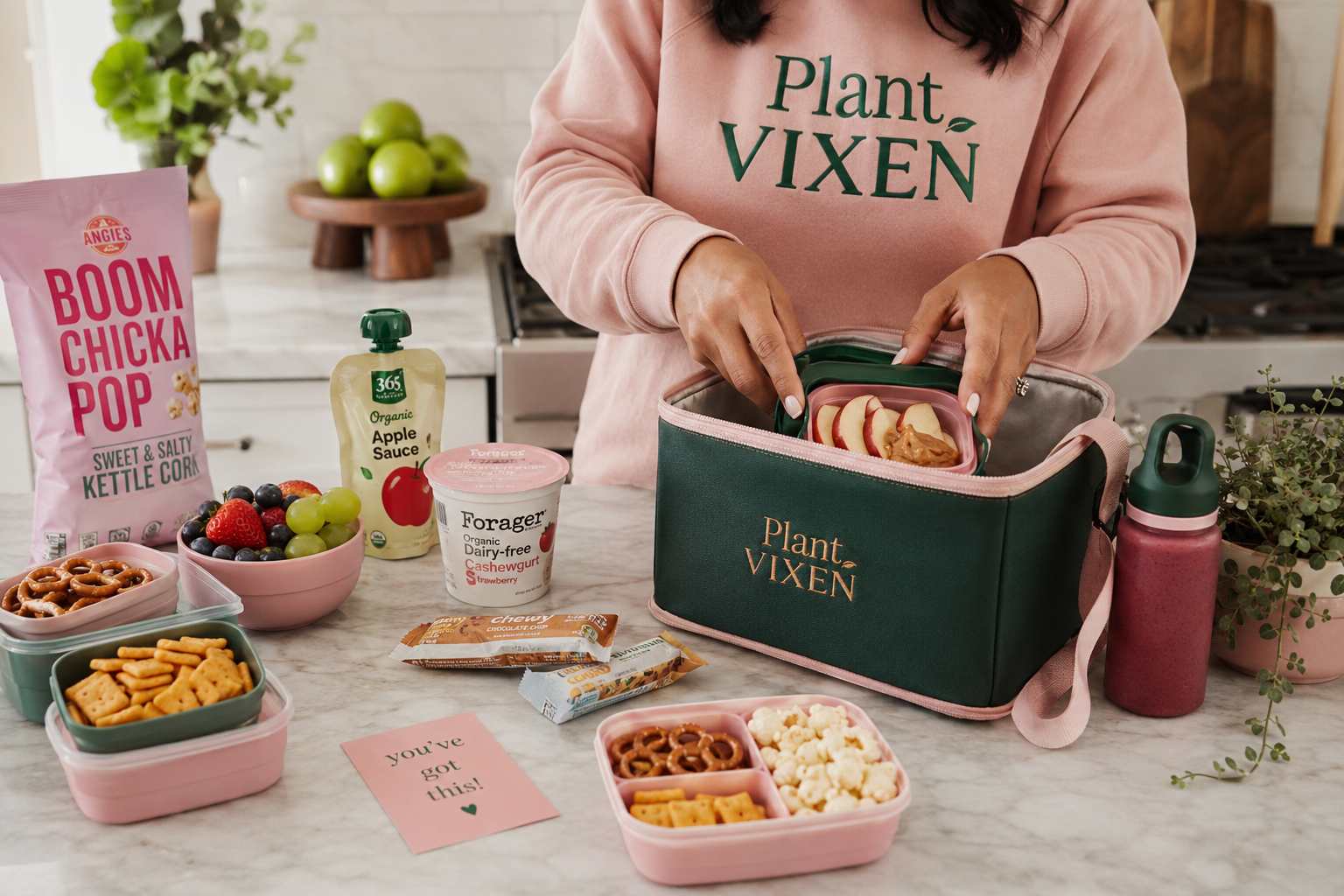
You can also make fruits and vegetables feel less boring by pairing them with familiar textures.
Add berries to yogurt. Put apple slices beside peanut butter. Serve baby carrots with a dip your child already likes. Keep grapes washed and ready. Add fruit to the lunchbox without making it a big announcement.
And for busy parents, grocery-store shortcuts are not a red flag.
Pre-cut fruit, snack packs, frozen fries, frozen veggies, plant-based nuggets, dairy-free yogurt cups, and easy lunchbox items can help when your schedule is already doing the most.
This is not about becoming the perfect Pinterest parent.
This is about having options ready before everybody gets hungry and starts acting brand new.
Family Plant-Based Meals That Don’t Make You Cook Twice
Now this is the part parents really need: family meals that don’t require two separate dinners.
Choosing a plant-based diet does not mean you need to become a short-order cook.
The easier approach is to build meals everyone can customize. This works especially well in mixed-food households where not everyone is ready to give up meat and dairy at the same pace.
Think “same meal, different options.”
Try:
Taco night with beans, rice, salsa, avocado, and crumbles
Pasta night with marinara, dairy-free cheese, or plant-based meatballs
Burger night with veggie burgers and regular toppings
Baked potato night with different toppings
Soup and grilled cheese night with vegan grilled cheese
Nacho night with beans, salsa, and dairy-free queso
This keeps dinner familiar and gives kids some choice, which can lower the pressure.
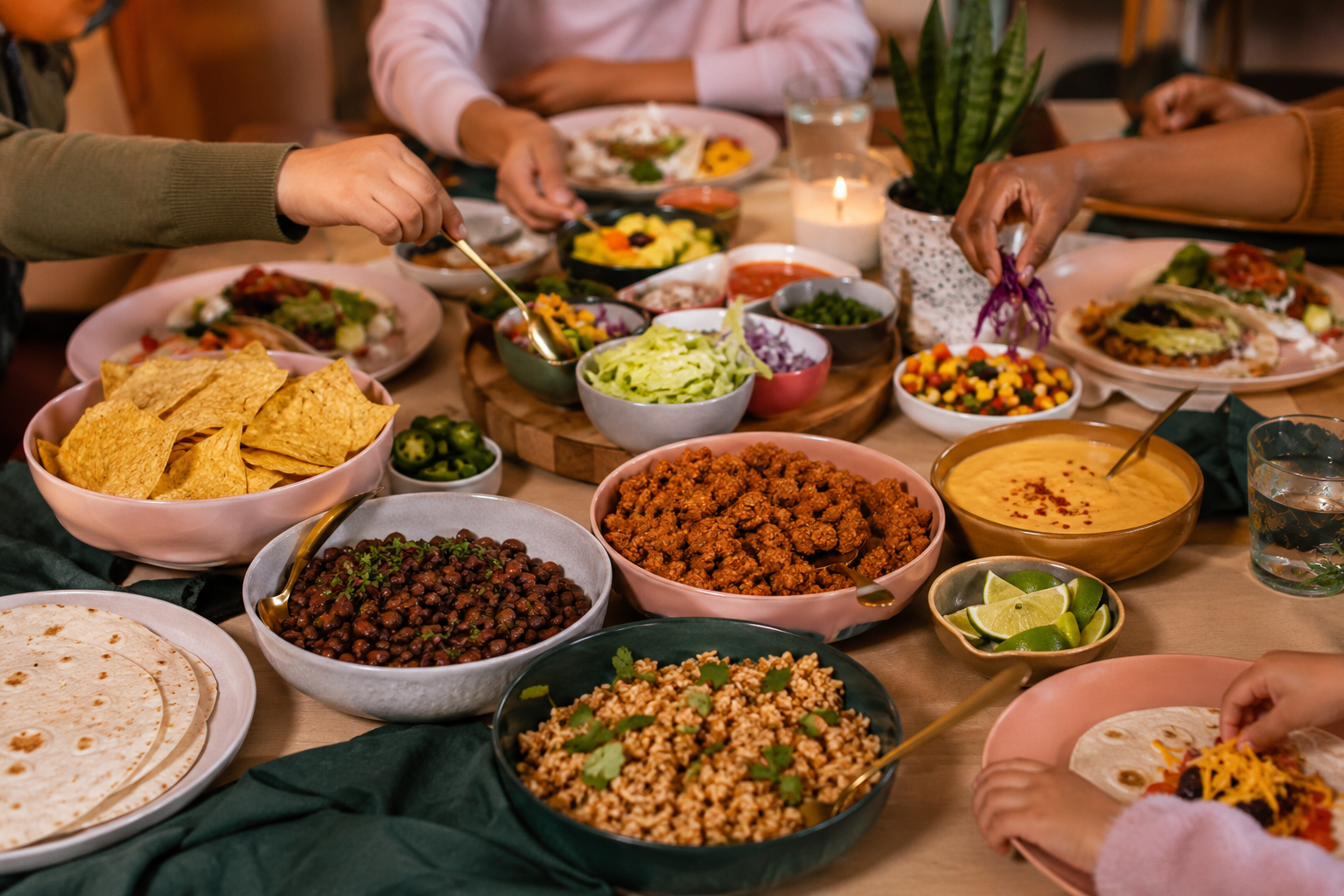
A taco plate can be meatless without feeling strange. A pasta bowl can still be comfort food. A loaded potato can be filling. A veggie burger can still feel like burger night.
Plant-based meals do not have to be bland little side quests.
Kids can get enough protein from plant-based sources when meals are planned well. Beans, lentils, chickpeas, soy foods, nut and seed butters, whole grains, and other plant foods can all play a role.
The real win is when dinner still feels like dinner… just with a smoother option.
You don’t need a perfect vegan household to start. You need one meal that feels doable enough to repeat.
Nutrition Notes Parents Should Keep in Mind With Vegan and Vegetarian Diets
We’re keeping this simple because this is not a nutrition lecture in a lab coat.
A well-planned vegan diet or vegetarian diet can support healthy growth and development. The key phrase is well-planned.
Children need enough calories, enough protein, healthy fats, calcium, vitamin B12, iron-rich foods, and a variety of fruits and vegetables.
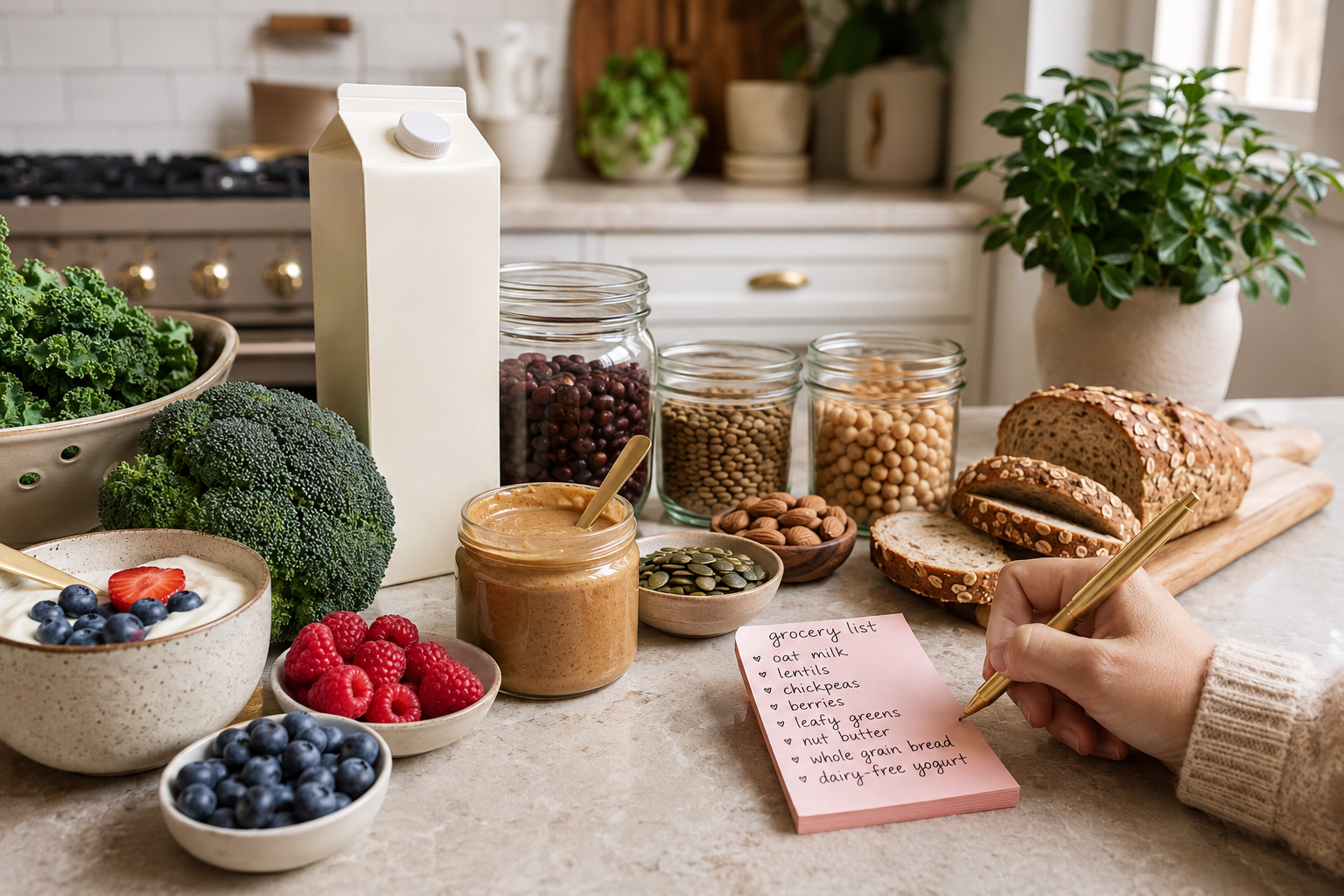
Helpful plant-based foods can include beans, lentils, chickpeas, whole grain foods, fortified plant milks, tofu, nut and seed butters, broccoli, leafy greens, and other nutrient-rich plant foods.
But this is where parents need to stand on business.
If you’re making a major shift for infants and children, or if your child has allergies, medical needs, selective eating, sensory concerns, or growth concerns, talk with a pediatrician or registered dietitian.
That’s not fear.
That’s smart support.
The goal is not to scare you away from plant-based eating. The goal is to help you build it in a way that actually supports your child’s body, appetite, and real-life routine.
Because a plant-based lifestyle should feel doable, not like you’re guessing your way through every grocery trip.
What Not to Do When Introducing New Plant-Based Foods to Kids
Here’s where most people mess up: they switch too fast.
Once you’re excited about going plant-based, it’s tempting to clean out the whole kitchen, buy every new product, and announce that the family is entering a new era.
But for kids, that can feel like too much.
Try not to:
Replace every snack overnight
Remove every familiar food from the plate
Make every meal a health lecture
Buy random products without a plan
Expect every first try to be a yes
Compare your child to social media families eating perfect vegan meals
Make plant-based eating feel like punishment

I’m going to hold your hand when I say this… sometimes the swap didn’t fail. The rollout did.
If your child says no once, don’t turn it into a whole identity crisis.
They may need to see it again. They may need it served differently. They may need their regular dip beside it. They may need it in a smaller portion. They may need to watch you eat it first without feeling pressured.
New plant-based foods can take a minute.
Don’t make the first “no” the final answer.
The Simple Way to Start Plant-Based Food Swaps This Week
You don’t need a full family menu makeover to begin.
Start with one meal. One snack. One drink. One small change that doesn’t make the whole house tense.
Here’s a simple starter plan:
Choose one meal your child already eats.
Swap one part of that meal.
Keep the sauce, side, or topping familiar.
Add fruit or veggies where they naturally fit.
Try it again another day.
Notice what worked.
If your child likes pizza, start there.
If they like pasta, start there.
If they like crunchy snacks, start there.
If they like smoothies, breakfast foods, burgers, or snack plates, start there.
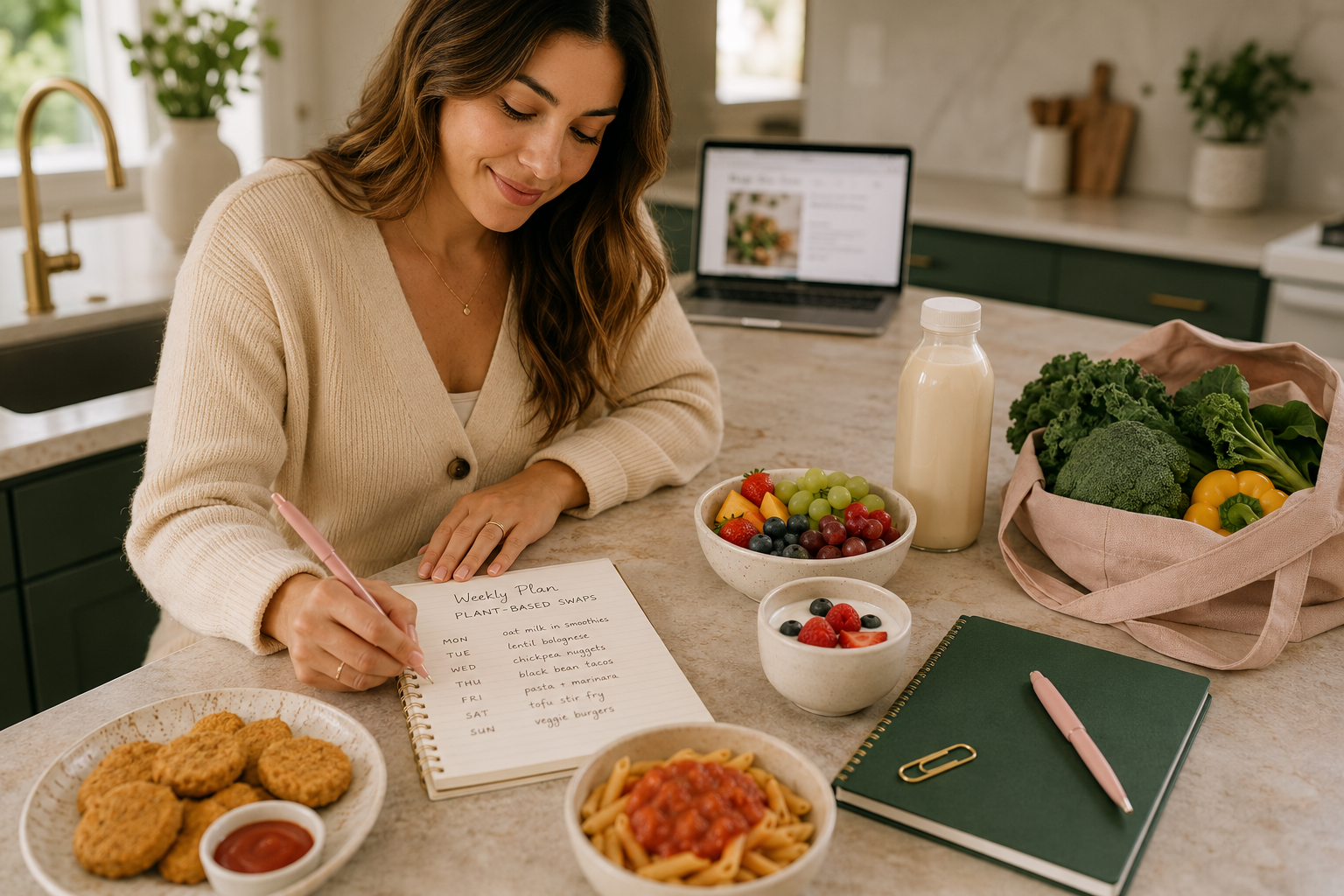
You can use the “at least half your plate” idea as a loose guide too. Just add more fruits or veggies where they make sense instead of turning every meal into a whole nutrition meeting.
The goal is to help your kids eat more plant-based without making food stressful.
One rejected swap doesn’t mean this lifestyle is off the table. It just means you need a better next move.
Plant-Based Food Swaps for Kids FAQ
What are the easiest plant-based food swaps for kids?
The easiest swaps usually start with foods kids already recognize. Try meatless nuggets, veggie burgers, pasta with marinara, dairy-free yogurt, smoothies with plant-based milk, mini pizzas with dairy-free cheese, or loaded potatoes with simple toppings.
Can children follow a plant-based diet?
Children can follow a plant-based diet, but it needs to be planned well. Parents should make sure children get the nutrients they need for healthy growth, including enough calories, protein, healthy fats, calcium, vitamin B12, and iron-rich foods.
For major diet changes, speak with a pediatrician or registered dietitian.
What plant-based milk should I try first for kids?
Many families start with oat, soy, almond, or pea protein milk. If your child is picky, try it in cereal, smoothies, oatmeal, pancakes, or baking before serving it plain.
How do I help picky eaters try plant-based foods?
Start with familiar meals, keep favorite dips or toppings, change one thing at a time, and keep the pressure low. Picky eaters may need repeated exposure before accepting a new food.
Should I switch all my child’s food at once?
For most families, no. Start with one meal, snack, drink, or swap at a time. Smaller changes are easier to repeat and less stressful for kids.
Conclusion… Keep the Swap Simple and Let It Build
You don’t have to flip the whole family menu overnight.
Start small. Keep meals familiar. Don’t pressure yourself or your kids to get everything right immediately. Let plant-based eating become normal over time.
The goal is to make this feel doable in your real home, with your real schedule, your real kids, and your real grocery budget.
Start with one familiar favorite. Make one smoother switch. Let the kids warm up without all the pressure.
That’s how you make the transition feel less like a fight and more like a soft little comeback. 🌱✨
Download the free Plant-Based With Kids Starter Checklist and make your first kid-friendly swaps feel easier this week.