What to Eat Instead of Meat (Without Feeling Unsatisfied)
If you’re wondering what to eat instead of meat, start by thinking about the meal… not just the ingredient you’re replacing. The best alternatives to meat include beans, lentils, mushrooms, tofu, jackfruit, plant-based burgers, meatless crumbles, veggie burgers, and other meatless meat options that match the flavor, texture, and purpose of the original dish.
Whether you’re looking for plant based alternatives to meat for tacos, burgers, spaghetti, chili, BBQ, or quick weeknight dinners, you don’t need to reinvent your entire menu. Most beginners have the easiest time keeping the meals they already love and simply swapping the protein.
That’s where many people get stuck… they think there’s one perfect meat substitute for everything. There isn’t. The real secret is choosing the right replacement for the right meal. That’s exactly what this guide will help you do.
If the whole “what do I eat now?” question keeps making plant-based feel harder than it should, read why starting plant-based feels hard next. It breaks down the beginner confusion without making you feel like you need a nutrition degree just to fix dinner.
What Are Plant-Based Meat Alternatives?
Plant-based meat alternatives are foods made to replace animal meat in meals. Some are designed to taste or cook like real meat, while others simply replace the texture, protein, or comfort that meat usually adds.
You may see them called:
- plant-based meat
- vegan meat
- meat alternative
- meat substitute
- vegetarian meat alternatives
- mock meat
- plant-based meat substitutes
- fake meat
- alternative meat
Some store-bought plant-based meat products are made from soy protein, pea protein, vegetable protein, textured vegetable protein, texturized soy protein, soy protein isolate, or soy protein concentrate.
That might sound like a lot, but once you know what each option is actually for, the grocery aisle gets way less intimidating.
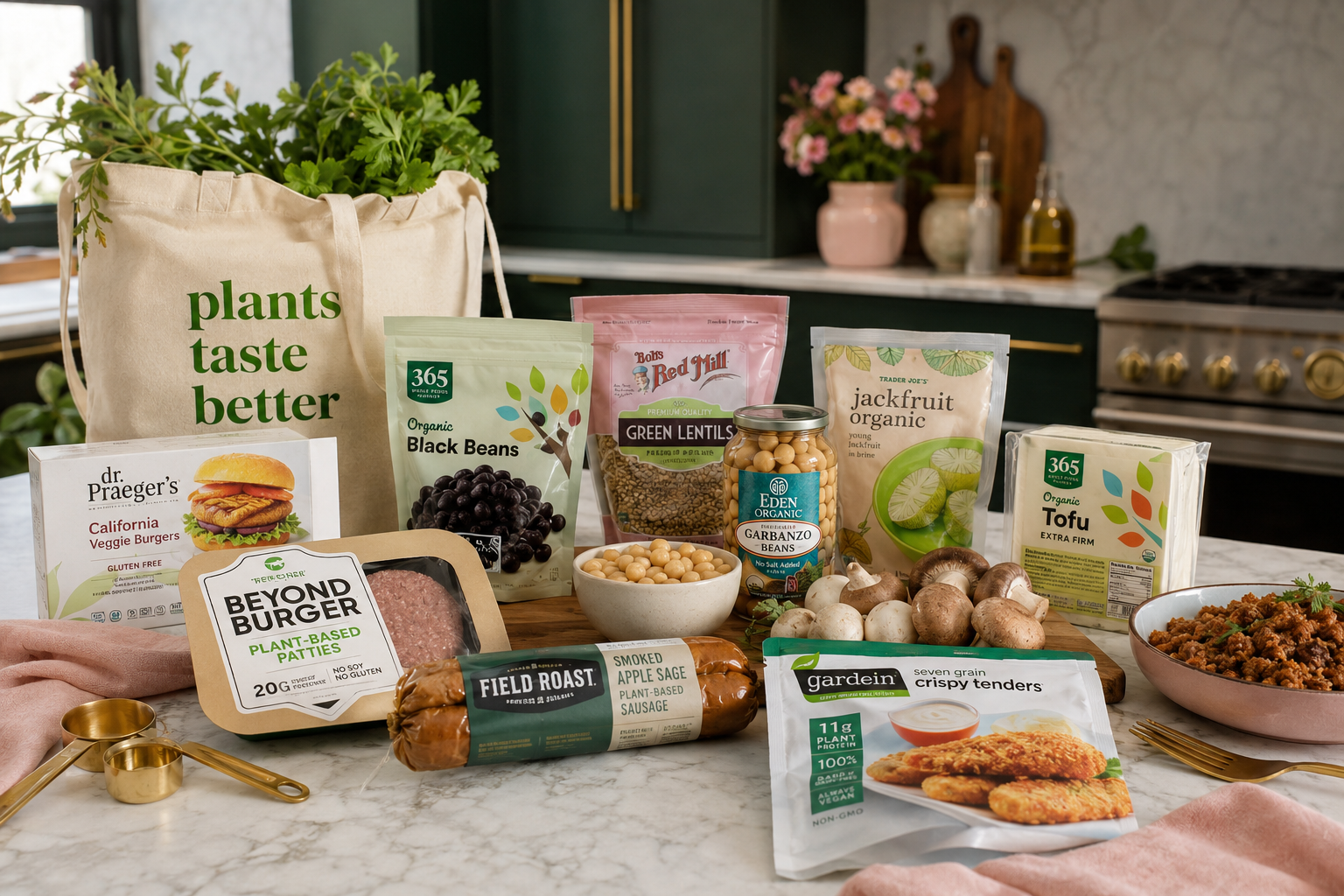
Popular options include Beyond Meat, Impossible Foods, Gardein, MorningStar Farms, Tofurky, Field Roast, and Quorn. Just to name a few.
You may see Beyond Burger patties, Impossible Burger, plant-based chicken nuggets, vegan chicken, plant-based meatballs, deli meat alternatives, veggie burgers, and plant-based sausage.
If you’re buying plant-based meat alternatives, read how to read nutrition labels next so you can spot which products are worth your cart…and which ones are just selling you a dream in the grocery store.
But here’s the quiet red flag: just because something says vegan, vegetarian, or plant based doesn’t mean it automatically belongs in every meal.
Some meat alternatives are better for burgers. Some are better for spaghetti. Some are better for BBQ. Some are best kept for busy nights when life be life-ing.
You don’t need every vegan meat on the shelf. You need the right swap for the meal you’re actually making.
Why Replacing Meat Feels Confusing at First
Here’s where most people mess up: they try one meat substitute, don’t like it, and decide the whole plant-based diet isn’t for them.
But Plant Bae, one bad tofu moment doesn’t get to ruin the whole glow-up.
Meat plays different roles in different meals. Ground beef in tacos isn’t doing the same job as fried chicken. Sausage in a breakfast wrap isn’t doing the same job as deli meat in a sandwich. A burger patty isn’t the same as shredded BBQ pork.
So before choosing a meat alternative, ask yourself:
- Do I need something crispy?
- Do I need something chewy?
- Do I need something smoky?
- Do I need something saucy?
- Do I need something fast?
- Do I need something filling?
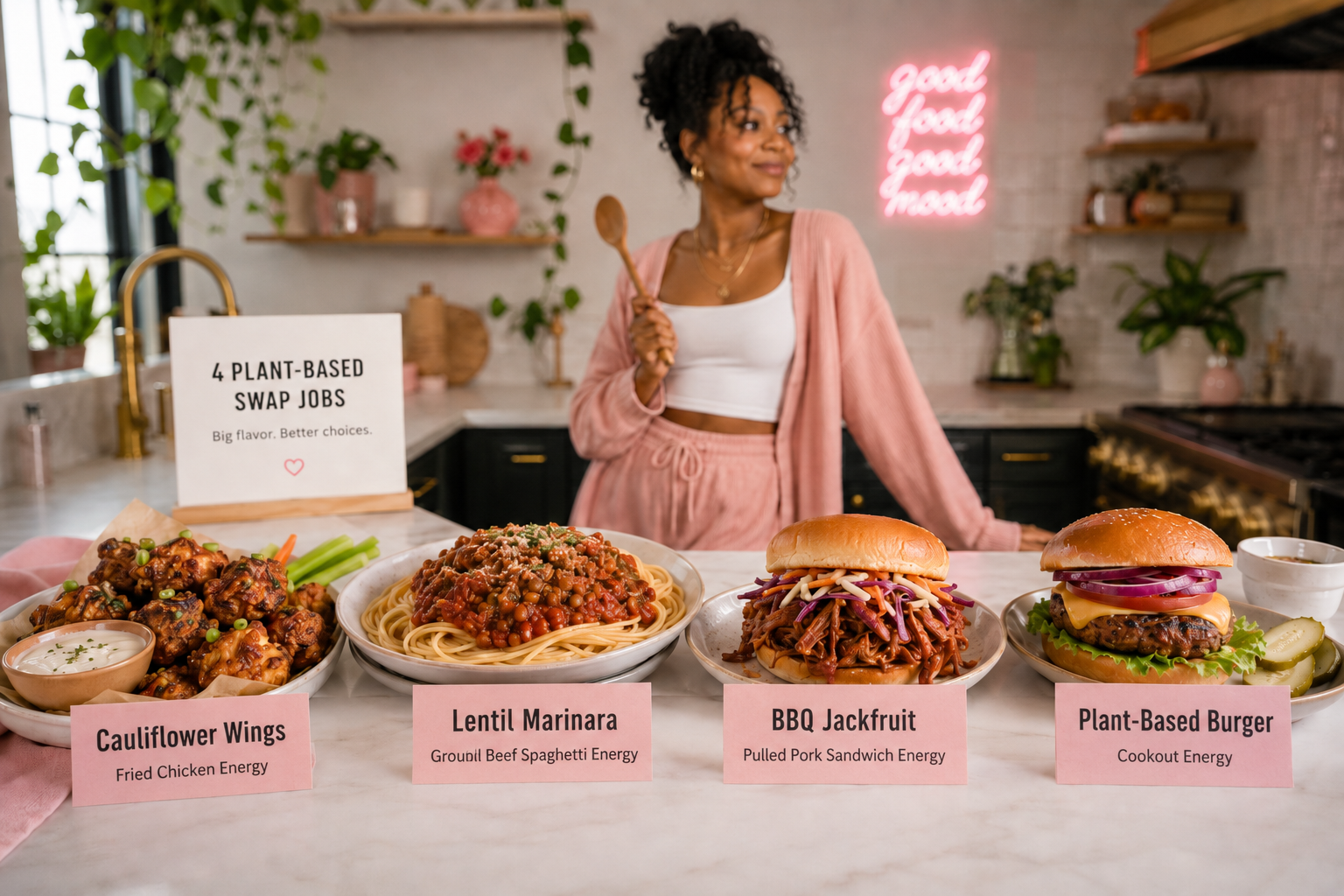
If you’re making spaghetti, lentils or plant-based meatballs may work beautifully. If you want something shredded and saucy, BBQ jackfruit might be the move. If it’s cookout night, plant-based burgers or veggie burgers make more sense than trying to force a salad into burger energy.
The real shift is this: don’t replace meat blindly. Replace the job meat was doing.
If one swap didn’t hit, that doesn’t mean you failed. It means that swap just wasn’t for you.
Best Plant-Based Meat Alternatives by Meal Type
Instead of memorizing every plant-based meat product in the store, think by meal type. This keeps things simple and helps you choose swaps that actually make sense.
Instead of Chicken
Chicken replacements depend on whether you want crispy, chewy, saucy, or quick.
Try:
- cauliflower wings
- plant-based chicken nuggets
- vegan chicken strips
- oyster mushrooms
- chickpea wraps
- crispy tofu
- hearty veggie bowls
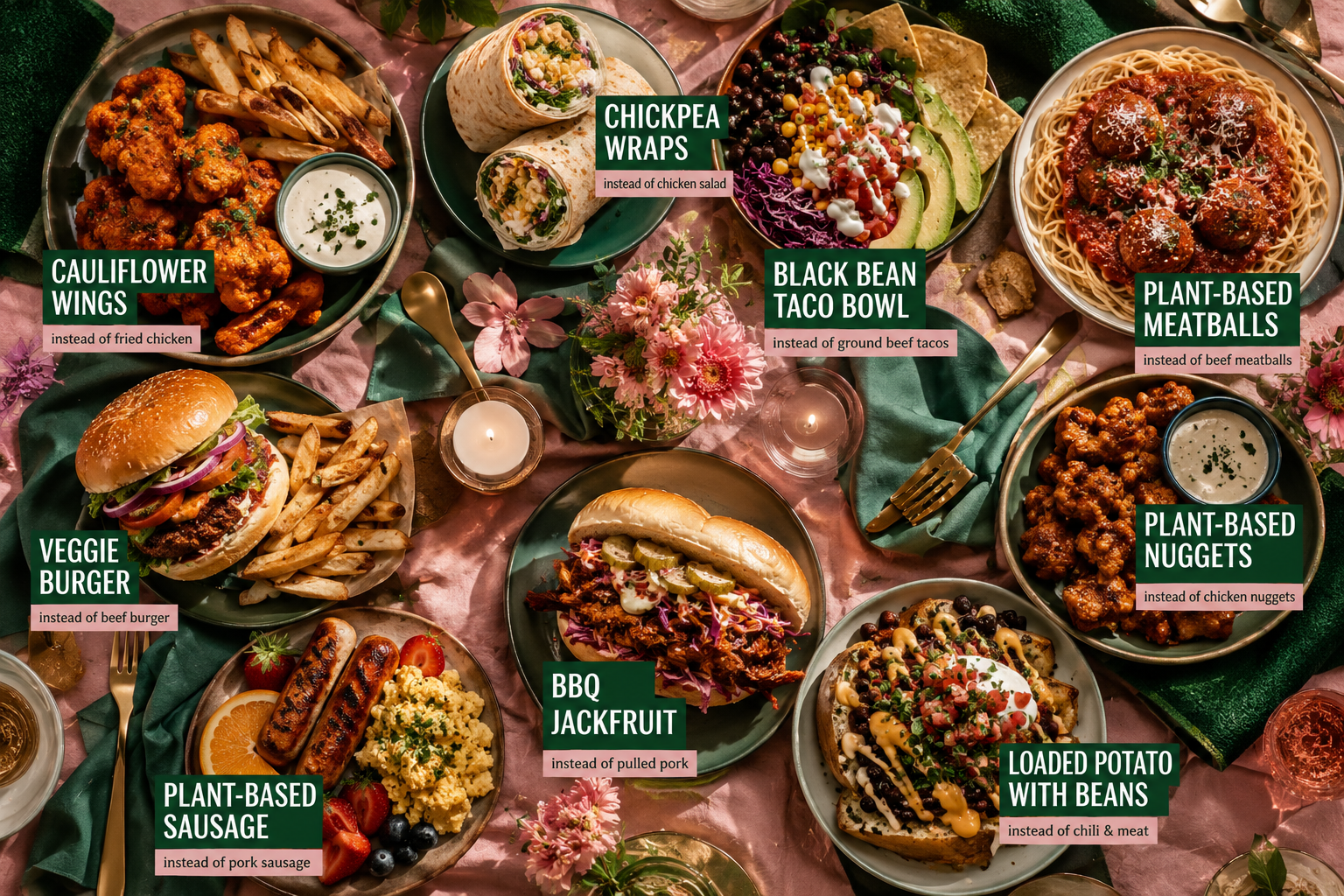
Cauliflower wings are great when you want that fried chicken-style comfort without making the meal feel heavy. Plant-based chicken nuggets, like Gardein-style nuggets, are helpful for quick dinners, wraps, or snacky plates.
Chickpea salad wraps can replace chicken salad when you want lunch to be simple but still filling. Oyster mushrooms can bring a chewy texture when seasoned and cooked well.
Instead of Ground Beef
Ground beef is one of the easiest meats to replace because most of the flavor comes from seasoning and sauce.
Try:
- lentils
- black beans
- mushrooms
- walnut-mushroom crumbles
- textured vegetable protein
- soy protein crumbles
- plant-based crumbles
- plant-based meatballs
Lentils are perfect for spaghetti, chili, taco bowls, and sloppy joe-style meals. Black beans work well in tacos, burritos, bowls, loaded potatoes, and veggie burgers.
If you want something closer to real meat, plant-based crumbles from brands like Beyond Meat or Impossible Foods can help with tacos, pasta sauce, and casseroles.
Instead of Burgers and Sausage
For burgers and sausage, store-bought plant-based meat can be a helpful bridge.
Try:
- Beyond Burger
- Impossible Burger
- veggie burgers
- plant-based burgers
- bean burger patties
- Field Roast sausage
- Tofurky sausage
- MorningStar Farms sausage-style products
- smoky beans or seasoned lentils
Plant-based burgers are helpful for cookouts, family meals, and date-night plates at home. A vegan burger with lettuce, tomato, pickles, sauce, and fries can still feel like a whole moment.
Plant-based sausage works in breakfast wraps, pasta bowls, soups, loaded potatoes, and sheet-pan meals.
Instead of BBQ Pork or Deli Meat
Pork-style meals usually need smoky, salty, saucy, or shredded texture.
Try:
- BBQ jackfruit
- BBQ mushrooms
- BBQ cauliflower
- jackfruit roast with potatoes and carrots
- smoky beans
- plant-based deli meat
- Tofurky deli meat
- Field Roast slices
- chickpea salad sandwiches
Jackfruit is popular because it shreds well and soaks up sauce and flavor. It doesn’t have the same protein content as some other swaps, so pair it with beans, potatoes, or a hearty side.
Deli meat alternatives can help with quick lunches when you don’t have time to cook a whole meal from scratch.
Some swaps bring protein. Some bring texture. Some bring comfort. Don’t make one ingredient carry the whole relationship.
Store-Bought Vegan Meat vs. Whole-Food Meat Substitutes
There are two main lanes: store-bought vegan meat and whole-food meat substitutes.
Both can work. Both can be useful. And no, you don’t have to pick one and marry it forever.
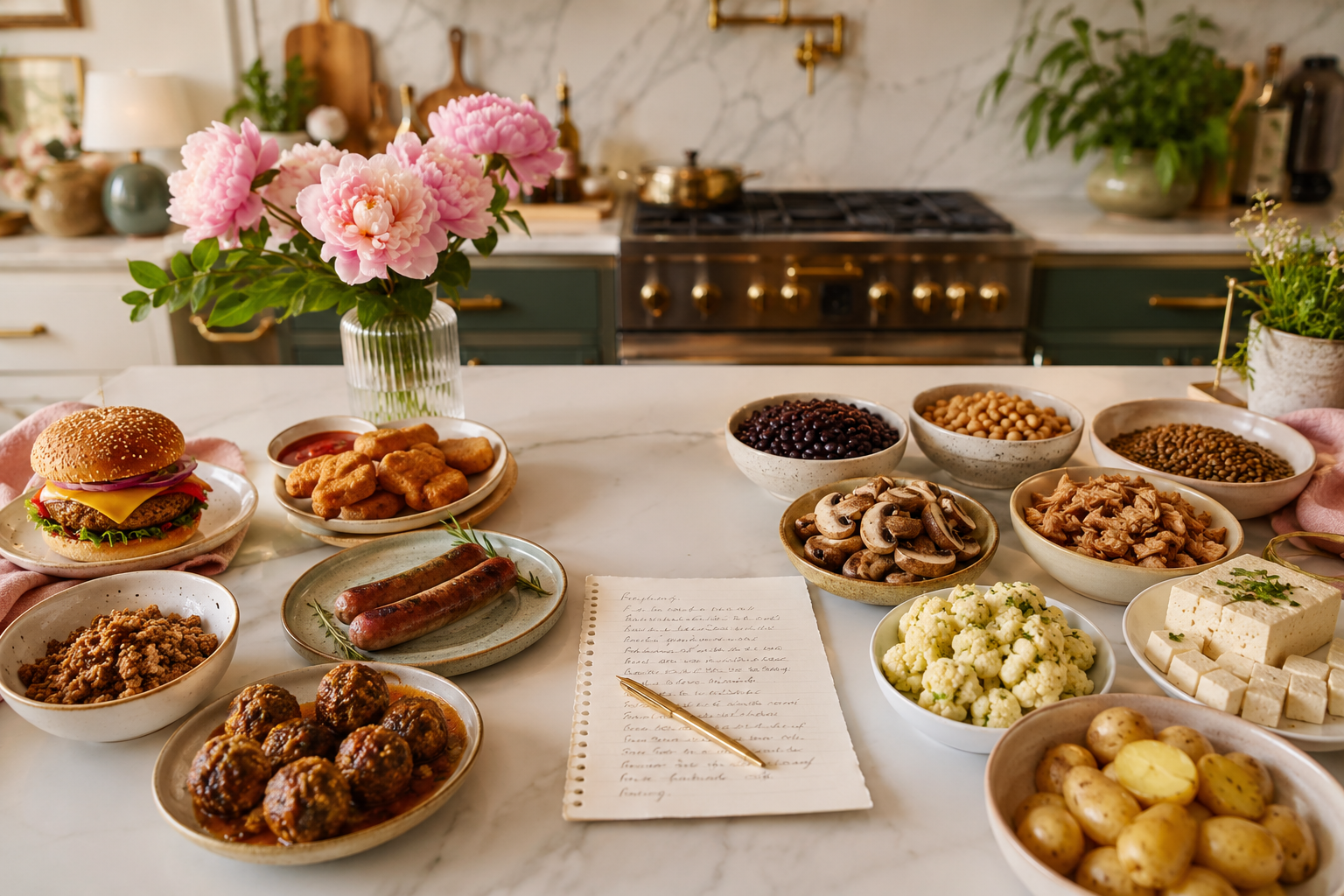
Store-bought plant-based meat products include:
- burger patties
- sausage
- nuggets
- chicken nuggets
- plant-based meatballs
- deli meat
- mock meat
- crumbles
These are convenient and can make your transition easier,
especially if you’re eating with meat eaters or trying to replace familiar meals.
Whole-food meat substitutes include:
- beans
- lentils
- chickpeas
- mushrooms
- jackfruit
- tofu
- tempeh
- seitan
- cauliflower
- hearty vegetables
These may not always taste like animal meat, but they can make meals filling, affordable, and satisfying.
Beginner Comparison: Which Meat Alternative Works Best?
The easiest way to choose among meatless alternatives is to match the option to the meal you’re making. Use this quick comparison before you shop.
| Instead of | Whole-food option | Convenience option | Best use |
|---|---|---|---|
| Ground beef | Lentils or mushrooms | Plant-based crumbles | Tacos and spaghetti |
| Chicken | Oyster mushrooms or tofu | Plant-based chicken | Wraps and comfort meals |
| Burgers | Black bean patties | Vegan burgers | Cookouts and quick dinners |
| Pulled pork | Jackfruit | Packaged BBQ alternative | Sandwiches and loaded potatoes |
Now this is where it gets interesting: the best transition usually uses both. I had a bit of both worlds, and it made my transition much more doable.
You might use lentils for everyday spaghetti, a Beyond Burger for a cookout, chickpeas for lunch wraps, and plant-based nuggets when life be life-ing.
That’s not inconsistency. That’s strategy.
Whole-food swaps are the main bae. Store-bought vegan meat is the convenient shortcut. Both can have a place on the plate.
How to Build a Filling Meatless Plate
A meatless meal doesn’t need to feel empty. It just needs structure.
Use this simple formula:
- Pick a plant-based protein or meat substitute.
- Add a comfort carb.
- Add vegetables or texture.
- Add sauce or seasoning.
- Add toppings for crunch, creaminess, or flavor.
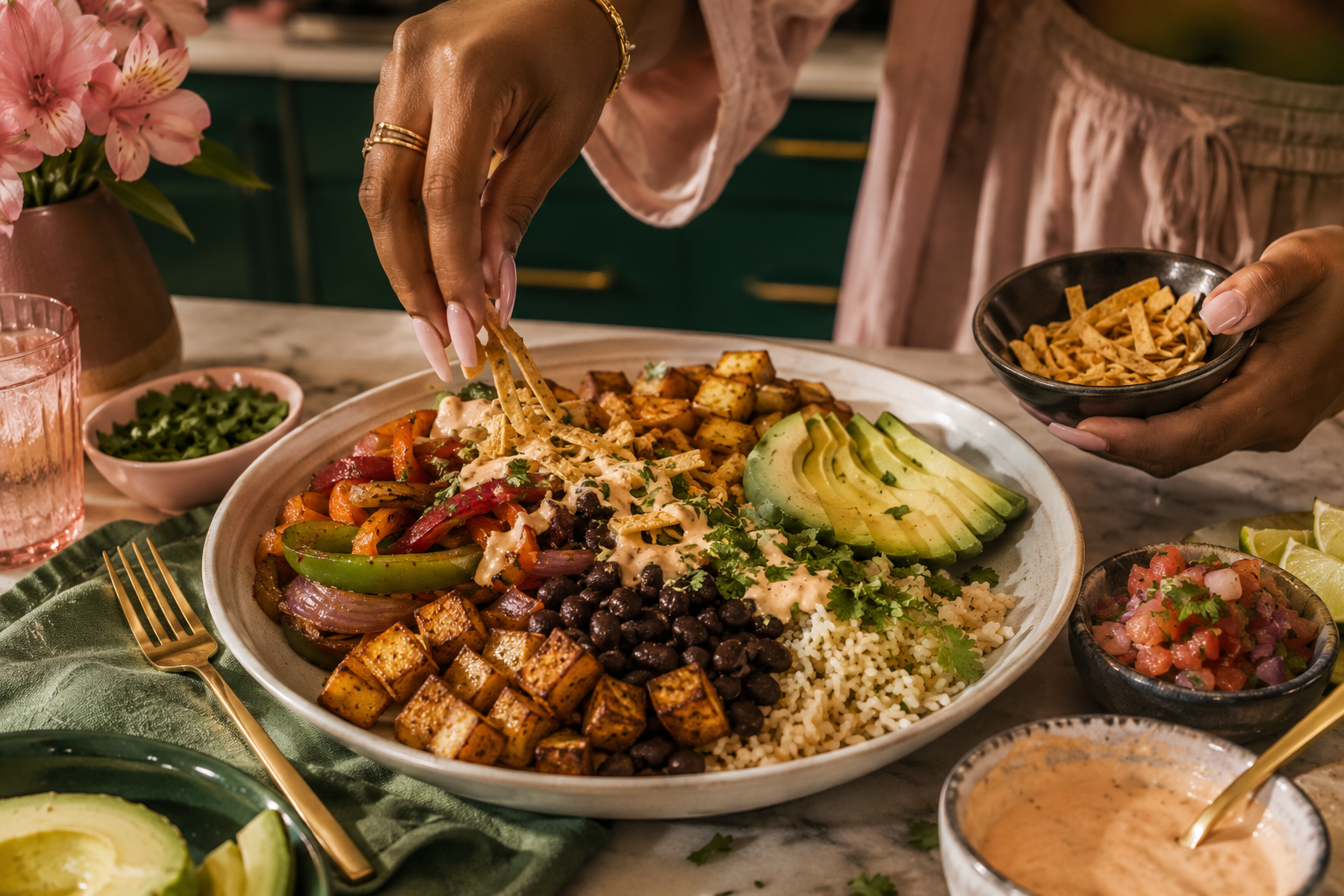
Your plant-based protein sources might be lentils, beans, chickpeas, tofu, veggie burgers, plant-based sausage, plant-based meatballs, or crumbles.
Your comfort carb might be rice, pasta, potatoes, tortillas, bread, quinoa, or noodles.
Your texture might come from mushrooms, peppers, onions, slaw, greens, roasted vegetables, or crispy toppings.
Your sauce might be BBQ, salsa, marinara, tahini, dressing, hot sauce, garlic sauce, or vegan mayo.
So instead of a sad little salad that leaves you hungry, try:
- black bean taco bowl with rice, salsa, avocado, and crunchy toppings
- lentil spaghetti with marinara and veggies
- BBQ jackfruit loaded potato with smoky beans
- chickpea wrap with greens and sauce
- veggie burger with roasted potatoes
- plant-based meatballs with pasta
- hearty bean soup with bread
This is the part that can make or break your consistency. If your plate doesn’t feel satisfying, cravings will circle back like a toxic ex.
Don’t just take meat off the plate and leave the meal lonely. Add protein, flavor, texture, and comfort so your plant-based plate can actually love you back.
Easy Meatless Comfort Meals to Try This Week
Here are beginner-friendly meatless meals that don’t feel like punishment:
- Black bean taco bowls
- Lentil spaghetti
- Plant-based meatballs with marinara
- BBQ jackfruit sandwiches
- Cauliflower wings with fries or salad
- Meatless meatloaf with mashed potatoes
- Jackfruit roast with potatoes and carrots
- Loaded potatoes with beans and veggies
- Veggie burgers with roasted potatoes
- Plant-based sausage breakfast wraps
- Hearty bean soup
- Chickpea wraps
- Vegan burger with toppings and fries
- Meatless chili with beans and lentils
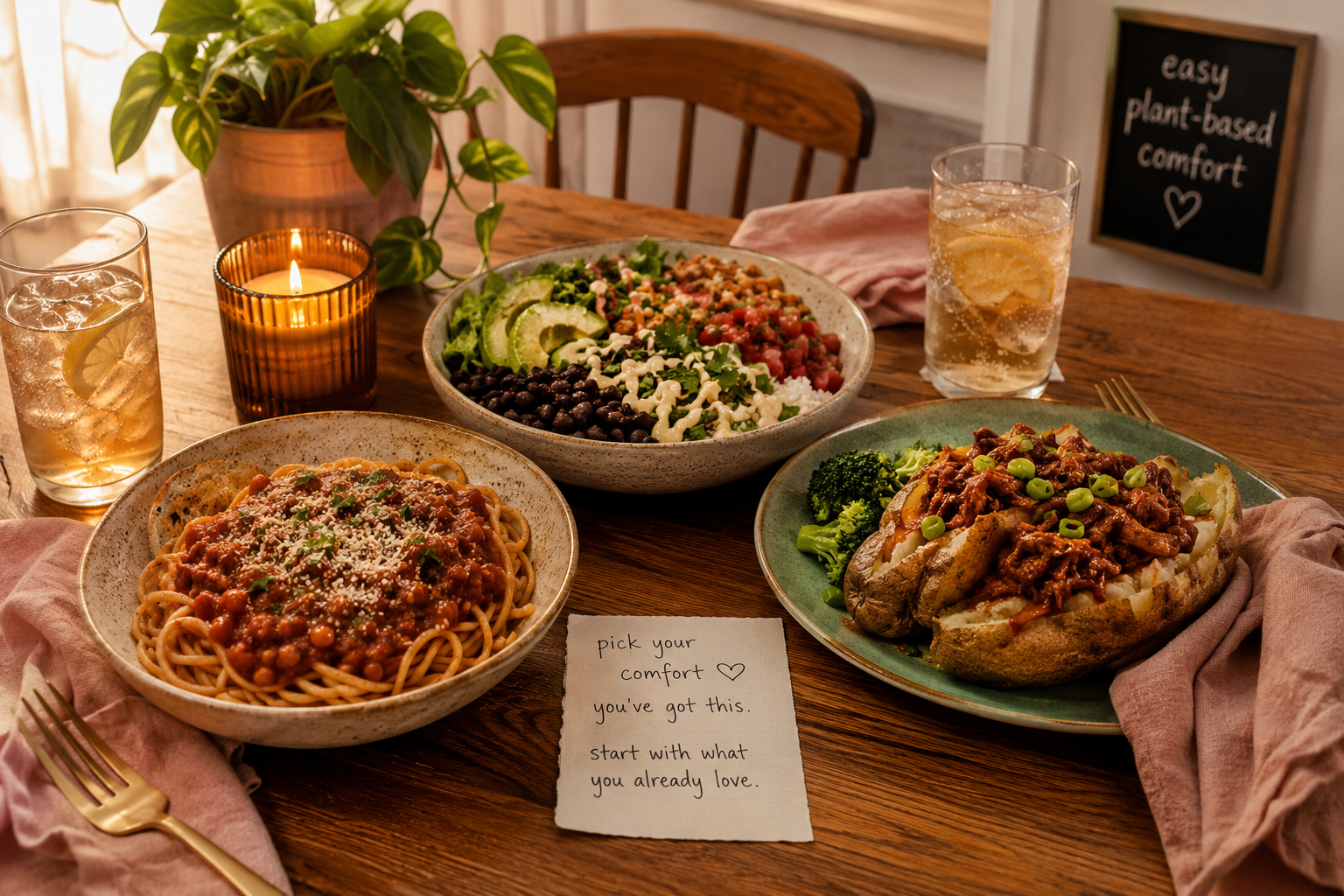
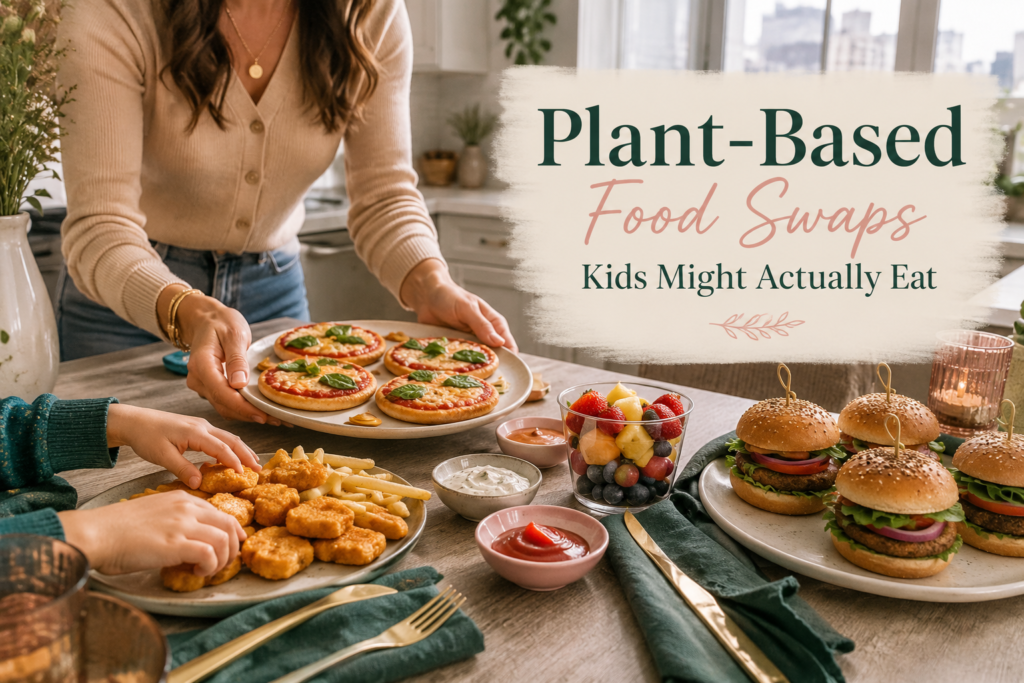
The goal is not to reinvent your whole life overnight. Start with meals you already know. If you’re feeding younger eaters too, these plant-based food swaps for kids can help you adjust familiar family meals without cooking a completely separate dinner.
If your family loves tacos, make black bean taco bowls. If spaghetti is already in rotation, add lentils or plant-based meatballs. If burgers are a weekend thing, try plant-based burgers or veggie burgers.
This is how plant-based food starts feeling normal instead of overwhelming.
And yes, some people choose plant-based alternatives because they want to reduce, animal products, meat and dairy, or overall meat consumption.
Many plant-based options are also talked about as better for the environment than conventional meat because meat production can use more resources.
But you don’t have to solve the whole future of protein before dinner. Start with one better plate.
Familiar meals are your transition bestie. Don’t abandon them. Remix them.
Frequently Asked Questions About Meat Alternatives
What are the best alternatives to meat for beginners?
The best beginner alternatives to meat are lentils, beans, mushrooms, tofu, jackfruit, veggie burgers, plant-based crumbles, vegan burgers, plant-based chicken, and meatless meatballs. Start with the option that fits a meal you already enjoy instead of trying to learn an entirely new way of eating at once.
What can I use instead of ground beef?
Lentils, chopped mushrooms, black beans, walnut-mushroom crumbles, textured vegetable protein, and packaged plant-based crumbles all work well instead of ground beef. Use them in tacos, spaghetti sauce, chili, casseroles, sloppy joes, and loaded potatoes.
What are good meatless meat options for chicken?
Oyster mushrooms, tofu, cauliflower, chickpeas, and packaged plant-based chicken are good meatless meat options for meals that normally use chicken. Oyster mushrooms and plant-based chicken work especially well when you want a crispy or chewy texture.
Are plant based alternatives to meat filling?
They can be very filling when the full plate includes enough protein, carbohydrates, vegetables, flavor, and texture. A lentil spaghetti dinner, black bean taco bowl, tofu stir-fry, or veggie burger with potatoes will usually feel more satisfying than simply removing meat and leaving the rest of the plate unchanged.
Do meatless alternatives have to taste exactly like meat?
No. Some meatless alternatives are designed to copy the taste and texture of meat, while others replace the function meat serves in a meal. Lentils may not taste like ground beef, but they can still make spaghetti, tacos, and chili hearty and satisfying.
Should beginners choose whole-food swaps or store-bought vegan meat?
Most beginners do well using both. Whole-food swaps such as beans, lentils, tofu, and mushrooms can handle everyday meals, while store-bought vegan meat can make cookouts, quick dinners, family meals, and busy nights easier. The better choice is the one that helps you build a satisfying meal you’ll actually eat.
Beginner Mistakes to Avoid With Meat Alternatives
Ima hold your hand when I say this: if your plant-based plate is boring, it might not be the lifestyle. It might be the setup.
Avoid these common mistakes:

1. Expecting every meat alternative to taste like real meat
Some plant-based meat gets close. Some doesn’t. A veggie burger may not taste like red meat, and jackfruit won’t taste like pork by itself. That doesn’t mean it’s bad. It just means it needs the right role.
2. Buying too many vegan meat products with no plan
Don’t buy burgers, nuggets, sausage, meatballs, and deli slices unless you know what meals they’re going into. That’s how groceries become expensive confusion.
3. Only eating salads
A salad can be cute, but if it has no protein, no carb, no fat, no crunch, and no flavor, it’s not a meal. It’s a cry for help in a bowl.
4. Forgetting fullness
Plant-based meals still need enough food. Add beans, lentils, chickpeas, potatoes, rice, pasta, tofu, or another plant-based protein.
5. Under seasoned
Plant-based food needs seasoning just like animal meat does. Garlic, onion, smoked paprika, Cajun seasoning, Italian herbs, BBQ sauce, salsa…. bring flavor to the party.
6. Quitting after one bad swap
One bad vegan meat substitute doesn’t mean plant-based eating isn’t for you. It means that product didn’t understand the assignment. If meat cravings are making it harder to keep experimenting, use these real-life tips for handling meat cravings instead of assuming you need more willpower.
Vixen Note: A bad swap is not a breakup. It’s feedback. Adjust the plate and keep your glow-up moving.
Quick Plant-Based Meat Alternative Cheat Sheet
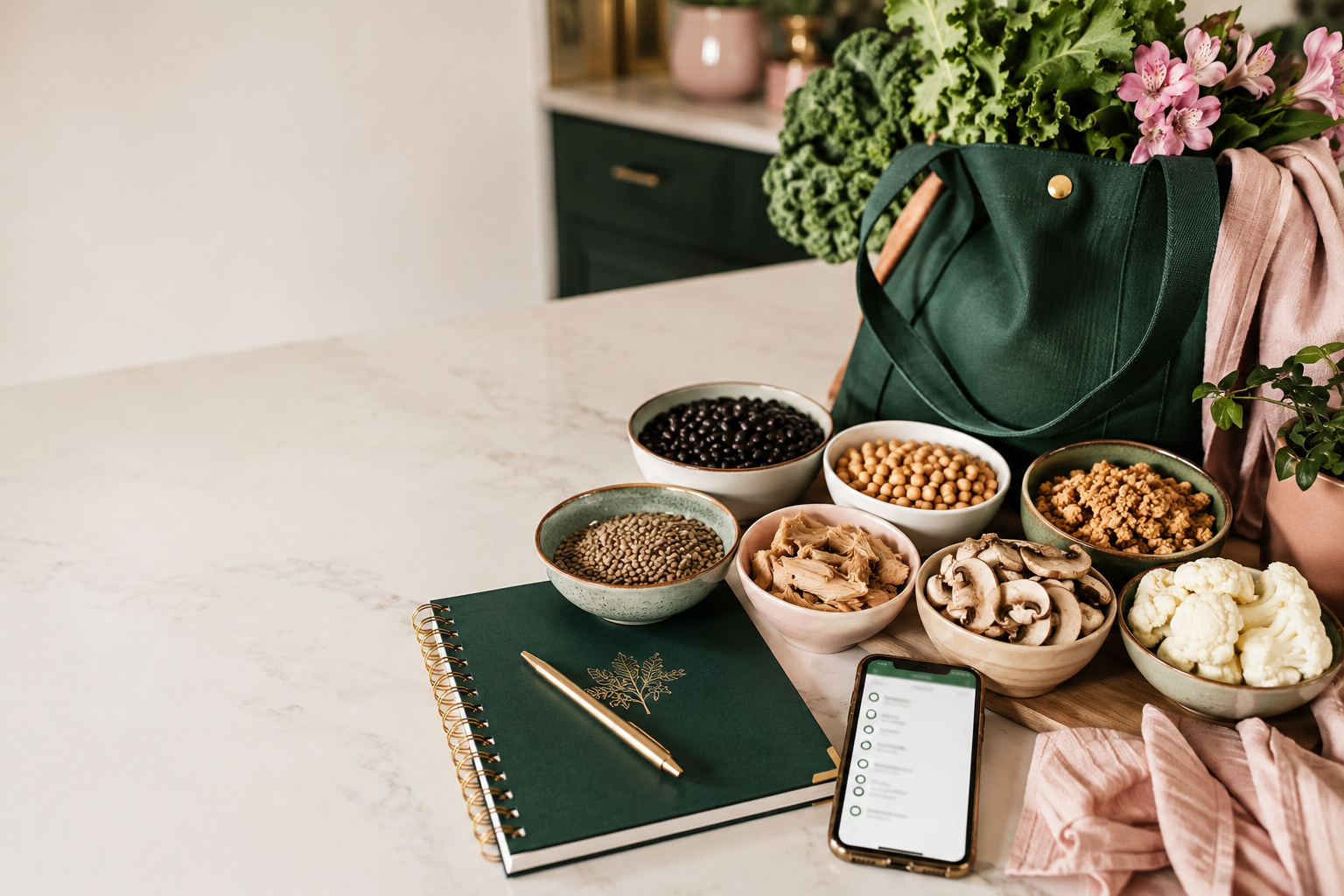
Use this quick guide when you need ideas fast:
- Instead of ground beef: lentils, black beans, mushrooms, textured vegetable protein, plant-based crumbles
- Instead of chicken nuggets: plant-based chicken nuggets, cauliflower bites, crispy tofu, vegan chicken nuggets
- Instead of burgers: veggie burgers, Beyond Burger, Impossible Burger, bean burger patties
- Instead of sausage: Field Roast, Tofurky, plant-based sausage, smoky beans
- Instead of meatballs: plant-based meatballs, lentil balls, mushroom-walnut balls
- Instead of deli meat: Tofurky deli meat, Field Roast slices, chickpea salad wraps
- Instead of BBQ pork: BBQ jackfruit, BBQ mushrooms, BBQ cauliflower
- Instead of fried chicken: cauliflower wings, oyster mushrooms, vegan chicken
Save this for your next grocery run so the shelf doesn’t seduce you into buying random things with no plan.
Vixen Note: Shop with a plan. Pretty packaging can get your attention. Choose swaps that actually fit the meals you’re trying to make.
FAQ About Plant-Based Meat Alternatives
What is the best plant-based meat alternative for beginners?
The best plant-based meat alternative for beginners depends on the meal. Lentils are great for spaghetti and tacos, black beans work well in bowls and burgers, plant-based crumbles replace ground beef, and veggie burgers or Beyond Burger patties can help with cookouts.
Is plant-based meat the same as vegan meat?
Plant-based meat and vegan meat are often used the same way, but not always. Vegan meat should avoid animal products completely, while plant-based meat usually means it’s made mostly or entirely from plant ingredients. Always check the label if you’re avoiding all animal products.
Are vegetarian meat alternatives healthy?
Some vegetarian meat alternatives can be helpful, especially during a transition. Look at ingredients, sodium, protein content, and how often you eat them. Balance store-bought meat substitutes with beans, lentils, chickpeas, mushrooms, tofu, and other plant proteins.
What meat substitute is closest to real meat?
Products like Impossible Burger, Beyond Burger, some plant-based burgers, and certain vegan meat crumbles are designed to taste closer to real meat. The closest option depends on whether you’re replacing burgers, ground beef, sausage, nuggets, or deli meat.
What is the difference between plant-based meat and cultured meat?
Plant-based meat is made from plant ingredients like soy protein, pea protein, vegetable protein, or wheat gluten. Cultured meat, cultivated meat, or lab-grown meat is made using animal cells. Most beginners shopping for everyday meat substitutes are looking for plant-based meat alternatives, not cultured meat.
Final Thoughts on What to Eat Instead of Meat
Replacing meat doesn’t have to feel like a dramatic breakup where you’re left staring at your plate with no plan.
You have options.
You can use lentils in spaghetti, black beans in taco bowls, BBQ jackfruit in sandwiches, mushrooms for chewy texture, plant-based burgers for cookouts, vegan chicken nuggets for busy nights, and plant-based sausage for breakfast wraps.
You can use whole-food swaps. You can use store-bought vegan meat. You can mix both. You can transition slowly. You can keep meals familiar.
The point isn’t to be perfect.
The point is to build plant-based meals that feel satisfying enough to keep choosing.
So this week, pick one meal you already love and give it a plant-based remix. Try one meatless dinner. Keep it simple enough to repeat.
And if you want an easier starting point, grab the free 3-Day Soft Start Plant-Based Starter Kit so you can stop guessing and start building a smoother plate with confidence.
You don’t need every vegan meat, burger, sausage, or meat substitute on the shelf. You just need a few plant-based swaps that love you back.
Keep learning, keep glowing up, and keep choosing the plant-based life that loves you back.
— The Plant Vixen