Eating cleaner sounds cute until dinner hits.
One person wants burgers. One child is side-eyeing anything green. Somebody else is asking if there is any “real food,” and you’re standing in the kitchen trying not to turn one healthy eating goal into a full household negotiation.
If that’s where you are, you’re not failing. You’re feeding real people with real opinions, real cravings, real schedules, and real comfort foods. A plant-based diet for families needs a different strategy than a solo glow-up.
💚 Quick Definition: A plant-based diet for families means helping your household eat more meals built around vegetables, whole grains, beans, fruits, legumes, plant proteins,
and comfort-friendly swaps without forcing perfection or cooking separate dinners every night. It can include vegan, vegetarian, or flexible eating depending on what actually works for your family.
This post will help you decide how to start a plant-based diet for your family without overwhelming the house, cooking three separate meals, or forcing everybody to change overnight.
Why a Plant-Based Diet for Families Feels Hard at First
A plant-based diet feels harder when you’re not just feeding yourself.
Family eating is emotional. It’s tied to comfort, culture, habits, convenience,
childhood favorites, routines, and “this is what we always eat” energy.

So when you start changing what is on the plate, it can feel like you’re not just changing dinner.
You’re touching the family rhythm.
That is why the transition can feel smooth in theory but messy in real life.
You might be thinking about the benefits of a plant-based diet, while your family is thinking, “Where is the chicken?”
You might want more whole foods and plant foods on the table,
while your picky eater is staring at broccoli like it personally betrayed them.
Here’s where most beginners get tripped up:
they think the whole family has to switch at once. They don’t.
A family can start eating more plant-based meals without everyone following a strict vegan diet, vegetarian diet, or perfect meal plan overnight.
Some families go fully vegan. Some lean vegetarian.
Some simply eat plant-based food more often while still figuring out what to do with animal products, dairy, and old comfort meals.
The goal at the beginning is not to force the whole house into one label.
The goal is to make the new meals feel normal enough to repeat.
A soft start is still a start, and sometimes that is the very thing that keeps the whole house from rebelling at dinner.
💗 Soft Start Pick: Start with one familiar meal your family already trusts.
And plant-base it up!
Plant-Based Meals for Families That Still Feel Familiar
If you want your family to follow a plant-based lifestyle without drama, don’t start with meals that feel too unfamiliar.
This ain’t the moment to bring out five new ingredients, a sauce nobody can pronounce, and a dinner plate that looks like it came with homework.
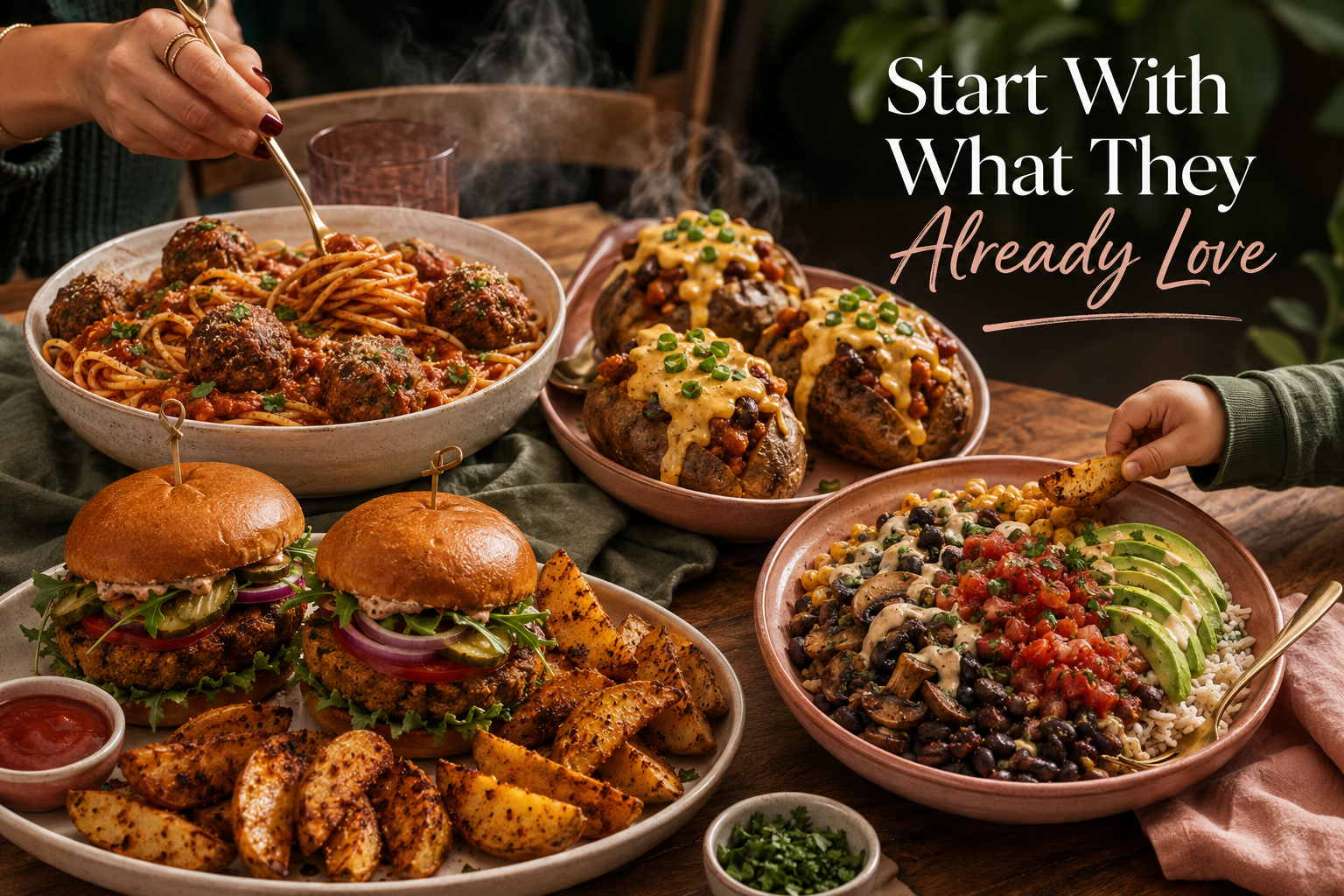
Start where your family already eats.
If your family likes tacos, start with taco bowls.
If they like spaghetti, start with lentil marinara or meatless meatballs.
If they like burgers, try veggie burgers with fries or roasted potatoes.
If loaded potatoes already get love in your house, make them with chili beans, dairy-free cheese, sautéed broccoli, or BBQ jackfruit.
Plant-based meals for families work better when they keep the same comfort, flavor, and full-plate energy.
Think:
- Taco bowls with black beans, seasoned mushrooms, lentils, or plant-based crumbles
- Spaghetti with lentil marinara or meatless meatballs
- Loaded potatoes with chili beans, vegan cheese, sautéed veggies, or BBQ jackfruit
- Veggie burgers with fries or roasted potatoes
- Rice bowls with seasoned beans, vegetables, sauce, and avocado
- Pasta bakes with dairy-free sauce, vegetables, and comfort-food energy
The meal does not need a brand-new personality. It just needs a better-for-you outfit.
Need help choosing what goes in place of the meat? Read What to Eat Instead of Meat: Beginner Alternatives for easy options that work in burgers, pasta, tacos, bowls, and family comfort meals.
Vixen Note: Meatless doesn’t mean struggle plate.
If the meal is not filling, seasoned, and worth sitting down for, the family is going to start looking at takeout like a toxic ex with good timing.
How to Avoid Cooking Separate Plant-Based and Non-Plant-Based Meals Every Night
Now this is where the plant-based glow-up gets tested for real.
A plant-based diet for families will wear you out fast if you turn yourself into the unpaid restaurant manager of the house.
You don’t need to cook one vegan meal, one vegetarian meal, one “regular” meal, and one plain backup plate every night.
That’s a setup, not a glow-up.
Instead, use flexible base meals.
A flexible base meal starts with one main foundation, then lets the family customize toppings, sauces, sides, or add-ons.
This works especially well for mixed-diet family meals because the whole dinner can still move in the same direction without forcing everyone to eat the exact same way.
Ready to make family dinners easier without cooking separate meals?
The Plant-Based Family Transition Playbook gives you five practical transition rules, a flexible family dinner formula, and a realistic first-week game plan.
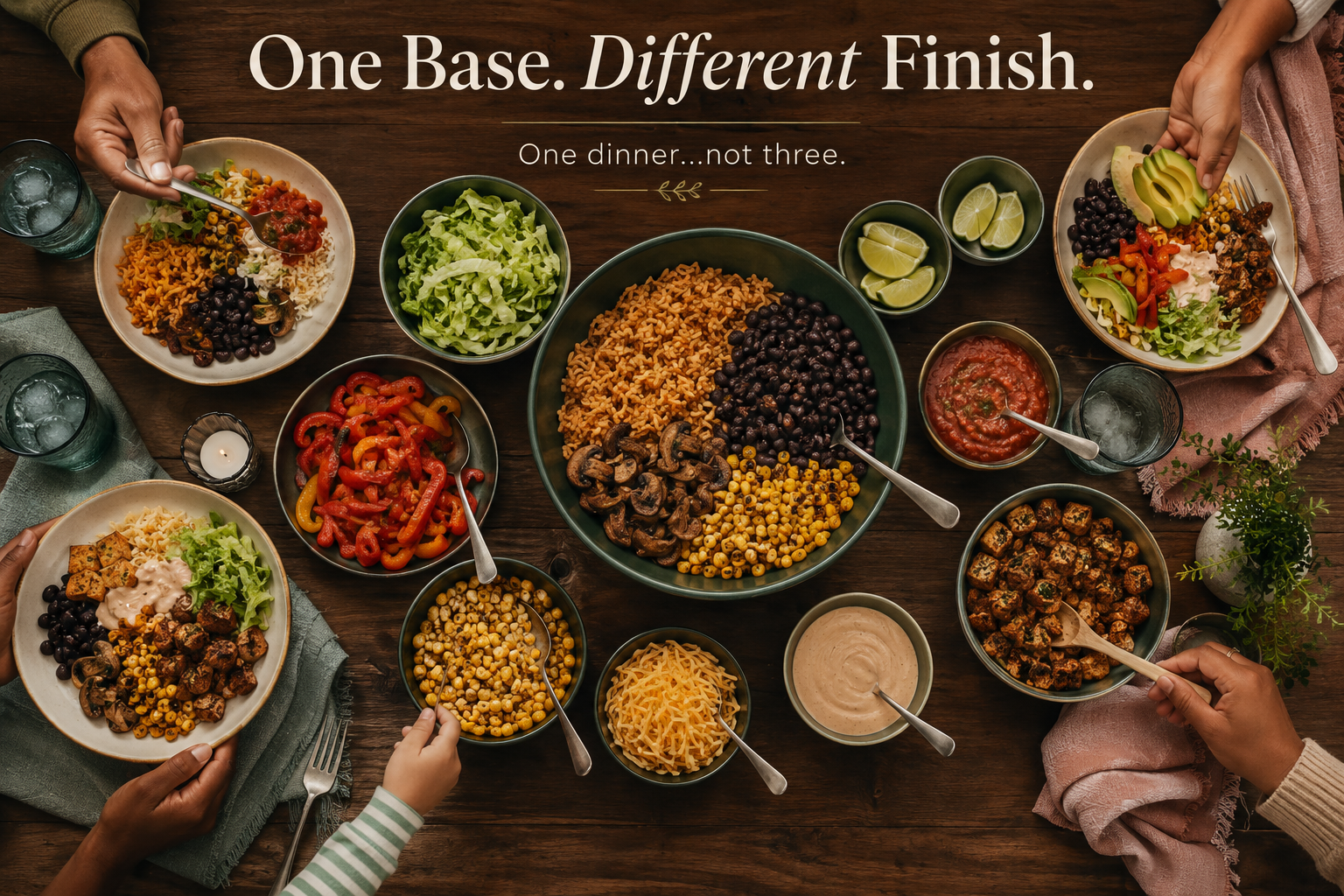
Use the Same Meal, Different Finish Method
Make one strong base, then let people finish their plates differently.
Examples:
- Pasta with marinara, vegetables, and optional plant-based sausage
- Taco bowls with beans, rice, salsa, avocado, lettuce, and toppings on the side
- Bean chili with dairy-free toppings, crackers, cornbread, or loaded potato options
- Stir-fry rice bowls with vegetables, sauce, and different protein choices
- Burger night with veggie burgers and familiar family sides
- Wraps with beans, vegetables, sauce, and optional extras
This keeps you from cooking separate meals while still giving your family some choice.
That matters because choice lowers resistance.
When people feel like the change is being forced on them, they push back.
When they feel like they still get flavor, comfort, and options, they’re more likely to try the meal without making it a whole dinner-table debate.
If picky eaters are a big part of your household,
Then you have to check out Easy Swaps for Picky Eaters and Busy Families.
💗 Vixen Verdict: A plant-based diet for families works best when the meal is flexible, familiar, and flavorful… not when one tired person is cooking three separate dinners and calling it wellness.
The goal isn’t to prove you can do the most.
The goal is to feed your people and still have some peace left after the plates are cleared.
What to Do When Your Family Is Not Fully Plant-Based
But this is the part nobody talks about enough: your family might not be fully plant-based when you start.
And that’s normal.
Everybody in the house might not be ready at the same time.
One person may want to eat plant-based for health benefits.
Another may be curious but inconsistent.
Someone else may still want dairy products, meat, or familiar animal foods on the plate.
That doesn’t mean the whole plan is ruined.
It means your strategy needs a little room to breathe.
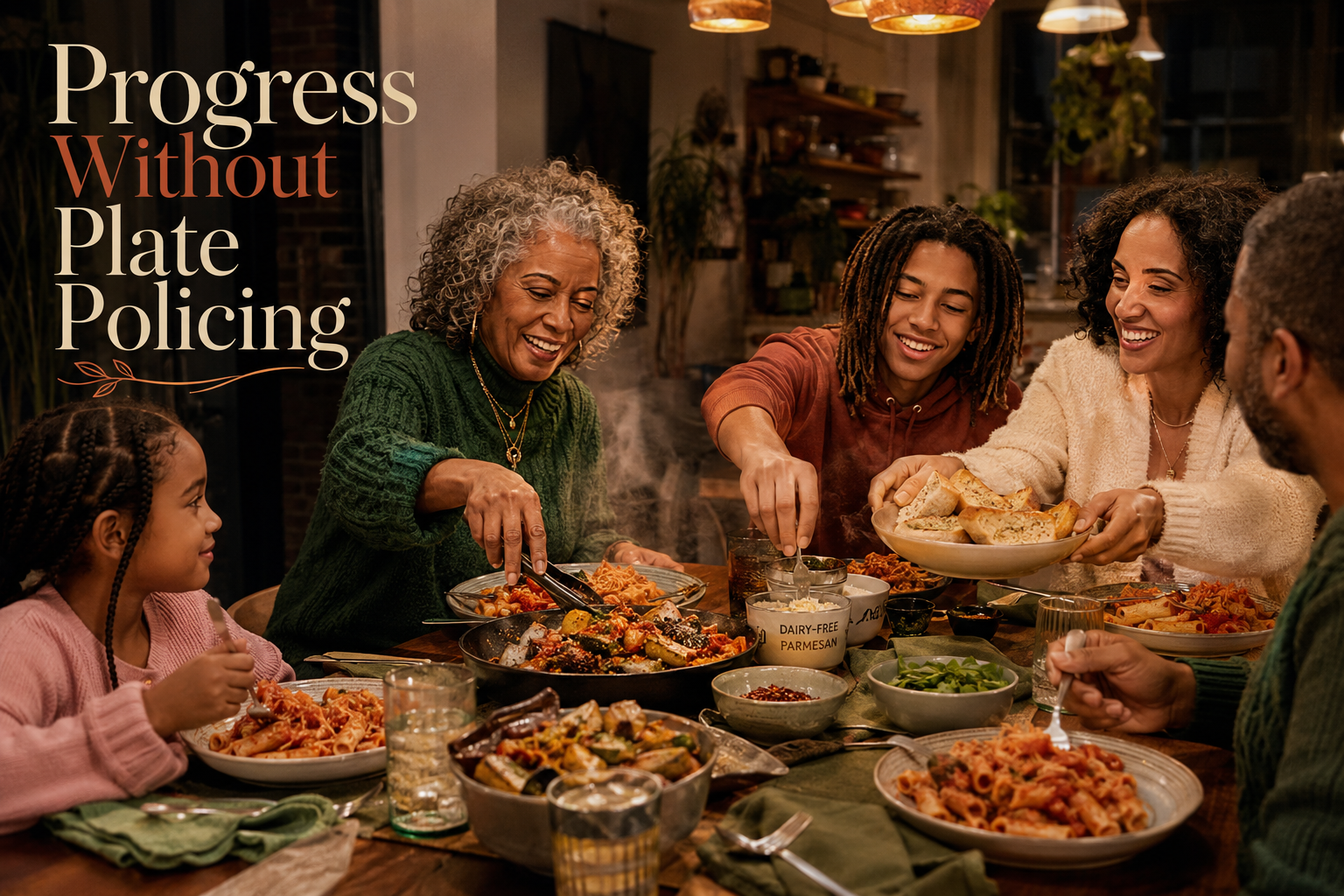
Instead of starting with “we are all going plant-based now,” try starting with “we’re adding more plant-based meals that actually taste good.”
That shift matters.
You can start with one meatless dinner a week. You can serve a chili with beans without announcing a lifestyle change.
You can make dairy-free mac and let the taste do the talking. You can add more vegetables, whole grains, legumes, lentils, and other useful staples into meals the fam already likes.
Some households will stay mixed for a while, and that’s okay.
One person might follow a vegan diet. Another may prefer vegetarian meals.
Someone else may simply be eating less meat. That is still progress.
The goal is not control.
The goal is consistency that doesn’t require daily conflict.
If your family situation is already complicated before dinner even starts, don’t stop here!
Go read How to Stay on a Plant-Based Diet: Real-Life Tips for Beginners next because…
staying plant-based gets a whole lot easier when you know how to handle eating out, family pressure, cravings, and real life when it starts acting brand new.
Let the plant-forward option be good enough to earn trust, not loud enough to start a fight.
💗 Soft Start Pick: Add better options before you start removing everything.
What Are the Benefits of a Plant-Based Diet for Families?
The benefits of a plant-based diet are often connected to eating more whole foods, whole grains, fruits, vegetables, beans, legumes, nuts and seeds, and fewer highly processed foods or highly refined foods.
The American Heart Association describes plant-forward eating as one way to support heart health and reduce several chronic-disease risks when the overall eating pattern is balanced.
For some families, eating a plant-based diet may support healthy eating goals around cholesterol, saturated fat, healthy weight, and overall wellness.
Some people also become interested in this lifestyle because they’re thinking about chronic diseases, type 2 diabetes, risk of heart disease, types of cancer, or wanting to put more nutrient-rich meals on the table.
But let’s keep it grounded.
A plant-based diet for families is not magic. It’s not a punishment.
It’s not a guarantee that every health goal changes overnight. The real win is making family meals realistic enough to repeat.
A healthy plant-based diet works best when it’s built around variety, not restriction.
A dinner your family will actually eat again is more useful than a “perfect” plate everybody secretly hated.
Sometimes the most powerful shift is making the better choice feel normal, filling, and easy enough to do again.
Nutrients to Watch When Your Family Starts a Plant-Based Diet
When your family is following a plant-based diet, you don’t need to obsess over every nutrient at every meal.
I like to think of it as building meals that help everybody get what they need across the week…while still keeping dinner realistic, filling, and easy enough to repeat.
Think whole grains, beans, green leafy vegetables, fruits, calcium-rich foods, plant protein, and other essential nutrients that help meals feel complete.
For families eating mostly vegan, vegetarian, or meatless meals, vitamin B12, omega-3 fatty acids, iron, calcium, zinc, iodine, and protein deserve extra attention.
That just means you build meals with variety and know which nutrients deserve a closer look.
For child-specific questions, read the American Academy of Pediatrics guidance on plant-based diets for children, especially if your child has allergies, growth concerns, picky eating issues, or you are deciding whether a vegetarian or vegan diet can meet their needs.
Vitamin B-12, Omega-3 Fatty Acids, and Sources of Vitamin B-12
Vitamin B-12 is one of the big nutrients to watch when meals include fewer animal foods. Meat and other animal products naturally contain vitamin B-12,
while plant foods generally don’t unless they’re fortified. The NIH Office of Dietary Supplements explains that vitamin B12 is found in animal foods such as fish, meat, poultry, eggs, milk, and dairy products, while plant foods don’t contain vitamin B12 unless fortified.
That is why sources of vitamin B-12 for families eating fewer animal products often include fortified cereal, fortified soy milk,
fortified dairy-free milk, nutritional yeast, or supplements when recommended by a qualified professional.
NIH also notes that people who eat little or no animal foods, including vegetarians and vegans, may not get enough vitamin B12 from their diets, so keep that in mind, babe.
Omega-3 fatty acids are another nutrient to think about. Some family-friendly options include walnuts, chia seeds, flaxseed, hemp seeds, and certain oils.
If your household doesn’t eat fish, ask a qualified professional whether algae-based options make sense.
Families who include eggs and dairy may get some nutrients from those foods. Families avoiding eggs and dairy, meat and dairy, or most dairy foods need to be more intentional.
The goal isn’t to scare you. The goal is to help your family get all the nutrients needed while still keeping meals realistic.
Examples:
- Oatmeal with fortified soy milk, dried fruit, and nuts or seeds
- Lentil pasta with vegetables
- Rice bowls with beans, green leafy vegetables, sauce, and avocado
- Fortified cereal with dairy-free milk
- Loaded potatoes with beans, veggies, and dairy-free sauce
- Stir-fry with tofu, rice, vegetables, and sauce
- Wraps with beans, vegetables, and seasoned fillings
If your family has medical needs, allergies, pregnancy concerns, child growth concerns, type 2 diabetes,
cholesterol goals, or nutrient questions, get personalized guidance from a qualified healthcare professional. Blog posts can support decisions, but they shouldn’t replace medical care.
Vixen Note: Balanced eating isn’t about memorizing every vitamin overnight. It’s about building meals that are filling, varied, and realistic enough to repeat.
Food Groups That Make Family Meals More Balanced
Meals feel easier when you stop thinking about one perfect ingredient and start thinking about food groups.
A balanced plate doesn’t have to be complicated. It can be built from simple categories your family already understands.
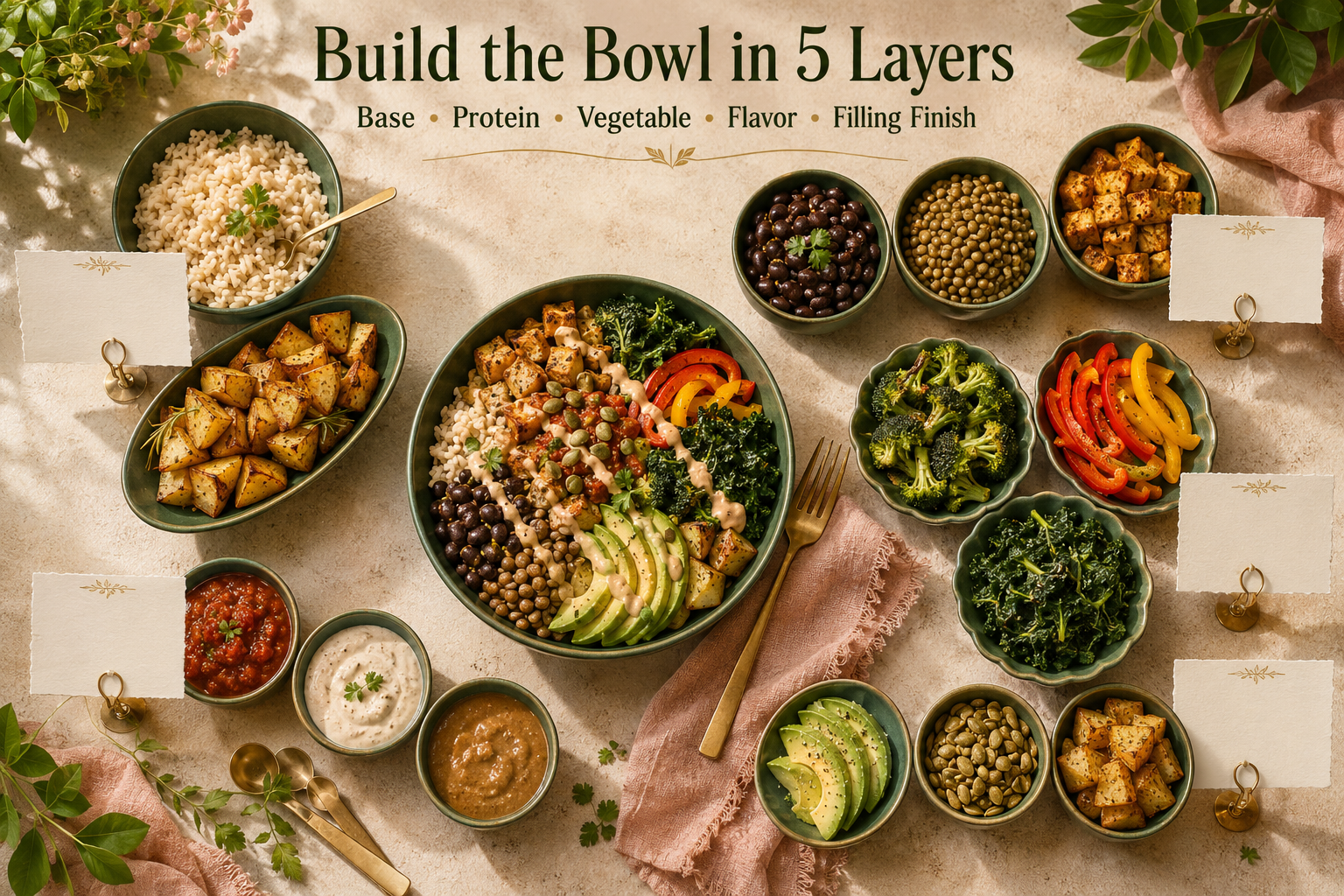
Try thinking in layers:
- A base: rice, pasta, potatoes, tortillas, oats, or whole grains
- A protein-style food: beans, lentils, tofu, veggie burgers, or meatless crumbles
- A vegetable: broccoli, peppers, leafy vegetables, corn, carrots, or frozen vegetables
- A flavor helper: sauce, salsa, seasoning, dairy-free cheese, gravy, or dressing
- A filling add-on: avocado, nuts and seeds, roasted potatoes, or another comfort-friendly side
This is how you help meals feel more complete without overthinking every nutrient.
For example, a rice bowl with beans, broccoli, salsa, avocado, and sauce can feel way more satisfying than a plain bowl of vegetables.
A loaded potato with bean chili and toppings can feel like dinner, not a side dish pretending to be grown.
That’s the difference between a family-friendly meal and a struggle plate with good intentions.
Family-Friendly Foods Worth Keeping on Hand
This is the part that can make or break your consistency.
If your kitchen is not set up for quick meals, every busy night becomes harder than it needs to be. That is when old habits start texting “you up?” and suddenly the drive-thru looks real romantic.
A family-friendly pantry does not need to be fancy. It needs to be useful.
Focus on ingredients that can become multiple meals.
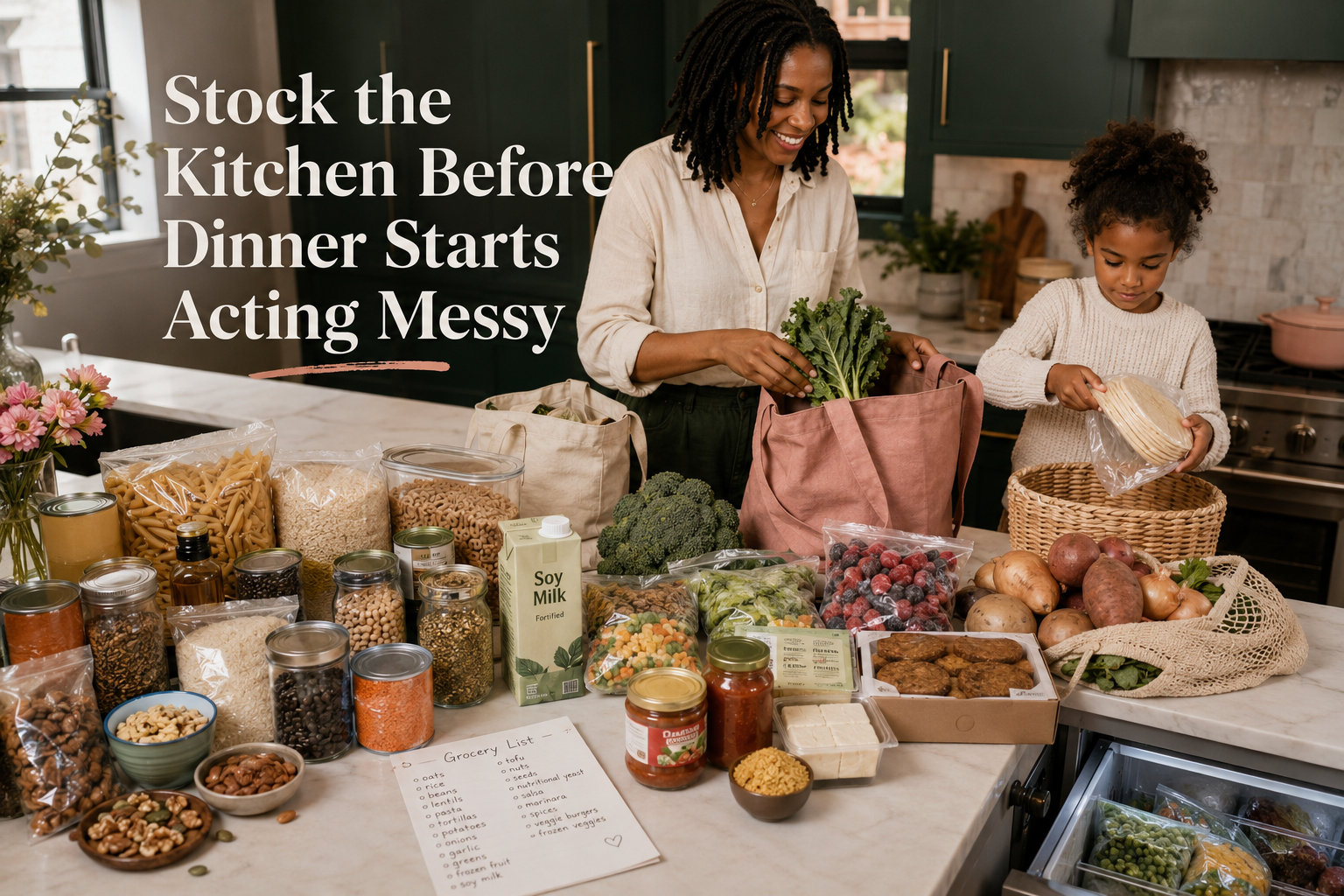
Family Starter Foods to Keep on Hand
- Canned beans
- Lentils
- Pasta
- Rice
- Potatoes
- Tortillas
- Frozen vegetables
- Broccoli
- Leafy vegetables
- Meatless crumbles
- Veggie burgers
- Tofu
- Oats
- Dairy-free cheese or sauce options
- Fortified soy milk
- Fortified cereal
- Nutritional yeast
- Whole grains
- Nuts and seeds
- Dried fruit
- Sauces and seasonings
- Frozen fruit
- Nut butter or seed butter if safe for your household
These foods give you options.
Beans can become tacos, chili, loaded potatoes, rice bowls, wraps, and soups. Pasta can become a quick dinner with marinara, lentil sauce, or vegetables. Potatoes can become a full meal with beans, sauce, and toppings. Tortillas can turn leftovers into wraps before anybody starts complaining.
Some convenience foods can help during the transition too. A veggie burger or dairy-free sauce can be useful when it keeps dinner moving. But here’s the quiet red flag: not every packaged option is automatically the best choice.
That is where label reading matters.
Some packaged options are high in calories, sodium, saturated fat, or added sugar. Others may be low in calories but not filling enough for a real family dinner. The point is not to fear the package. The point is to know what you are buying.
Packaged options can make the transition easier, but the front of the package doesn’t tell the whole story. Use this guide to read nutrition labels and compare dairy-free milk, cereal, cheese alternatives, meat substitutes.
Vixen Note: A stocked pantry is what saves you when dinner starts acting messy. Keep the basics on hand so one tired evening does not turn into a whole comeback tour for old habits.
🛒 Cart-Worthy: Beans, rice, potatoes, pasta, tortillas, frozen vegetables, sauces, and fortified staples.
How to Incorporate More Plant-Based Meals Without Perfection
The easiest way to incorporate more plant-based meals is to start with a number your family can actually repeat.
Not every meal. Not every day. Not the whole lifestyle in one week.
Start with one or two meals per week.
That is enough to practice without overwhelming the house. One dinner can be taco bowls. Another can be spaghetti with lentil marinara. Then you keep the meals that work and let go of the ones that caused too much drama.
This is also where you can lower the pressure around labels. Your family does not have to be fully vegan, vegetarian, or anything else to eat more meals built around beans, vegetables, grains, and fruit.
A healthy plant-based transition is allowed to be flexible.
Vixen Note: If your version of healthy eating makes dinner feel harder every night, it needs a little editing. The goal is a lifestyle you can live with, not a performance nobody asked for.
What Deserves a Side Eye When Starting a Family Transition
Now let’s talk about what deserves a little side eye.
Because some beginner mistakes make this way of eating feel harder than it has to be.
Trying to make everything from scratch immediately? Side eye.
Buying random vegan products without knowing if your family will eat them? Side eye.
Serving tiny portions to people used to full plates and wondering why they are still hungry? Big side eye.
A family transition has to be realistic. If the food feels unfamiliar, expensive, too light, or too complicated, the family will start resisting before the habit has time to grow.
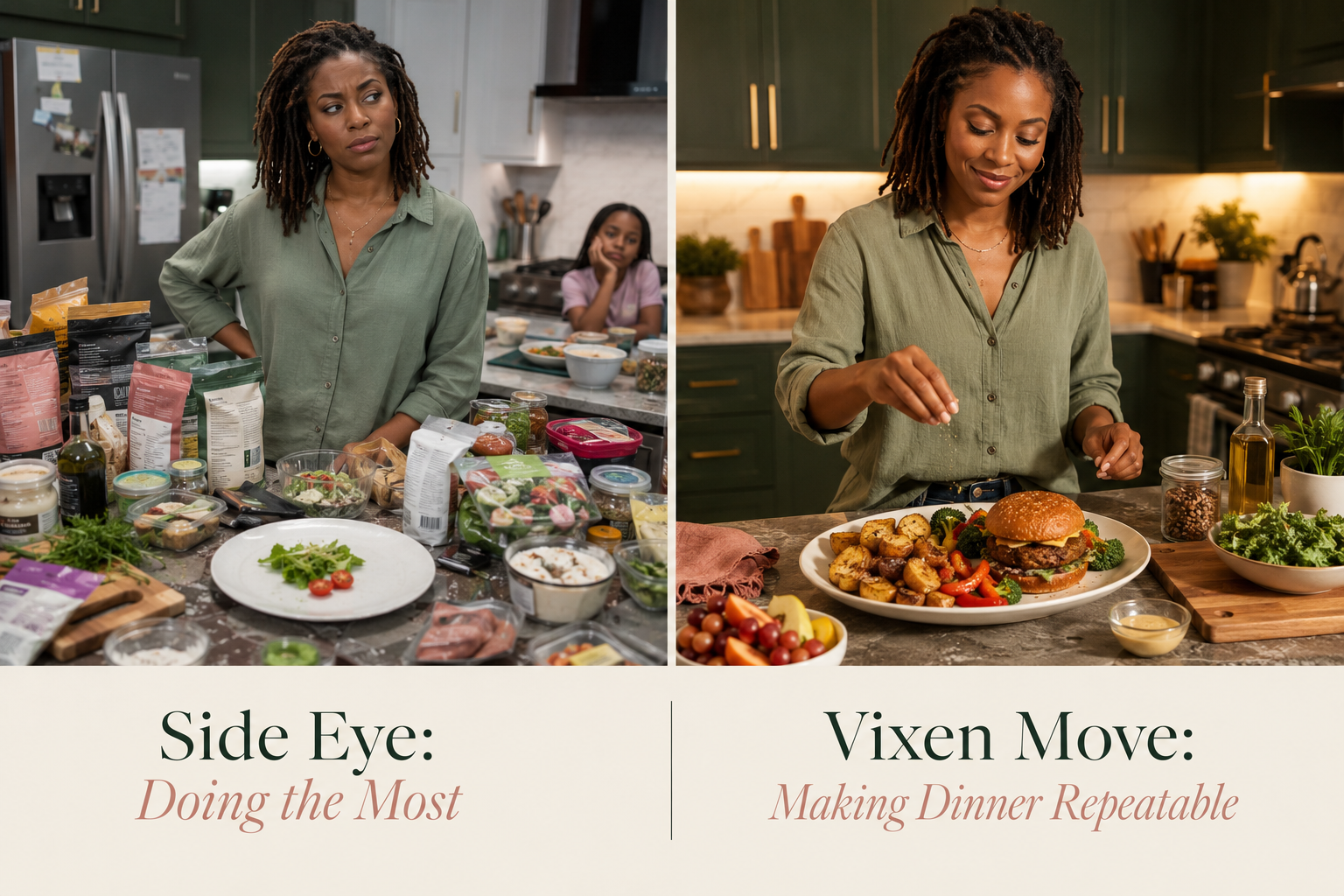
Common Family Mistakes to Avoid
- Trying to change every meal at once
- Making every dinner from scratch immediately
- Buying expensive vegan cheese before knowing what your family likes
- Assuming every packaged meatless food is automatically healthy
- Relying only on highly processed foods and skipping whole foods completely
- Replacing animal foods without thinking about flavor, texture, or nutrients
- Serving meals that are too small or too plain
- Using guilt, shame, or pressure as motivation
- Expecting picky eaters to love unfamiliar meals right away
This doesn’t mean you can’t use shortcuts. You absolutely can.
But the shortcut needs to support the meal, not become the whole plan.
A veggie burger with roasted potatoes and fruit on the side can be a solid beginner dinner. A plate of random snack foods because you did not know what else to make? That is where the plan needs more support.
Feeling overwhelmed usually isn’t a sign that your family can’t do this. It’s often a sign that you’re trying to change too much at once. These five common beginner mistakes can help you spot what’s making the transition harder than it needs to be.
👀 What Deserves a Side Eye: Trying to change your whole family overnight with unfamiliar meals, tiny portions, and no backup plan. That is not a glow-up, that is dinner drama waiting to happen.
Vixen Note: Better meals should feel like support, not a household punishment. If the food is making everybody miserable, the strategy needs adjusting … not your worth.
Your Simple Family Starter Plan for This Week
Here is where we stop overthinking and get dinner on the table.
You do not need a full 30-day family meal system to begin. Save the full grocery lists, meal maps, printable planning pages, and deeper support for the next step.
For now, start with a simple weekly move.
Choose:
- One meatless family dinner
- One comfort swap
- One backup meal
- One grocery shortcut
- One meal to repeat before adding more complexity
That is enough.
A Simple Family Starter Plan
Monday: Taco bowls with beans, rice, toppings, salsa, and avocado
Wednesday: Spaghetti with lentil marinara or meatless meatballs
Friday: Veggie burgers with fries or loaded potatoes
Backup meal: Bean chili, loaded potato, or rice bowl
Grocery shortcut: Frozen vegetables, canned beans, tortillas, fortified soy milk, cereal, sauce, and pre-washed greens
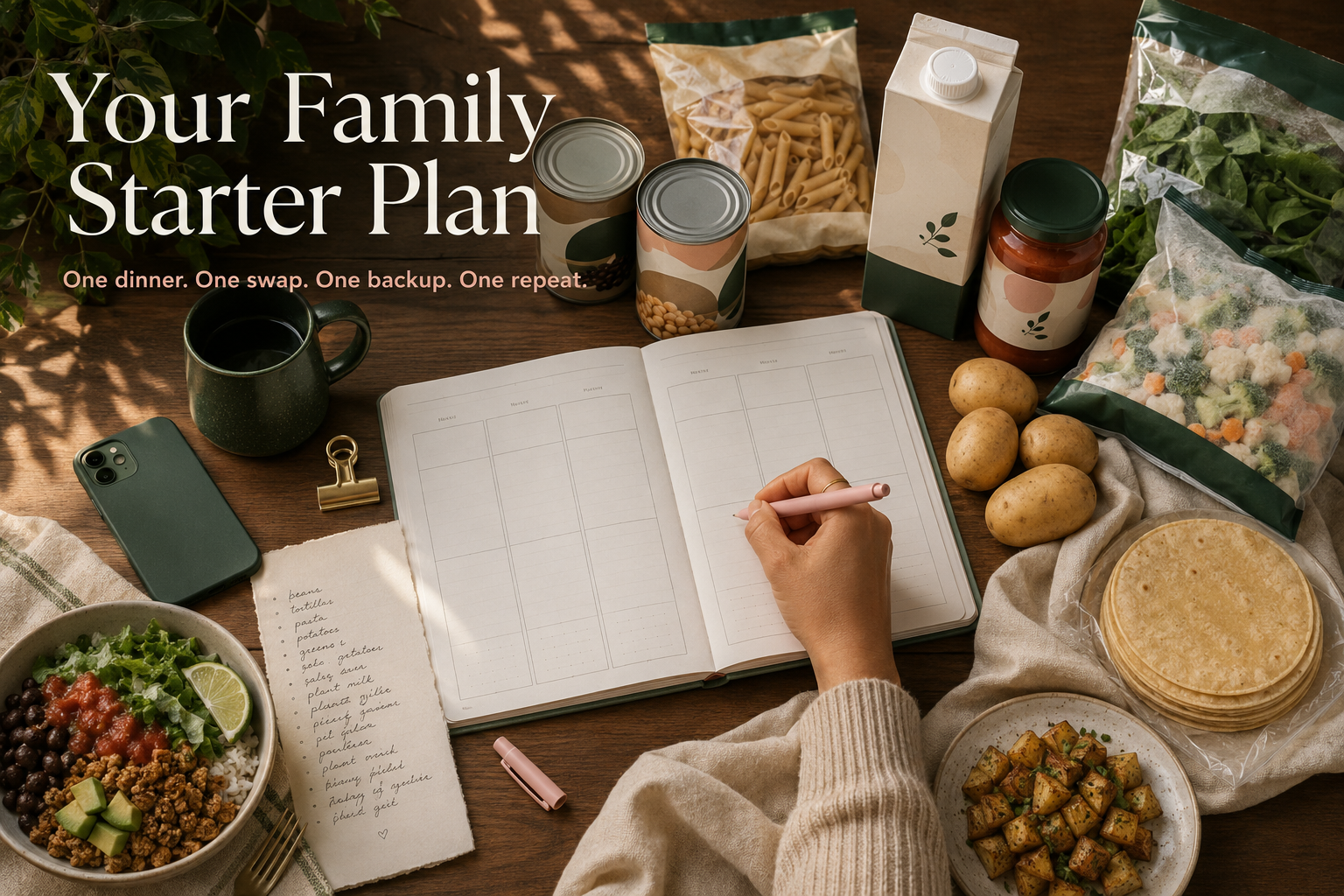
This gives your family a few chances to try new meals without making the whole week feel like a test.
And please don’t start with the hardest dinner. You’ll thank me later!
Start with the meal that already has a little trust at the table. If taco night is easy, begin there. If pasta is the family favorite, start there. If everybody likes potatoes, baby, let the potato do its job.
✨ Your Next Best Move: Pick one meal your family already eats and make that meal meatless first. Don’t start with the hardest dinner. Start with the one that already has a little trust at the table.
Vixen Note: You don’t need to redesign your whole family menu this week. Start with one repeatable meal, make it good, and let that small win build your confidence.
FAQs About a Plant-Based Diet for Families
Can a plant-based diet work for families with picky eaters?
Yes, but it works best when you start with familiar meals instead of forcing brand-new dishes right away. Taco bowls, pasta, veggie burgers, loaded potatoes, wraps, rice bowls, and soups are easier beginner choices because they already feel like real meals.
Do I have to make my whole family plant-based at once?
No. Your family can eat more meals built around plants without everyone following a strict vegan or vegetarian plan overnight. A flexible start is often more realistic for mixed-diet households.
What are the easiest plant-based meals for families?
Some of the easiest options include taco bowls, spaghetti with lentil marinara, loaded potatoes, veggie burgers, bean chili, rice bowls, wraps, pasta bakes, soups, and skillet meals.
How do I start a plant-based diet for my family on a budget?
Start with affordable staples like beans, lentils, rice, pasta, potatoes, oats, tortillas, frozen vegetables, whole grains, and sauces. Then add specialty products slowly so you do not waste money on things your family may not like.
Can children get all the nutrients they need with vegetarian and vegan diets?
Well-planned vegetarian and vegan diets can include many vitamins and minerals, but families need to pay attention to essential nutrients like vitamin B-12, iron, calcium, vitamin D, iodine, zinc, omega-3 fatty acids, and protein.
Talk with a pediatrician or registered dietitian if you are removing meat and other animal products from a child’s meals.
Is this kind of eating helpful for weight management?
It can support a healthy weight for some people when meals focus on whole grains, vegetables, fruits, beans, and balanced portions. But any eating pattern can still lead to weight gain if most meals are high in calories, added sugar, and highly refined foods. If someone is overweight or obese, personalized guidance is best.
Does eating more meatless meals lower the risk of chronic diseases?
Some research connects patterns rich in fruits, vegetables, whole grains, beans, and nuts with a lower risk of certain chronic diseases. But no single meal pattern guarantees disease prevention, and claims about type 2 diabetes, risk of heart disease, or types of cancer should stay careful and general.
Is a plant-based diet the same as a vegan diet or vegetarian diet?
Not always. A vegan diet avoids animal products. A vegetarian diet usually avoids meat but may include eggs and dairy. A plant based approach focuses on eating more plant foods and may be flexible depending on the person or family.
Final Thoughts on Starting a Plant-Based Diet for Families
A plant-based diet for families doesn’t have to mean separate meals, pressure, perfection, or a house full of people side-eyeing dinner.
It can start softer than that.
One familiar meal. One comfort swap. One backup dinner. One grocery shortcut. One less thing to overthink.
The real move is making this feel doable inside the life you actually have. That means flexible dinners, full plates, familiar flavors, and enough room for your family to adjust without turning every meal into a debate.
Start with one family meal this week and let that be enough.
Then grab The Plant-Based Family Transition Playbook so you know what to cook, buy, and keep on hand the next time dinner starts acting brand new.
Plant-based for the family doesn’t have to be perfect … it just needs to be full of flavor, flexible, and worth coming back to.
And remember…you don’t have to force the whole house into perfection to start changing the table. Keep it flavorful, keep it flexible, and let the family come around one good plate at a time.
Alright, Plant Bestie… y’all already know… stay fine, stay fed, and keep standing on your plant-based business.