You grab a protein bar, a bag of chips, a box of crackers, or a “plant-based” frozen meal and think, This should be fine.
Then you turn the package around and see words like whey, casein, caseinate, or lactose.
That’s where label-reading gets tricky.
Hidden dairy is not always listed as plain old “milk.” Sometimes it shows up under different names of milk ingredients, especially in packaged foods, snacks, protein products, baked goods.
This beginner guide will help you understand what to look for, which ingredients usually contain dairy, and how to read food labels with more confidence.

Important note:
If you have a milk allergy, food allergies, or a severe sensitivity, use this article as educational support only. Follow your healthcare provider’s guidance and contact the manufacturer when you are unsure.
Why Hidden Dairy Shows Up in Packaged Foods
Dairy is not only used to make foods creamy.
Food companies may use a dairy ingredient for texture, flavor, browning, protein, thickness, or shelf stability. That means milk-derived ingredients may be hidden in foods you would not expect.
You may find a hidden dairy ingredient in:
- Chips
- Crackers
- Protein powders
- Granola bars
- Chocolate
- Bread
- Soups
- Frozen meals
- Salad dressings
- Seasoning blends
- Instant mashed potatoes
- Deli meat
- Canned tuna
- Baked goods
That doesn’t mean every product in those categories will contain dairy. It just means you need to check the ingredient list before assuming it is safe.
Start With Food Labels and the Allergen Statement
The easiest place to begin is the allergen statement.
In the U.S., milk is a major food allergen, and FDA-regulated packaged foods must identify major allergens when they are used as ingredients. A label may list milk directly in the ingredient list or in a “Contains” statement, such as “Contains: Milk.”
Look for wording like:

Contains: Milk
or:
Contains: Milk, Soy, Wheat
If a product contains milk as an ingredient, that statement is your first red flag.
But don’t stop there.
Some shoppers miss hidden ingredients because they only read the front of the package. The FDA also reminds consumers with food allergies to read the ingredient list, not just rely on front-label claims.
Beginner Shortcut for Reading Labels
Use this simple order:
- Check the allergen statement for contain milk language.
- Scan the ingredient list for obvious dairy.
- Look for different names like whey, casein, caseinate, and lactose.
Once you practice this a few times, you’ll be able to spot dairy much faster while grocery shopping.
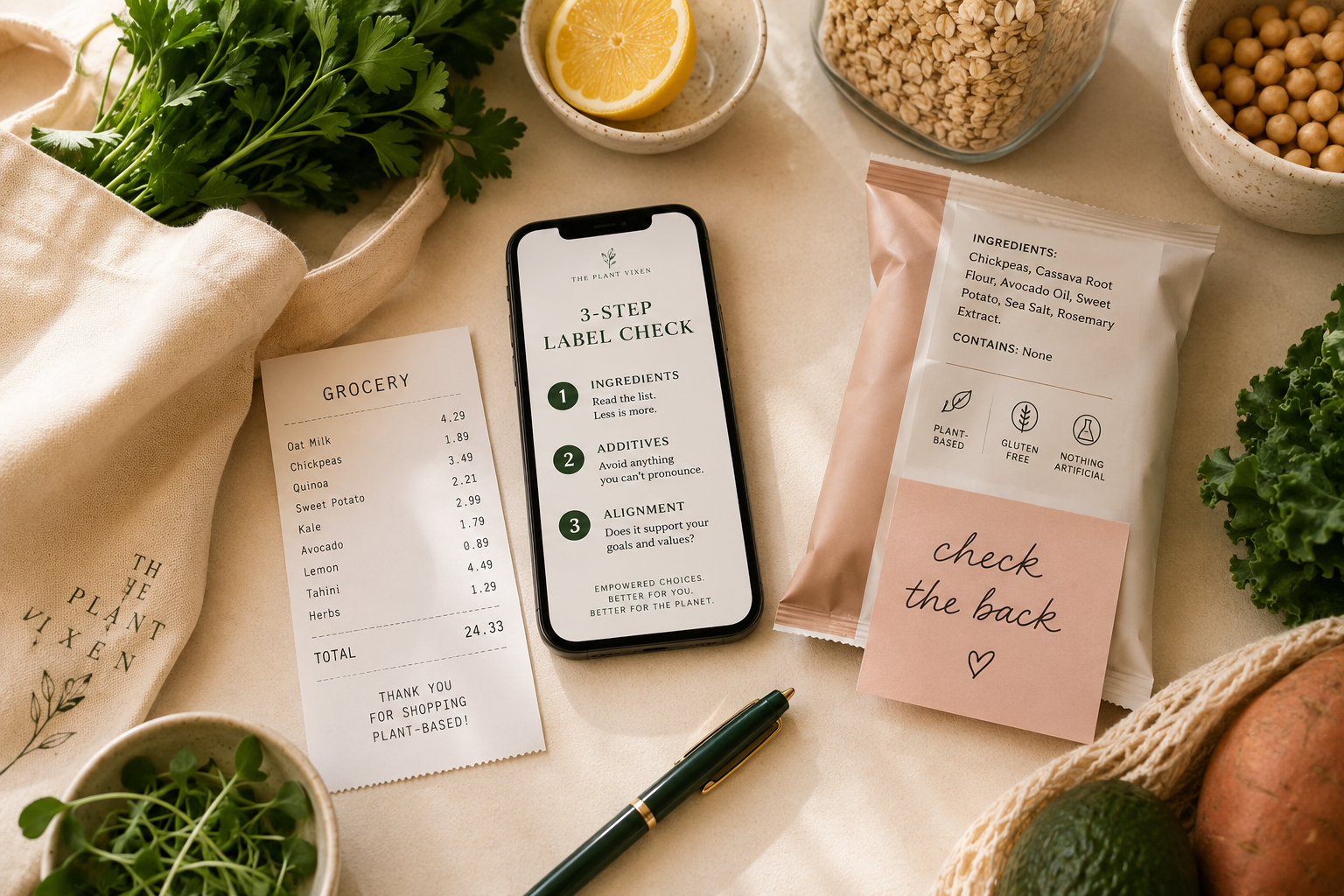
If food labels still feel like they’re talking in fine-print riddles,
Start with this beginner guide on how to read nutrition labels so the whole package makes more sense.
Obvious Dairy Ingredients Beginners Should Know
Some milk ingredients are easy to spot.
These usually mean the food is not dairy-free:
- Milk
- Whole milk
- Skim milk
- Cream
- Butter
- Cheese
- Yogurt
- Sour cream
- Buttermilk
- Half-and-half
- Ghee
- Milk powder
- Powdered milk
- Evaporated milk
- Condensed milk
If you’re trying to avoid dairy, these are automatic skip-it ingredients.
Hidden Dairy Ingredient Names That Are Easy to Miss
Now let’s get into the sneaky stuff.
These ingredients may not sound like milk at first, but they are common names of milk ingredients that beginners should recognize.
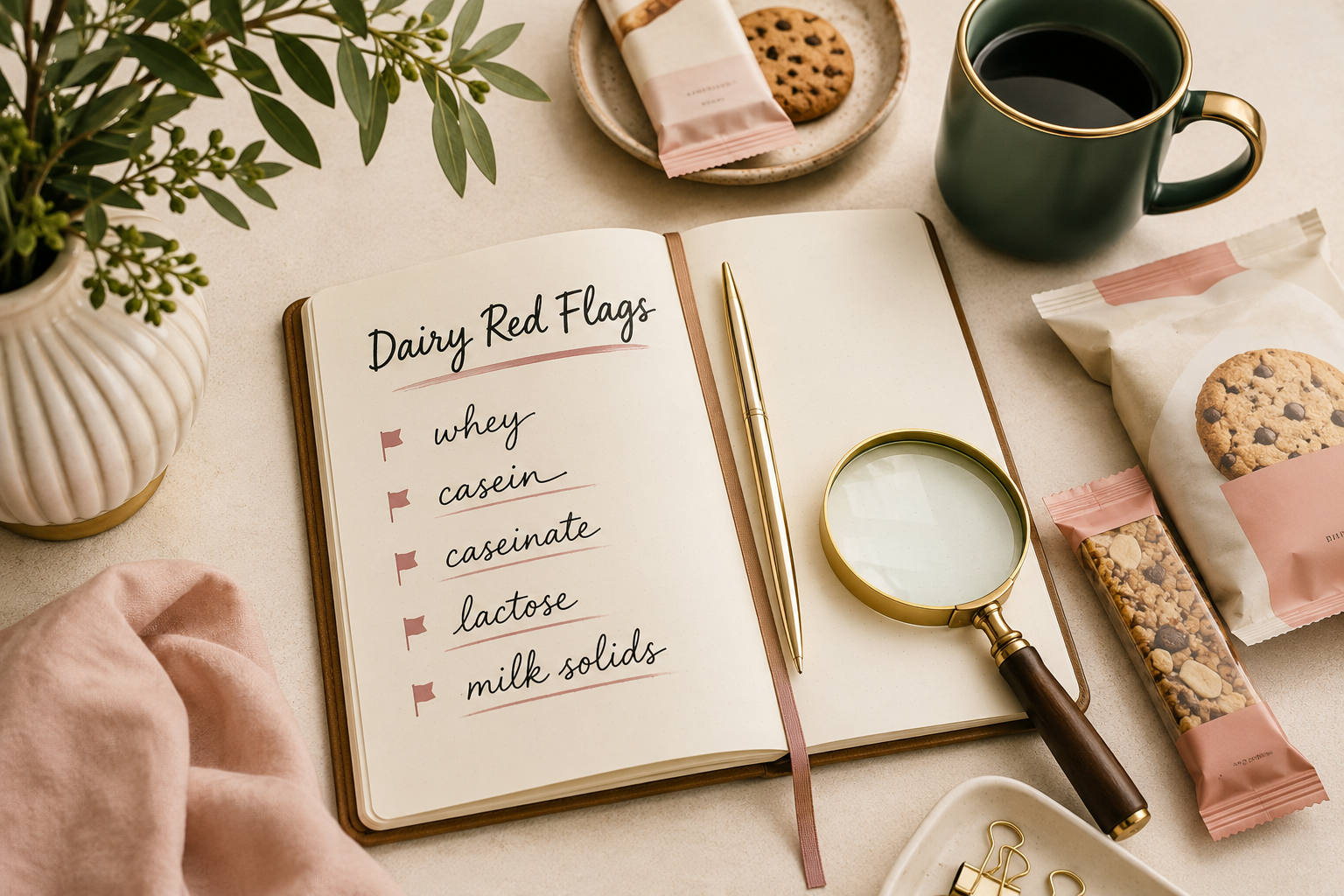
| Ingredient | What It Means | Where It May Be Hidden |
|---|---|---|
| Whey | A milk protein | Protein bars, chips, crackers, protein powders |
| Casein | A milk protein | Creamers, processed foods, cheese-style products |
| Caseinate | A casein derivative | Creamers, snack foods, sauces |
| Lactose | Sugar found in milk | Seasonings, snacks, medications, processed foods |
| Milk solids | Dried milk components | Chocolate, baked goods, sauces |
| Milk protein concentrate | Concentrated milk protein | Protein drinks, bars, high-protein snacks |
| Milk protein isolate | Isolated milk protein | Shakes, bars, meal replacements |
| Lactalbumin | Milk protein | Processed foods, protein products |
| Lactoglobulin | Milk protein | Protein foods, packaged snacks |
| Butterfat | Fat from milk | Desserts, cookies, pastries |
| Butter oil | Concentrated milk fat | Baked goods, snack foods |
| Curds | Coagulated milk | Cheese products, processed foods |
| Rennet casein | Milk derivative | Some meat and cheese products |
Feeling like these dairy words are starting to blur together? Keep it simple.
so you can quickly check common milk-derived ingredients while you shop.
Start with the big four:
Whey, casein, caseinate, and lactose.
Those are the ones beginners often miss first.
Whey and Casein: The Big Milk Protein Clues
If a product has whey, it contains a milk protein.
If a product has casein, it also contains a milk protein.
You may also see terms like:
- Whey protein
- Hydrolyzed whey protein
- Caseinate
- Sodium caseinate
- Calcium caseinate
- Hydrolyzed casein
A product can contain casein even when the front label looks confusing.
For example, some creamers or processed products may not look like obvious milk products, but the ingredient list tells the truth.
Simple rule:
if it says whey and casein, it is not dairy free.
Allergy, Milk Allergy, and Lactose Intolerance Are Not the Same
This part matters bae.

A milk allergy is not the same thing as lactose intolerance.
A food allergy involves the immune system reacting to a food protein.
Food Allergy Research & Education explains that milk allergy is different from lactose intolerance,
which is related to trouble digesting lactose, the sugar found in milk.
Lactose intolerance happens when the body doesn’t make enough lactase, the enzyme that helps break down lactose.
That means a person with lactose intolerance may need to limit lactose, while a person with a milk allergy may need to avoid milk proteins like whey and casein.
This is also why lactose-free milk is not the same as dairy-free milk.
The FDA notes that lactose-free products are generally intended for people with lactose intolerance
and may not be suitable for people allergic to milk because removing lactose does not remove milk allergens.
Quick Beginner Translation
- Lactose-free means the lactose has been reduced or removed.
- Dairy-free means the product should not contain dairy ingredients.
- Milk allergy means milk proteins can be a problem, not just lactose.
If you have an allergy, you need to check for milk protein ingredients, not just lactose.
Dairy-Free, Non-Dairy, and Plant-Based: What the Labels Really Mean
Front labels can be helpful, but they can also be messy.
Here is the beginner breakdown:
| Label Term | What to Know |
|---|---|
| Dairy-free | Usually used to mean no dairy ingredients, but still read every label. |
| Non-dairy | Can be confusing and may still include certain milk-derived ingredients. |
| Plant-based | Does not automatically mean the product contains zero dairy. |
| Vegan | Should not include milk and milk products, but allergy shoppers should still check for cross-contact warnings. |
| Lactose-free | May still be a dairy product made from cow’s milk. |

There is no federal FDA definition for the term “dairy-free,” according to the Food Allergy Research and Resource Program at the University of Nebraska-Lincoln,
so people with milk allergy should not rely only on that wording.
The big lesson: front-label claims are not enough. The ingredient list is where you confirm what the product actually contains.
Hidden Sources of Dairy in Foods You Didn’t Know Contain Dairy
Some foods with dairy are obvious.
Pizza? Ice cream? Creamy pasta? No surprise.
But hidden sources can show up in foods you may not expect.
Here is a list of foods beginners should double-check:
- Deli meat
- Deli salads
- Canned tuna
- Instant mashed potatoes
- Seasoning blends
- Crackers
- Chips
- Popcorn
- Chocolate
- Protein bars
- Granola bars
- Bread
- Tortillas
- Soups
- Pasta sauce
- Pesto
- Frozen meals
- Veggie burgers
- Baked goods

Deli meat is a good example because some processed meats may use an additive, filler, flavoring, or milk-derived ingredient depending on the product.
You don’t have to avoid the whole deli section, but you do need to check the ingredient details.
A product you didn’t know contained dairy may surprise you once. After that, you’ll know what to watch for.
Ingredients That Sound Like Dairy But Usually Aren’t
Some words sound suspicious but not automatically dairy.
These include:
- Cocoa butter
- Coconut milk powder
- Cream of tartar
- Lactic acid
- Calcium lactate
- Sodium lactate
Cocoa butter sounds like butter, but it comes from the cocoa bean.
That said, chocolate can still include milk powder, butterfat, or other milk ingredients.
Lactic acid sounds like lactose, but it is not the same thing. Still, if you have a serious allergy or need to avoid hidden dairy completely, contact the brand when a source is unclear.
What About “May Contain Milk”?
A label may say:
- May contain milk
- Made on shared equipment with milk
- Produced in a facility that also processes milk
This doesn’t always mean the product contains milk as an intentional ingredient. It often points to possible cross-contact.
That matters more for someone with a milk allergy than someone avoiding dairy by preference.
The FDA explains that advisory statements like “may contain” are different from required allergen labeling and should not be used as a substitute for declaring major allergens that are actual ingredients.
If you have food allergies, treat these warnings seriously and follow medical guidance.
How to Avoid Hidden Dairy While Grocery Shopping
You do not need to memorize a comprehensive list overnight.
Use this quick method instead.

Step 1: Check the Ingredient List
Look for obvious dairy first:
- Milk
- Cream
- Butter
- Cheese
- Ghee
Then scan for hidden milk ingredients:
- Whey
- Casein
- Caseinate
- Lactose
- Milk solids
- Milk protein isolate
- Milk protein concentrate
Step 2: Check the Allergen Statement
Look for:
Contains: Milk
If the product contains milk, put it back.
Step 3: Question the Front Label
Do not assume a product is safe just because it says:
- Natural
- Plant-based
- Vegetarian
- Creamy
- Lactose-free
You should still read every label, especially if you’re shopping for a milk allergy.
Step 4: Build a Safe List
Once you find products that work for you, save them.
Start with:
- One safe snack
- One safe chocolate
- One safe protein option
- One safe dressing
- One safe frozen meal
- One safe creamer
This makes future food choices easier and less stressful.
Quick Dairy Ingredient Checklist
Here is a simple checklist you can use before buying packaged food.
Obvious Dairy
- Milk
- Cream
- Butter
- Cheese
- Yogurt
- Ghee
- Milk powder
- Evaporated milk
- Condensed milk
Hidden Dairy
- Whey
- Casein
- Caseinate
- Sodium caseinate
- Calcium caseinate
- Lactose
- Milk solids
- Milk protein isolate
- Milk protein concentrate
- Lactalbumin
- Lactoglobulin
- Butterfat
- Butter oil
- Curds
- Rennet casein
Label Claims to Double-Check
- Dairy-free
- Plant-based
- Vegan
- Lactose-free
- Natural
- Creamy
Easy Dairy-Free Swaps for Common Packaged Foods
You don’t have to give up convenience foods. You just need better swaps.
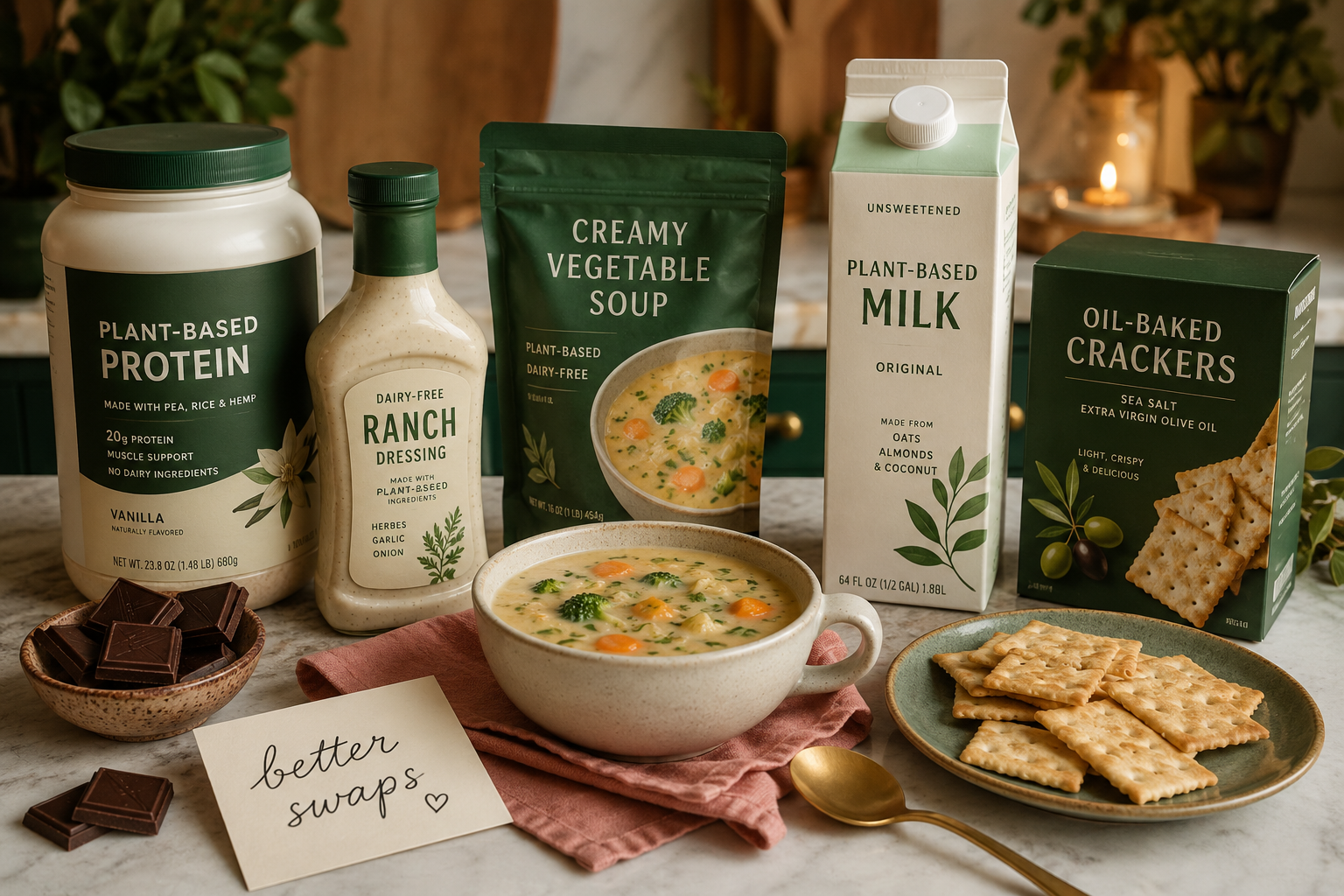
| Instead of This | Look For This |
|---|---|
| Milk chocolate | Vegan chocolate or dairy-free dark chocolate |
| Whey protein bars | Pea, soy, hemp, or brown rice protein bars |
| Cheese crackers | Vegan crackers or oil-based crackers |
| Cream-based soups | Vegetable broth, coconut milk, or cashew-based soups |
| Ranch dressing | Dairy-free ranch or tahini-based dressing |
| Butter crackers | Olive oil or seed-based crackers |
| Whey protein powder | Plant-based protein powder |
The goal is not perfection. The goal is understanding food labels well enough to choose what fits your body, values, and needs.
FAQ: Hidden Dairy Ingredients
What is the most common hidden dairy ingredient?
Whey is one of the most common hidden dairy ingredients in packaged foods, especially protein bars, snack foods, and protein powders.
Does casein contain dairy?
Yes. Casein is a milk protein. If a label says casein, caseinate, sodium caseinate, or calcium caseinate, the product is not dairy-free.
Can a product contain lactose but not milk protein?
Some products may contain lactose as an isolated ingredient, but lactose is still milk-derived. People with milk allergy should be cautious because allergy concerns usually involve milk proteins, not just lactose.
Is lactose-free milk dairy-free?
No. Lactose-free milk is still usually made from cow’s milk. It may help some people with lactose intolerance, but isn’t safe for everyone with a milk allergy.
What should I do if a label says “may contain hidden milk ingredients”?
If the warning says “may contain milk,” treat it as a cross-contact warning. For allergy safety, contact the manufacturer or follow your healthcare provider’s guidance.
Are milk products always listed as “milk”?
No. Milk and milk products can appear under different names, including whey, casein, caseinate, lactose, milk solids, and milk protein concentrate.
Final Takeaway
You don’t need to become a label-reading expert overnight.
Start with the ingredients beginners miss most:
Whey. Casein. Caseinate. Lactose. Milk solids.
Then check the allergen statement and scan the ingredient list before you buy.
The more you practice, the easier it gets to avoid hidden dairy and make food choices that actually match what you need.
Need More Support?
Want a simple cheat sheet you can use while shopping?
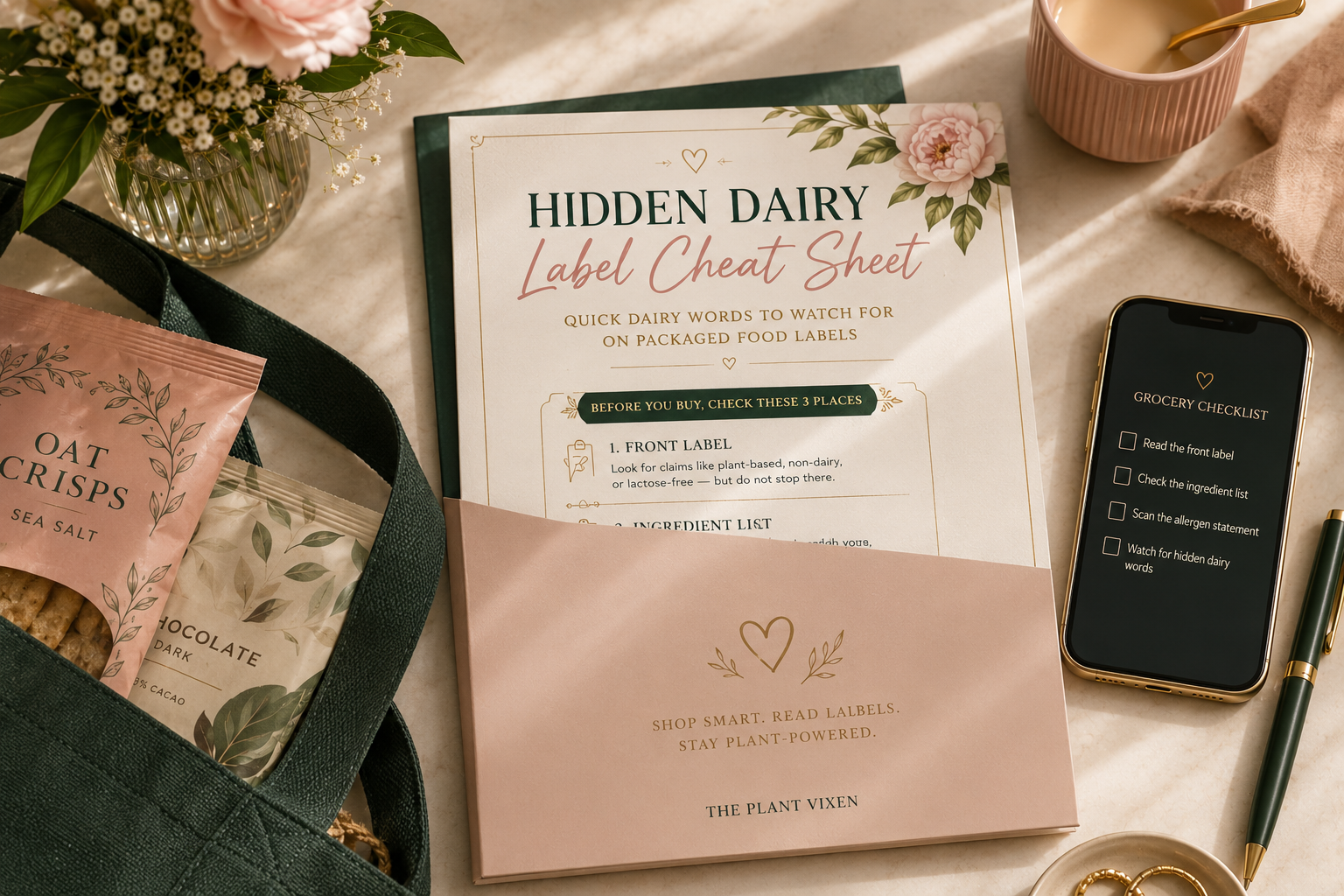
Perfect for beginners who want to identify dairy in packaged foods without feeling overwhelmed.
Get the free Hidden Dairy Label Cheat Sheet so you can spot common milk-derived ingredients before they end up in your cart.
Keep learning, keep glowing up, and keep choosing the plant-based life that loves you back.
Your Plant-Based Big Sis
— The Plant Vixen