The minute you decide to eat more plant-based meals, the grocery store starts acting like you need a vegan version of everything you’ve ever eaten.
A burger replacement. Chicken-style pieces. Sausage. Crumbles. Meatballs. Nuggets. Something shaped like bacon but somehow priced like a small luxury purchase.
For many beginners, reducing meat starts to feel like replacing one shelf of meat products with another shelf of vegan alternatives.
Commercial plant-based meat can absolutely make the transition easier. Sometimes it’s the very thing that keeps taco night familiar, gets dinner on the table faster, or helps you through a craving that didn’t disappear just because you bought oat milk.
But no, you don’t need plant-based meat substitutes at every meal to eat plant-based.
They’re an option. They’re a tool. They’re not a requirement.

The bigger question isn’t, “What can I put where the meat used to be?” It’s this:
What job was the meat doing in this meal?
Was it providing chew, saltiness, protein, familiarity, smoky flavor, convenience, or simply a centerpiece? Once you know the job, you can decide whether the meal needs a meat substitute or a different structure.
Do You Need Plant-Based Meat Substitutes to Eat Plant-Based?
No. You can follow a plant-based diet without regularly buying commercial burgers, nuggets, crumbles, or sausage-style products.
Plant-based meat substitutes can preserve the taste and texture of a familiar meal, reduce cooking time, or make the early transition feel less disruptive. Useful doesn’t mean required.
Beans, chickpeas, tempeh, seitan, edamame, nuts, seeds, and soy products can all contribute protein to a vegetarian or vegan eating pattern. USDA MyPlate includes beans, peas, nuts, seeds, tofu, and tempeh among vegetarian protein-food options.
These plant-based foods don’t all provide the same amount of plant protein, but they give you more ways to build meals without relying on a commercial replacement.
The key is understanding what each food actually contributes.
A mushroom can bring savory flavor and chew, but it shouldn’t automatically be treated like a high-protein meat alternative.
Jackfruit can give you that shredded barbecue texture, but it usually needs a more substantial side or protein source to make the full meal work.
Plant-Based Meat Is an Option, Not a Requirement
Think of commercial vegan meat like a shortcut route.
Sometimes it gets you where you need to go faster. That doesn’t mean it needs to become the only road you know.
It may make sense for:
- burger night
- family tacos
- a weekend cookout
- an emergency freezer dinner
The point isn’t to prove you can make every meal from scratch.
The point is to decide when the shortcut actually helps.
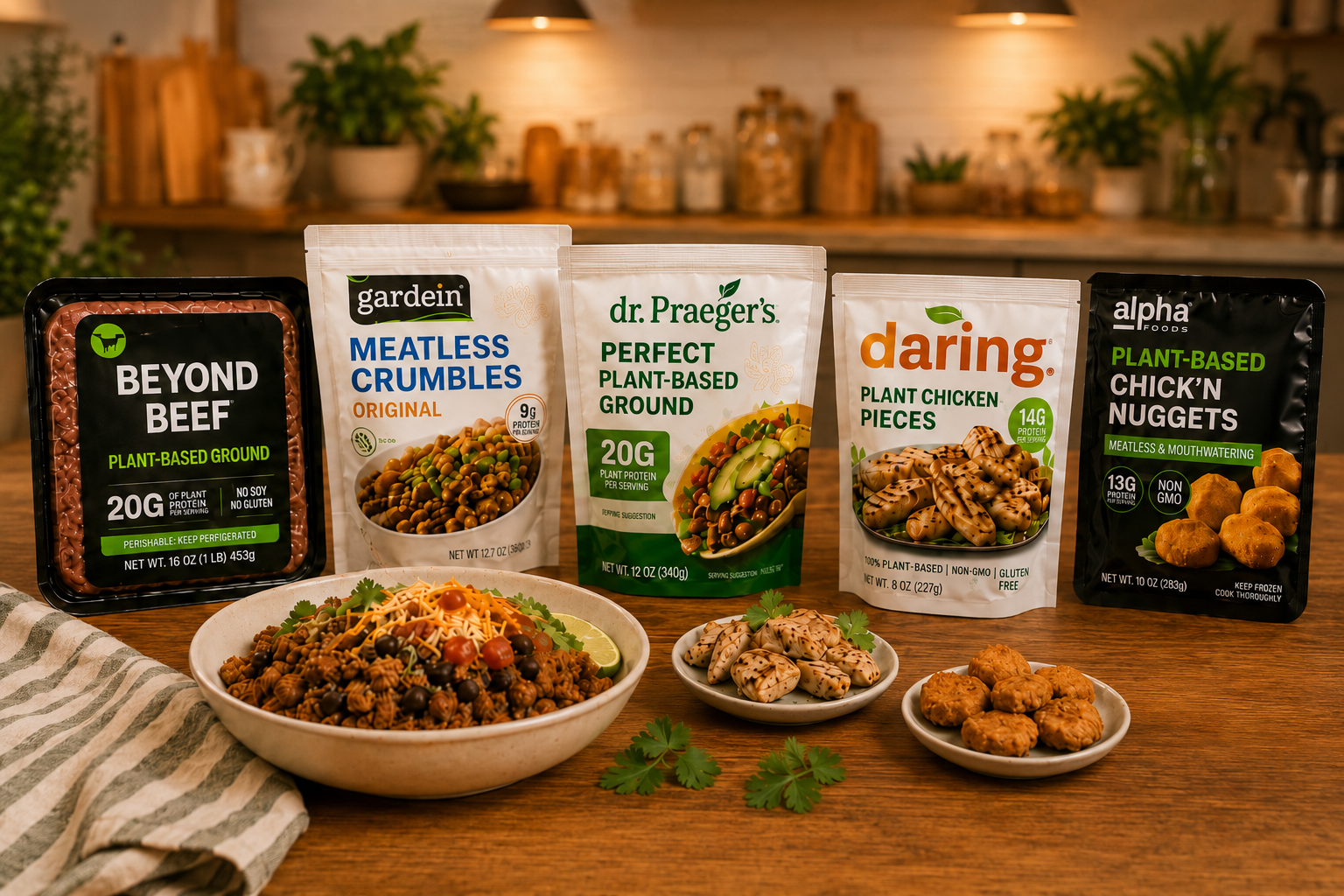
Quick Vixen Breakdown
Convenience Food: A food or product that helps get dinner on the table faster.
Transition Tool: A familiar option that reduces friction while you adjust to plant-based eating.
Everyday Meal Foundation: The substantial ingredient or meal structure that helps make dinner filling and satisfying.
Complete Nutrition Planning: Looking across your overall eating pattern to meet your individual energy and nutrient needs.
Why Beginners Think Every Vegan Meal Needs a Meat Alternative
A lot of us learned to build dinner around the same basic layout:
Meat. Starch. Vegetable.
The meat wasn’t just another ingredient. It was the centerpiece. It told you what the meal was.
Chicken with mashed potatoes.
Meatloaf with green beans.
Pork chops with rice.
So when you remove the meat, the plate can suddenly look like a collection of side dishes waiting for somebody important to arrive.
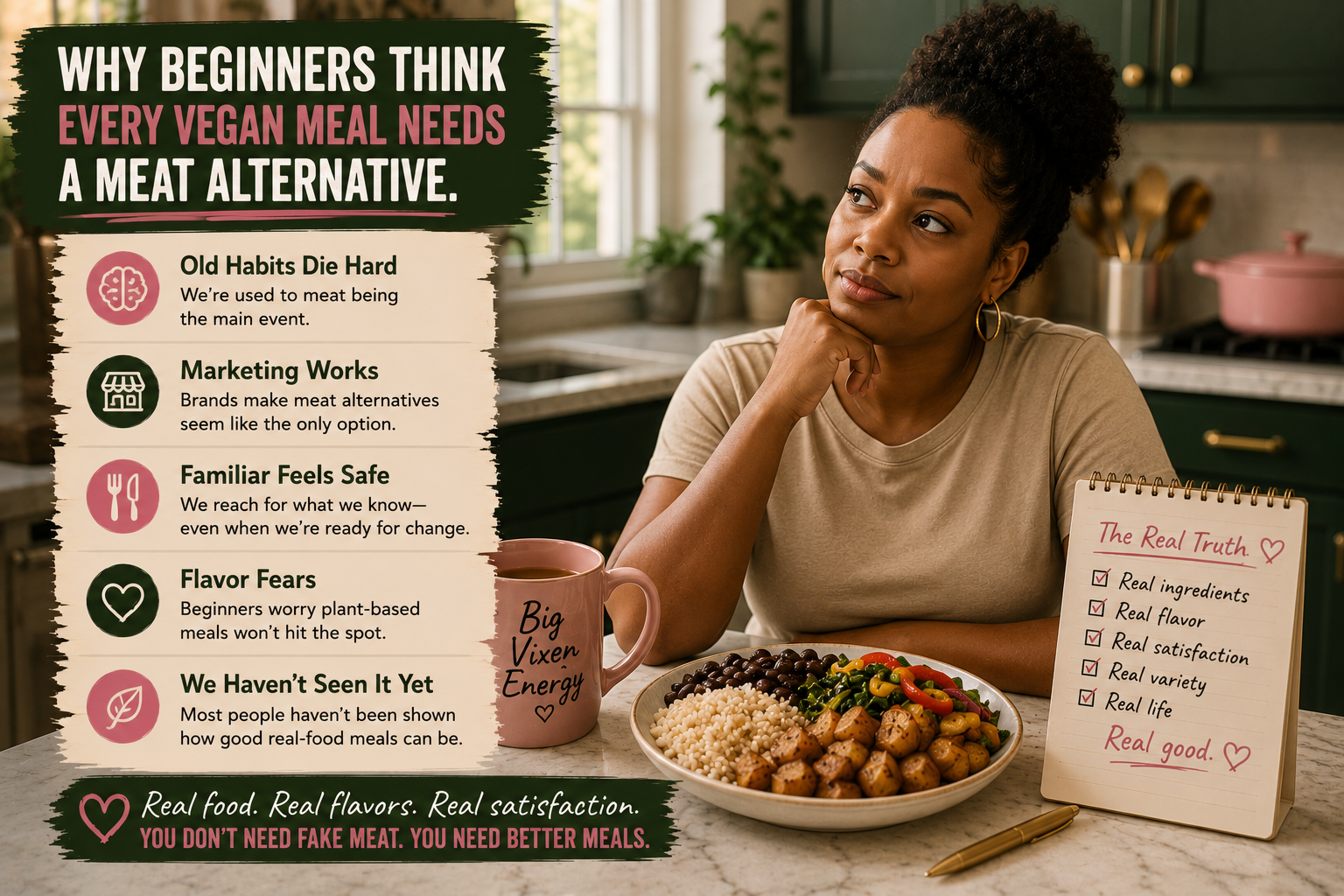
That unfinished feeling doesn’t always mean you need real meat or vegan meat. Sometimes it means the meal lost its structure.
That’s one reason starting a plant-based diet can feel harder than expected. You’re not only changing ingredients. You’re learning a new way to organize meals.
Why Removing the Meat Can Leave the Plate Feeling Unfinished
Imagine taking the sofa out of your living room and leaving everything else exactly where it was.
The lamps are still there. The rug is still there. The coffee table is doing its best. But the room clearly isn’t working the same way.
Removing meat from a traditional plate can create the same problem.
The meal may have lost:
- substance
- moisture
- contrast
- savory flavor
- a clear main component
Dropping a meat substitute into the empty space is one solution.
It just isn’t the only one.
Sometimes You Need a Meat Substitute. Sometimes You Need a Better Meal Structure.
A plate of potatoes and green beans may need another substantial component.
But those same ingredients could become:
- a loaded baked potato
- a smoky potato-and-bean skillet
- a hearty soup with bread
- a saucy rice-and-vegetable dish
Now the meal doesn’t feel like somebody removed the main event.
The structure changed, so nothing feels missing.
That’s the difference between replacing an ingredient and rebuilding the meal.
When Plant-Based Meat Is Genuinely Useful
There are times when a familiar meat alternative earns its spot in the cart.
This isn’t about weakness, laziness, or whether you’re “plant-based enough.”
It’s about reducing friction.
Familiar Vegan Alternatives Can Make the Transition Easier
During the early transition, familiar vegan foods can keep everything from feeling brand new at once.
You may not want to learn a completely different recipe, cooking method, and family dinner routine on the same Tuesday night.
Using meatless crumbles in tacos lets you keep the tortillas, toppings, seasonings, and family setup everyone already understands.
That familiarity can be especially useful when you’re feeding children. The Plant Vixen’s guide to plant-based food swaps for kids can help when you need the meal to feel recognizable without cooking separate dinners.
Plant-Based Meat Can Help With Cravings, Convenience, and Mixed Households
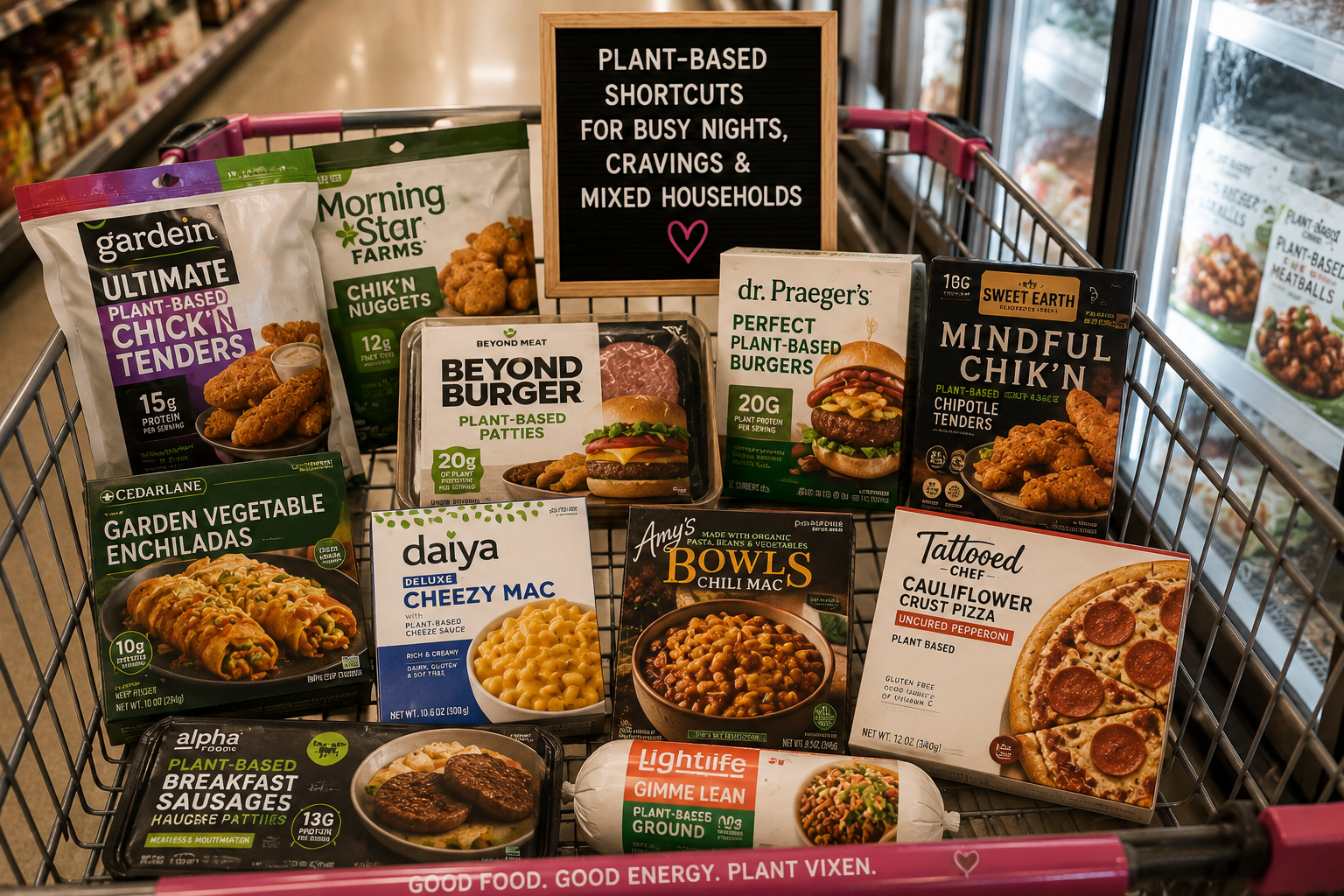
A plant-based burger may be exactly what you want when you’re craving browned edges, a soft bun, pickles, and fries.
A black bean dish may be delicious, but it isn’t always answering the same craving.
Commercial options can also help with:
- rushed evenings
- mixed households
- family cookouts
- skeptical relatives
- recipes where texture matters
That doesn’t mean the substitute has to become your everyday meal foundation.
It means the product solved a real problem.
A product can also help someone reduce red meat or other animal products without automatically becoming the foundation of every meal.
For deeper help with cravings, read Craving Meat on a Vegan Diet?
When Meat Substitutes Become Expensive, Repetitive, or Unnecessary
A transition tool can slowly turn into a grocery habit you never stopped to question.
One package of vegan meat may fit the budget.
Buying burgers, sausage, nuggets, crumbles, deli slices, and chicken-style pieces every week can hit differently.
The issue isn’t that these foods exist.
The issue is expecting them to carry the entire plant-based diet.
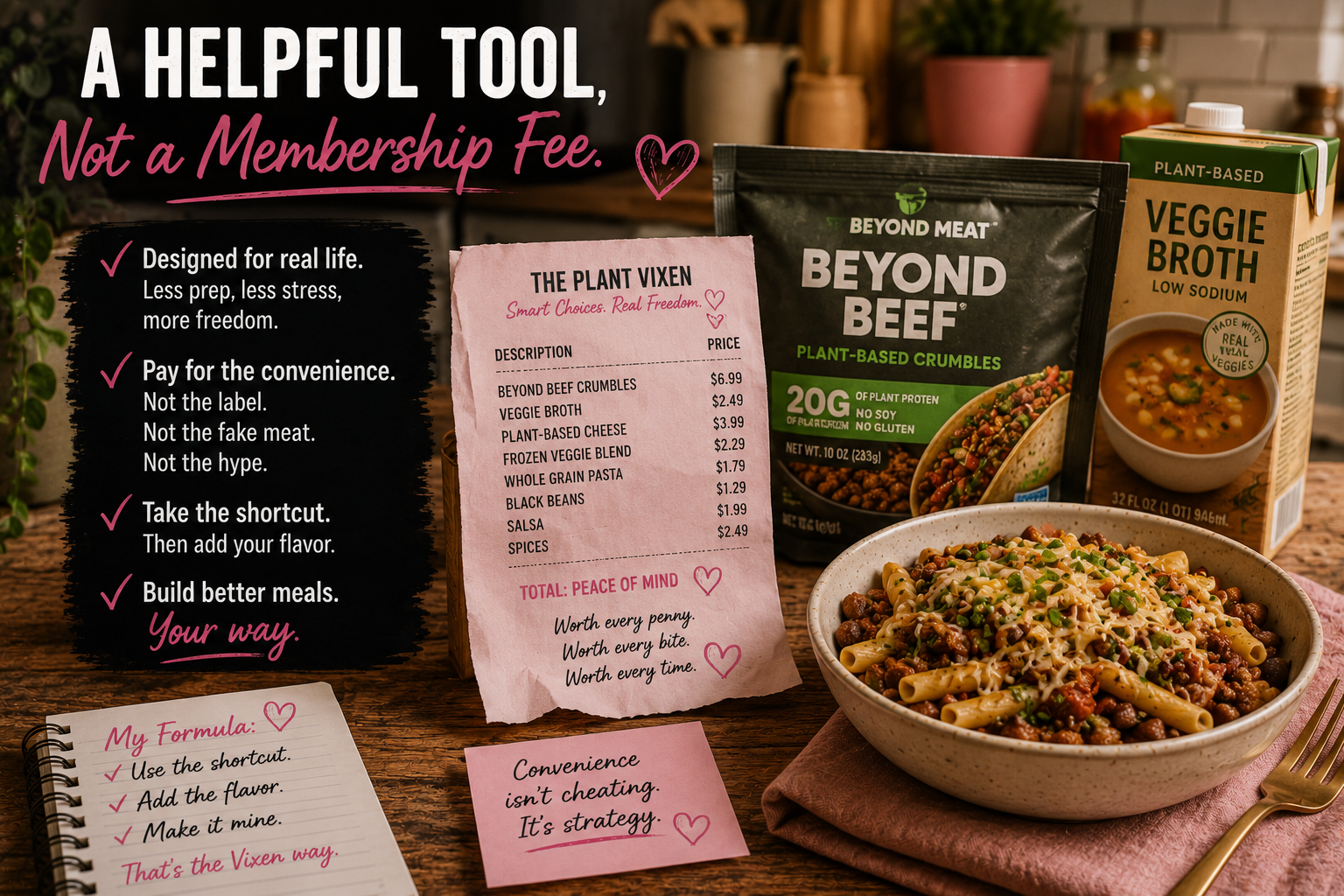
The Real Cost of Relying on Vegan Meat at Every Meal
The shelf price doesn’t tell you the full story.
Look at:
- how many servings are actually in the package
- how many people you’re feeding
- whether the portions are satisfying
- whether leftovers reheat well
- what sides you still need to purchase
A package may look reasonable until you realize it feeds two people and your household has four opinions and three different hunger levels.
Beans, chickpeas, potatoes, rice, frozen vegetables, and bread may stretch across more servings. That doesn’t make them nutritionally superior. It gives you more budget options.
When Taste and Texture Start Feeling Too Repetitive
Plant-based eating can feel surprisingly small when every dinner is a burger, crumble, nugget, or sausage. Different box. Same general personality.
Rotate between pasta bakes, savory bowls, stuffed peppers, skillet meals, and breakfast hashes so one product category isn’t carrying the whole menu.
Sodium Deserves a Label Check
Some plant-based meat products contain a meaningful amount of sodium. Others may fit more comfortably into your day.
The only useful way to know is to check the label.
The FDA recommends starting with the serving size because the nutrition information on a package is usually based on that amount. A package may contain more than one serving, so eating two servings means consuming twice the listed nutrients.
As a general label-reading guide:
- 5% Daily Value or less is considered low
- 20% Daily Value or more is considered high
The FDA lists the Daily Value for sodium as less than 2,300 milligrams per day.
That doesn’t mean you need to panic when a product is high in sodium.
It means you look at:
- the serving size
- how often you eat it
- the sauces and sides
- the rest of the day
For more help, use this guide to read nutrition labels and understand nutrition facts.
What to Eat Instead of Meat Substitutes
Instead of collecting one random list of vegan foods, start with the job you need the ingredient to perform.
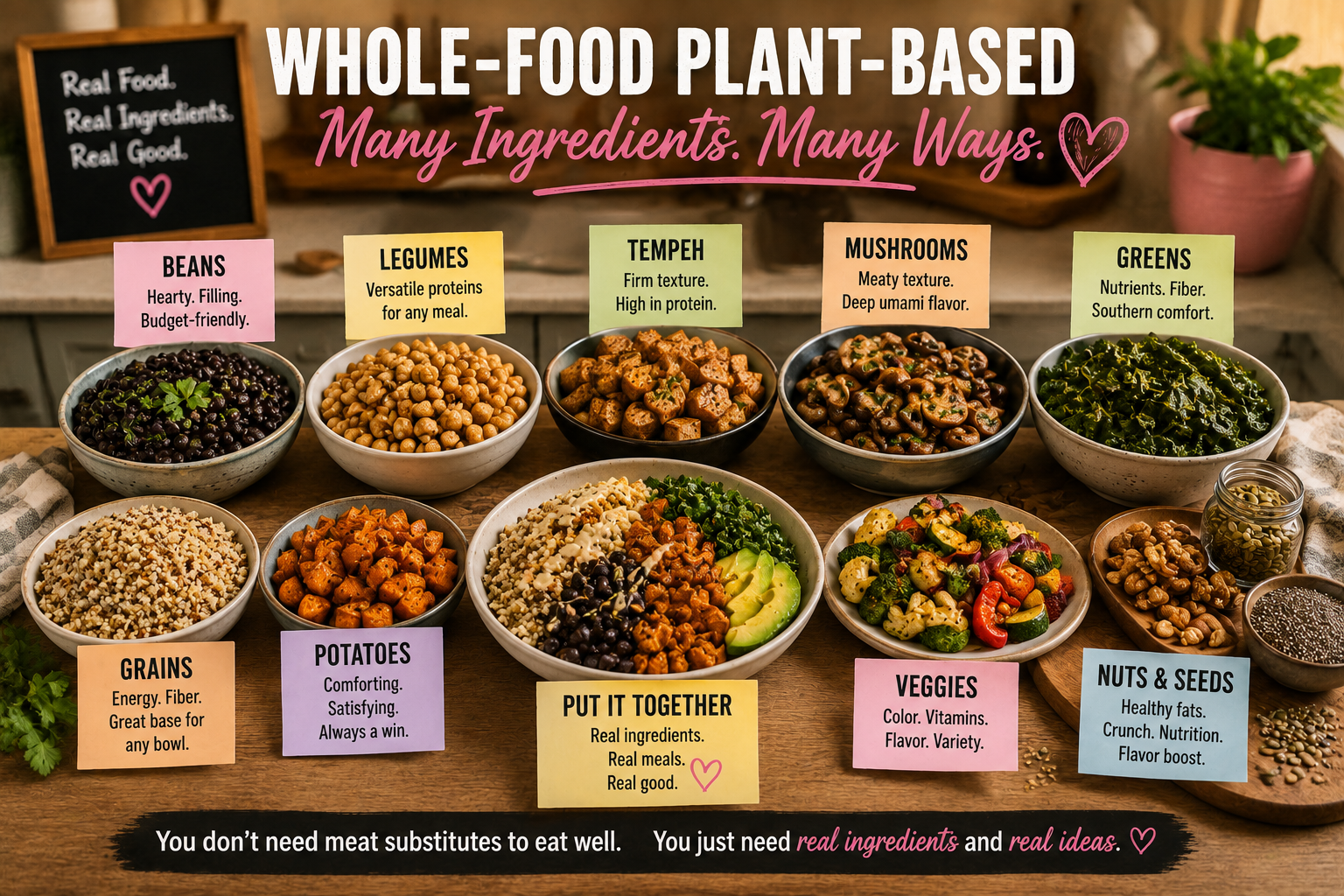
Hearty Plant Proteins for Filling Vegan Meals
When you need a hearty plant protein, consider:
- seasoned black beans
- chickpeas
- white or kidney beans
- tempeh
- seitan
Beans and other legumes can bring protein, carbohydrates, and fiber to a meal.
Tempeh and seitan usually offer a firmer, chewier texture.
The amount of protein you get still depends on the food, portion, recipe, and full meal.
“Contains plant protein” and “this dinner will keep me full” aren’t always the same statement.
Tempeh, Seitan, and Mushrooms When You Want More Texture
Tempeh works well when you want browned edges and chew.
Seitan can work in fajitas, sandwiches, and skillet meals where you want something firm and sliceable.
Because seitan is made from wheat gluten, it isn’t suitable for someone who needs to avoid gluten.
Mushrooms bring savory flavor and a satisfying bite, especially when browned properly.
They’re great at doing the flavor job.
They may still need beans, walnuts, seitan, tempeh, or another protein source in the meal, depending on what else you’re serving.
Pantry-Friendly Legumes for Quick Plant-Based Meals
Canned beans and chickpeas are some of the easiest options to keep around because they don’t require a full meal-prep personality.
You can turn them into:
- a creamy bean spread
- a quick soup or stew
- a chunky pasta sauce
- a seasoned bean-and-corn salad
Drain them, season them well, and give them enough sauce or moisture.
A can of beans dumped beside plain rice with no flavor plan isn’t convenient.
It’s just quick disappointment. That’s not a glow-up… that’s a setup.
For a wider look at familiar options, visit What to Eat Instead of Meat.
One Practical Way to Use Tofu
Tofu is one useful soybean food and source of soy protein.
It’s not the universal answer to chicken, eggs, fish, ground meat, breakfast, lunch, dinner, and whatever else wandered into the conversation.
One practical use is a tofu stir-fry.
Tofu works there because it has a neutral flavor, absorbs sauce, and cooks fairly quickly.
Pair it with frozen stir-fry vegetables, rice, and a sauce you actually like.
That’s a specific job in a specific meal.
It doesn’t need to take over the whole menu.
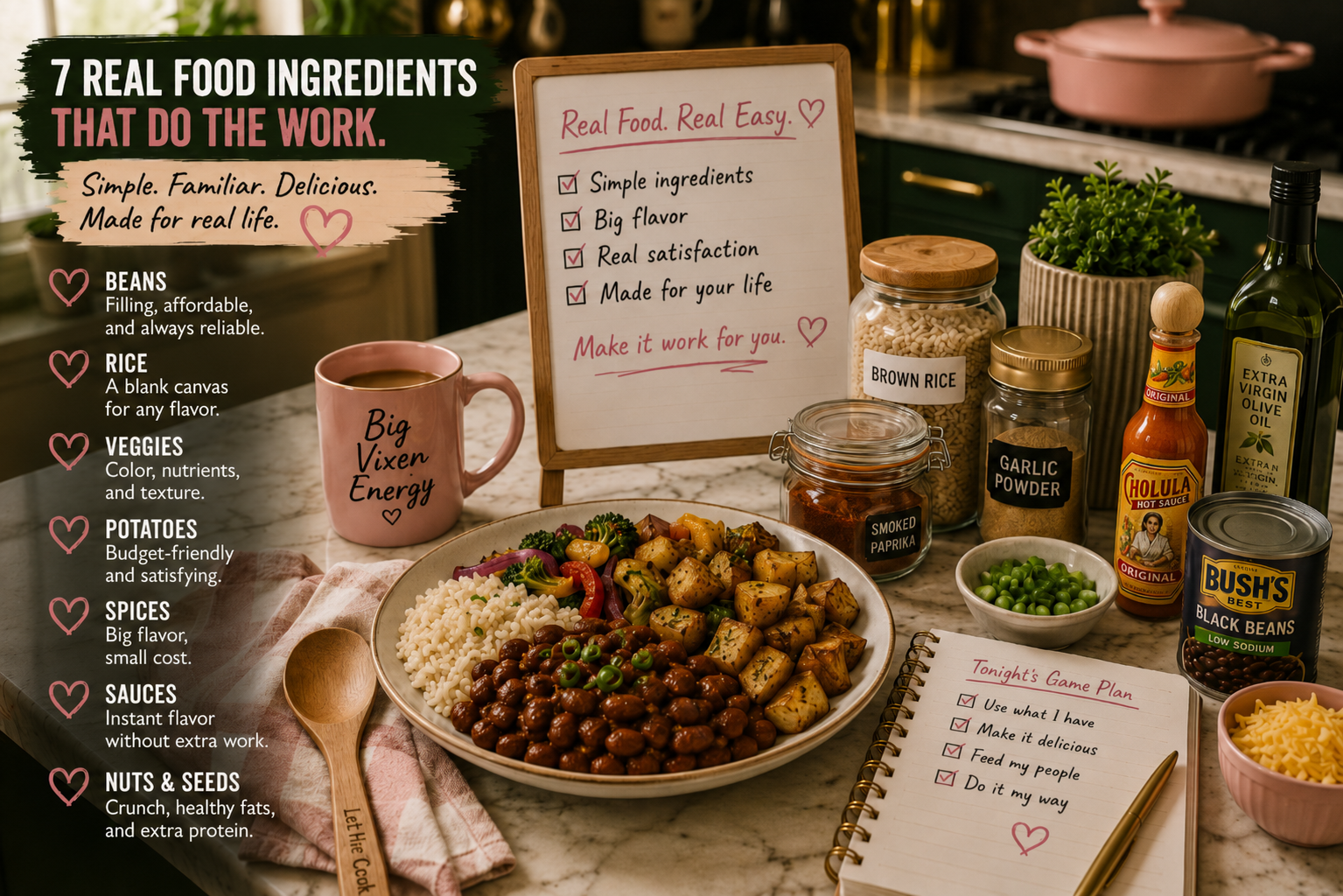
How to Build a Satisfying Plant-Based Meal Without a Meat Centerpiece
A meal can contain vegan foods and still feel unsatisfying. The problem might not be missing meat. It may be missing one of the pieces that makes dinner feel complete.
Start With a Plant Protein or Hearty Meal Foundation
Start with a clear meal foundation, such as textured vegetable protein, black-eyed peas, soy curls, or seitan.
Not every meal needs one item sitting alone in the middle of the plate.
The foundation can be spread through the entire dish, like beans in tacos or tempeh mixed through a potato hash.
Add Carbohydrates, Fat, and Enough Food
Carbohydrates help turn ingredients into a full meal.
Think:
- rice
- potatoes
- bread
- tortillas
Fat and creamy elements can add richness and satisfaction.
That might come from avocado, walnuts, vegan mayonnaise, olive oil, or a sauce.
And please make enough food.
A tiny bowl isn’t more plant-based because you’re still hungry when it’s gone.
Build Better Taste and Texture
Satisfaction often comes from contrast.
Creamy avocado with crunchy slaw.
Soft beans with toasted tortillas.
Crispy potatoes with chewy tempeh.
A thick sandwich filling with fresh lettuce and toasted bread.
Texture keeps the meal interesting.
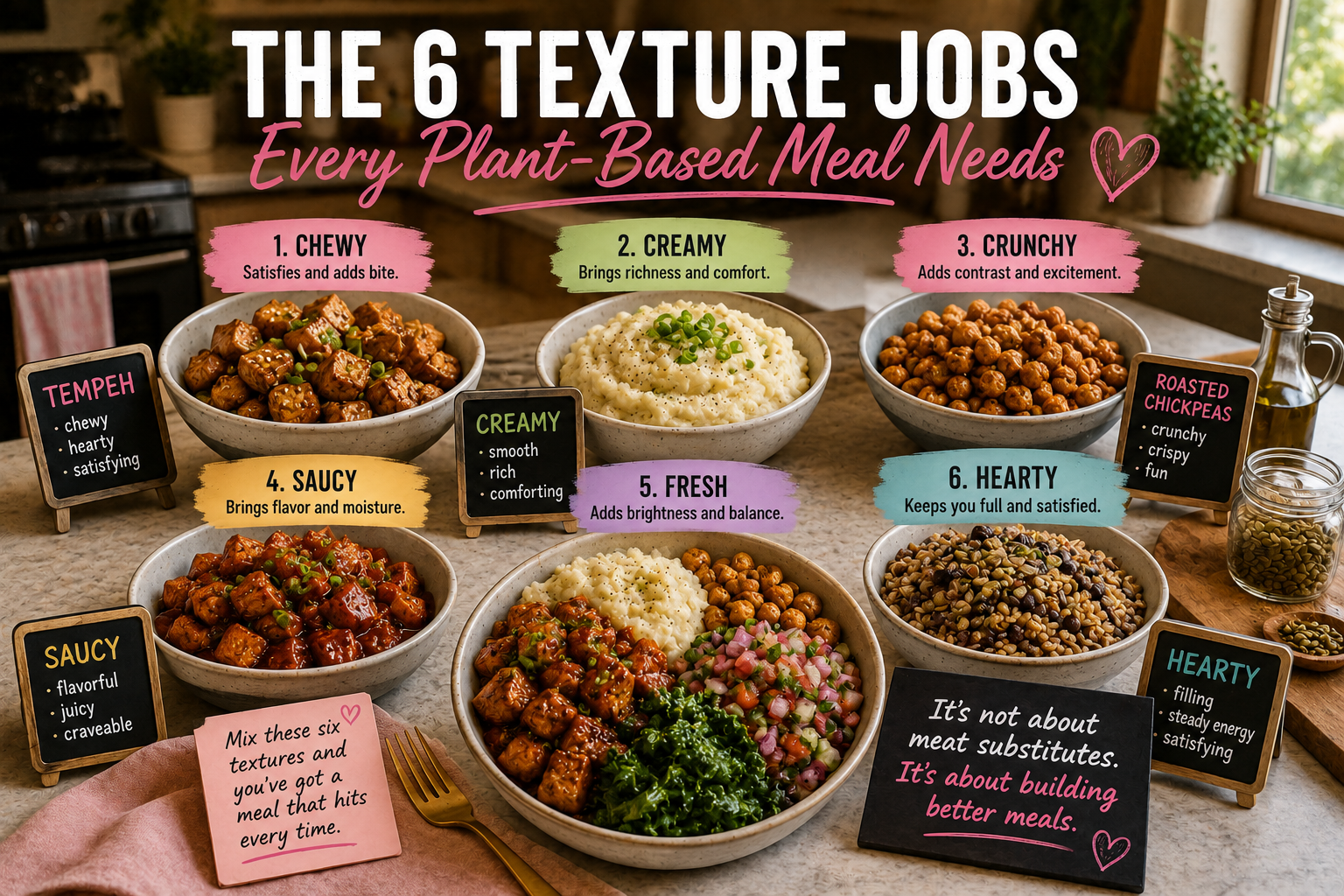
It also helps whole-food meals feel intentional instead of like the ingredients were introduced five minutes before dinner.
Use Sauce, Seasoning, and Familiar Meal Formats
Season the meal in layers.
Season the main ingredient.
Brown or roast where it makes sense.
Add aromatics.
Finish with sauce, acid, fresh toppings, or something crunchy.
Keep a familiar meal format when it helps:
- pasta night
- grain bowls
- stuffed wraps
- sheet-pan dinners
- breakfast for dinner
Do I Need a Meat Substitute Tonight?
- Use one when familiarity, speed, texture, or a strong craving matters.
- Skip it when the meal already has a hearty foundation.
- Combine it with beans, grains, vegetables, or potatoes when the package won’t feed everyone.
- Check the label when sodium, servings, protein, or allergens matter.
- Try a different structure when the plate feels like disconnected side dishes.
Here’s the real reveal:
A satisfying plant-based meal usually needs a protein or substantial foundation, carbohydrates, fat, flavor, texture, sauce or moisture, enough volume, and a familiar or enjoyable format.
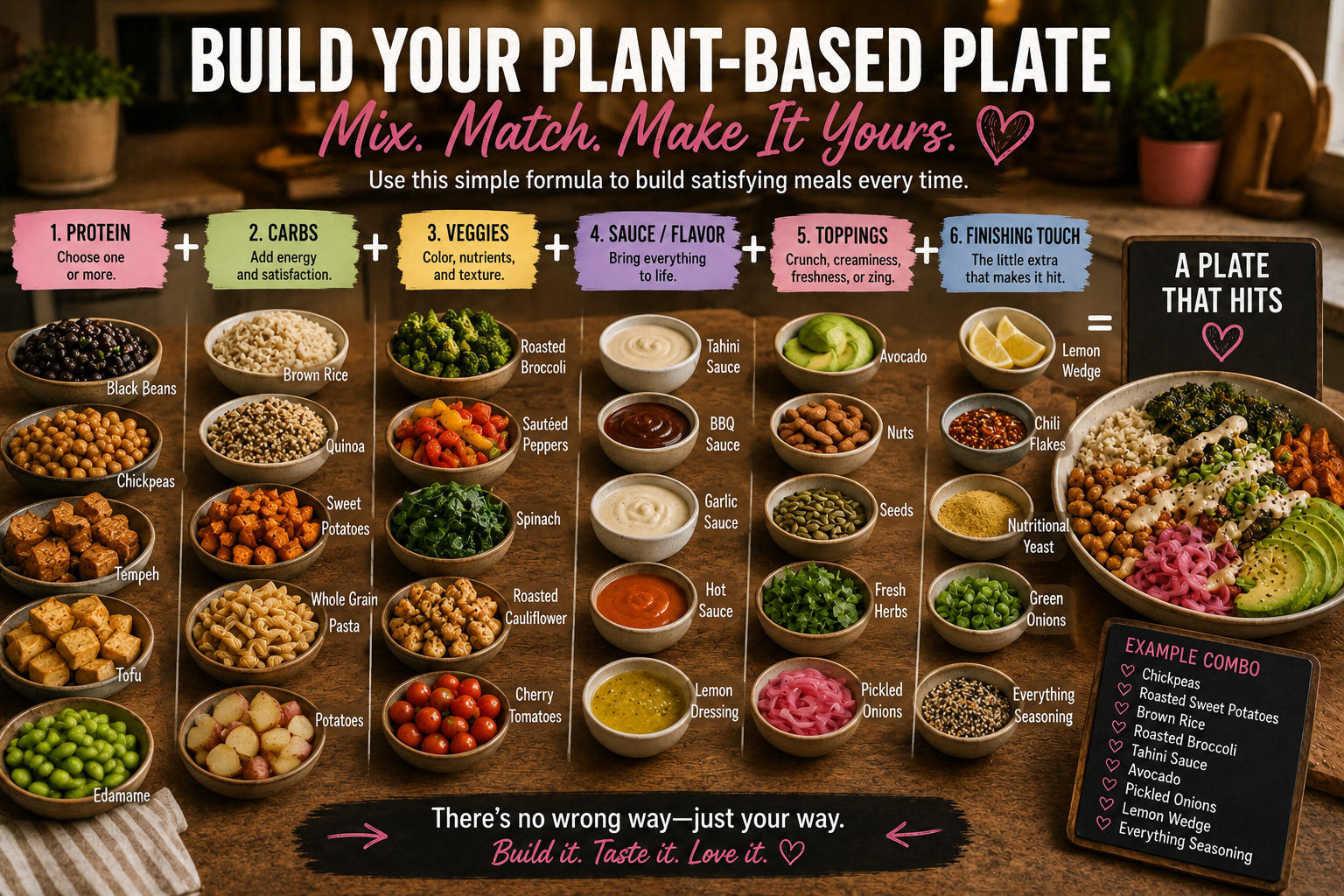
That explains meal satisfaction.
Now that you know meat substitutes are tools—not requirements—the next step is building a plant-based routine that doesn’t feel overwhelming. Read Plant-Based Diet for Beginners: 5 Common Mistakes before your next grocery trip.
It doesn’t guarantee that one meal or one day covers every nutritional need.
Seven Familiar Vegan Meals That Don’t Need Plant-Based Meat
These aren’t complicated plant-based recipes.
They’re familiar meals built with a different foundation.
They don’t depend on a commercial meat alternative.
They also don’t feel like somebody served a side dish and called it personal growth.
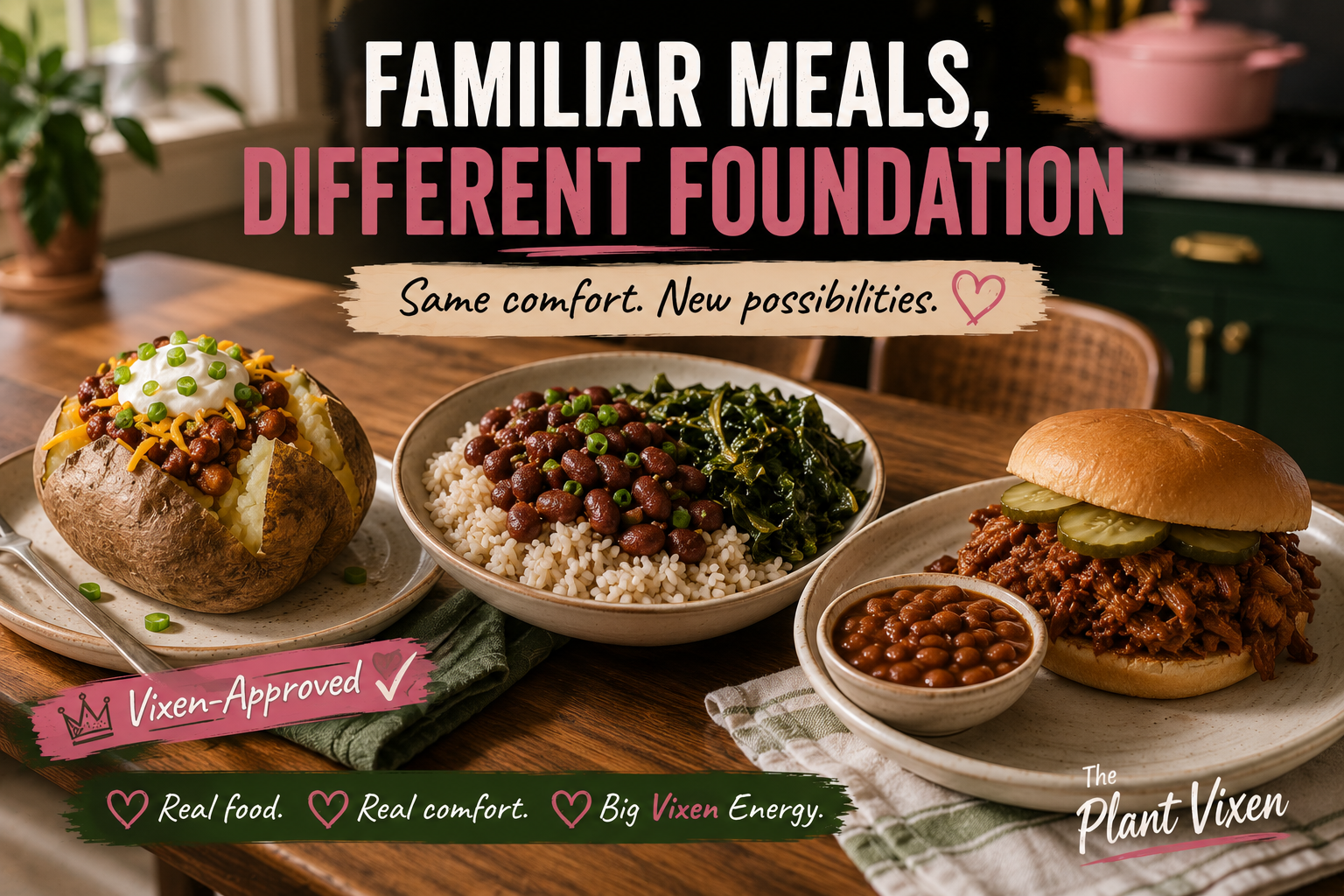
Black Bean Tacos With Avocado and Crunchy Slaw
Season black beans with smoky spices, garlic, onion, and a little salsa or broth. Pile them into warm tortillas with avocado and crunchy slaw.
The beans provide the foundation, avocado adds richness, and slaw brings crunch. The meal still feels like taco night without anything pretending to be ground beef.
Barbecue Jackfruit Sandwiches With Baked Beans
Jackfruit is good at giving you that shredded, pulled texture.
Toss it with barbecue sauce and pile it onto a toasted bun with slaw or pickles.
Serve it with baked beans so the plate has more substance and plant protein.
Jackfruit is doing the texture job here.
The beans are helping with the meal foundation.
Chickpea Salad Sandwiches or Wraps
Mash chickpeas with vegan mayonnaise, mustard, chopped celery, seasonings, and a little pickle relish if that’s your thing.
Serve the mixture on toasted bread or in a wrap with lettuce and tomato.
This works because it keeps the familiar deli-style format while using a pantry-friendly ingredient.
Red Beans and Rice
Red beans and rice already understand the assignment.
The beans become creamy.
The rice makes the dish filling.
Aromatics and smoky seasoning build the savory depth that keeps the meal from tasting flat.
Add greens, cornbread, or seasoned cabbage when you want a fuller family plate.
Loaded Baked Potatoes With Seasoned Beans and Vegetables
A baked potato don’t have to sit beside the main dish.
It can be the structure of the meal.
Buss down a fluffy potato and load it with seasoned beans, sautéed vegetables, salsa, vegan cheese, avocado, or a creamy sauce.
The toppings can change by household without making you cook separate dinners.
Mushroom-Walnut Burgers With Oven Potatoes
Mushrooms add moisture and savory flavor.
Walnuts add richness and texture.
Together, they can create a hearty homemade burger that feels different from both a bean patty and a commercial vegan burger.
Serve it on a bun with oven potatoes, pickles, and a sauce worth opening the refrigerator for.
Tempeh Breakfast Hash With Potatoes and Peppers
Crumble or dice tempeh and brown it with crispy potatoes, peppers, onions, and smoky seasoning.
Tempeh works in this meal because it adds chew and browned texture throughout the skillet.
It isn’t standing in for every breakfast meat ever created.
It’s helping one specific hash feel more filling.
Serve it with toast, fruit, or avocado depending on what the household needs.
How to Choose a Plant-Based Meat Alternative at the Grocery Store
When convenience matters, choose the product based on the work it needs to do.
Not the front of the package.
Not the trend.
Not because somebody online made it look like a plant-based rite of passage.
Grocery stores now carry everything from soy-protein crumbles to burgers made with peas, wheat gluten, mushrooms, or other ingredients.
Decide What Job the Meat Substitute Needs to Do
Start with the meal.
Do you need:
- a burger for a bun
- crumbles for tacos
- something that can survive the grill
- a freezer option for rushed nights
- a familiar ingredient for a family recipe
A product can be great in one situation and disappointing in another.
Compare Protein, Sodium, Serving Size, and Price
Turn the package over.
Compare products using the same serving size whenever possible.
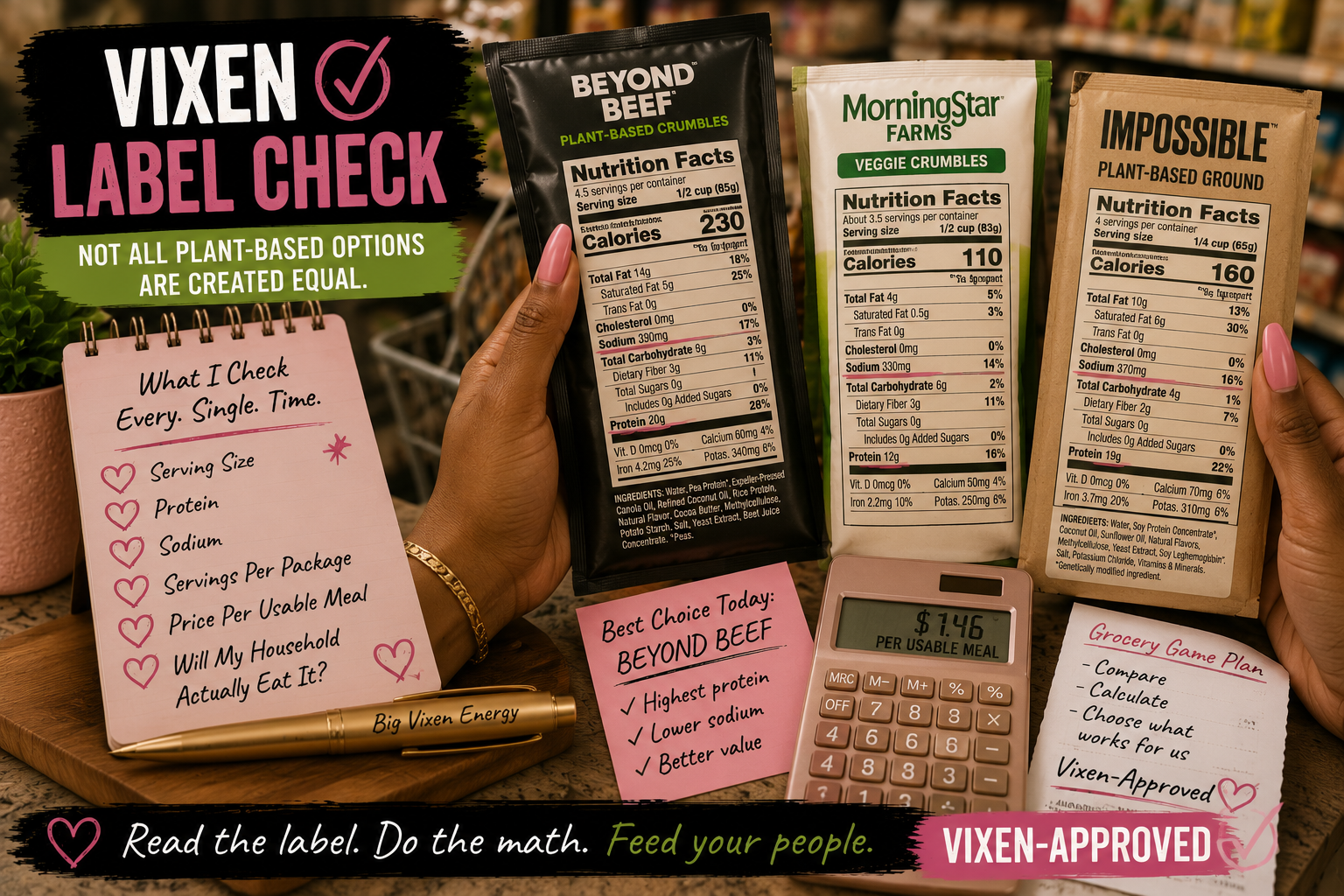
Check:
- grams of protein
- sodium
- servings per package
- price per usable meal
- preparation method
The Nutrition Facts label can help you compare foods, but serving size matters because the numbers apply to the listed serving, not necessarily the whole package or the amount you personally eat.
Ingredients can matter for allergies, preferences, and how the product fits your household.
A long ingredient list isn’t automatically a danger sign.
A short ingredient list isn’t an automatic nutrition certificate either.
Choose the Vegan Meat Your Household Will Actually Eat
A product isn’t a bargain if it sits in the freezer until it develops emotional distance from the rest of the groceries.
Taste matters.
Texture matters.
Preparation matters.
Whether the family will eat the leftovers matters.
Vixen Verdict: Use the substitute when it solves a real dinner problem. Skip it when you’re buying it only because you think every plant-based meal is required to have one.
Plant-Based Nutrition Beginners Shouldn’t Ignore
Removing meat from the plate and replacing its nutritional role are two different jobs.
The meal doesn’t need a visual imitation of meat to be nutritious.
But the overall eating pattern still needs planning.
The Academy of Nutrition and Dietetics states that appropriately planned vegetarian and vegan dietary patterns can be nutritionally adequate for adults. The important words are appropriately planned.
Plant Protein Needs Enough Food and Variety
Protein can come from beans, peas, nuts, seeds, soy products, tempeh, seitan, and other foods.
But you still need enough total food and suitable portions across the day.
A sprinkle of chickpeas on lettuce isn’t automatically a high-protein meal because chickpeas attended the meeting.
Look at the whole plate and the whole day.
People with higher protein needs, medical conditions, pregnancy, athletic goals, or restricted diets may need more personalized guidance.
Iron, Calcium, Zinc, and Vitamin B12 Still Need a Plan
Plant foods contain nonheme iron, which is absorbed differently from heme iron. The NIH Office of Dietary Supplements notes that vitamin C can improve nonheme iron absorption, so pairing beans with peppers, tomatoes, or citrus can help.
Calcium can come from fortified foods, certain vegetables, and some tofu, but amounts vary by product. Zinc is found in beans, nuts, seeds, and whole grains, while phytates in some plant foods can reduce absorption. NIH zinc guidance explains why vegetarian and vegan eaters may need to be more intentional about intake and preparation.
Vitamin B12 needs special attention because unfortified plant foods aren’t dependable sources. NIH guidance on vitamin B12 lists fortified cereals, fortified nutritional yeast, and supplements as possible sources. Check labels because fortification varies.
Vixen Note: Replacing what meat looked like on the plate isn’t the same as replacing every nutritional role meat once played. Nutrition is handled across your overall eating pattern, not by making one black bean carry the whole team.
Whole Foods Aren’t Automatically Nutritionally Complete
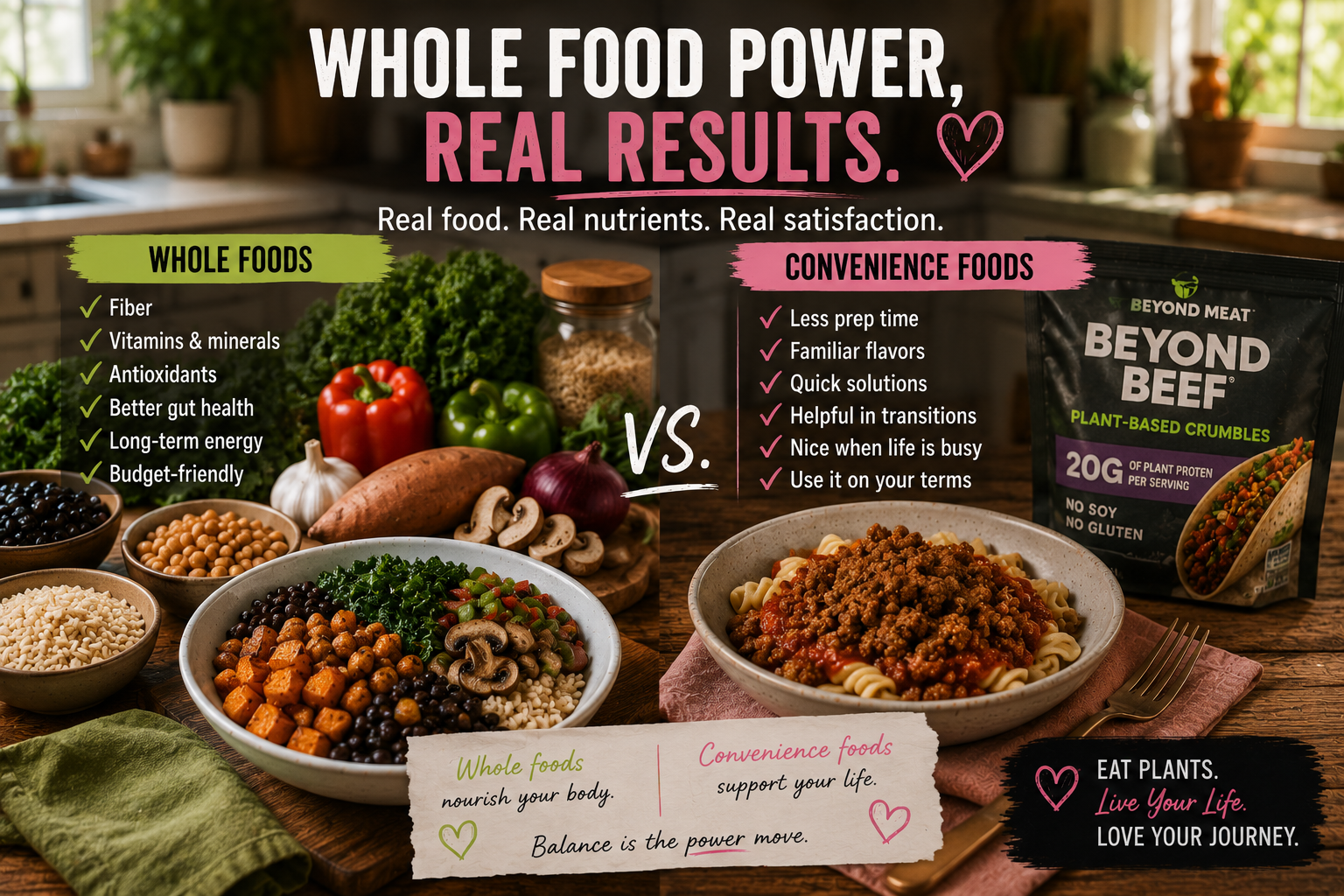
A meal made with whole foods can be flavorful, affordable, and high in fiber.
That doesn’t mean it automatically covers protein, iron, calcium, zinc, vitamin B12, and every other nutrient in the amount you need.
“Whole food” describes the type of food.
It doesn’t finish the nutrition planning for you.
Plant-Based Meat Isn’t Automatically Unhealthy
Commercial products vary.
One may be higher in protein.
Another may be lower in sodium.
Another may use coconut oil and contain more saturated fat.
Another may fit your family because it cooks well, tastes good, and keeps you from ordering dinner three nights a week.
The useful question isn’t:
“Is plant-based meat good or bad?”
Ask:
How does this specific product fit into this specific meal and my overall eating pattern?
A Realistic First Week of Eating Plant-Based
You don’t need to empty the freezer or prove you can make seitan from scratch by Thursday. Run one small test.
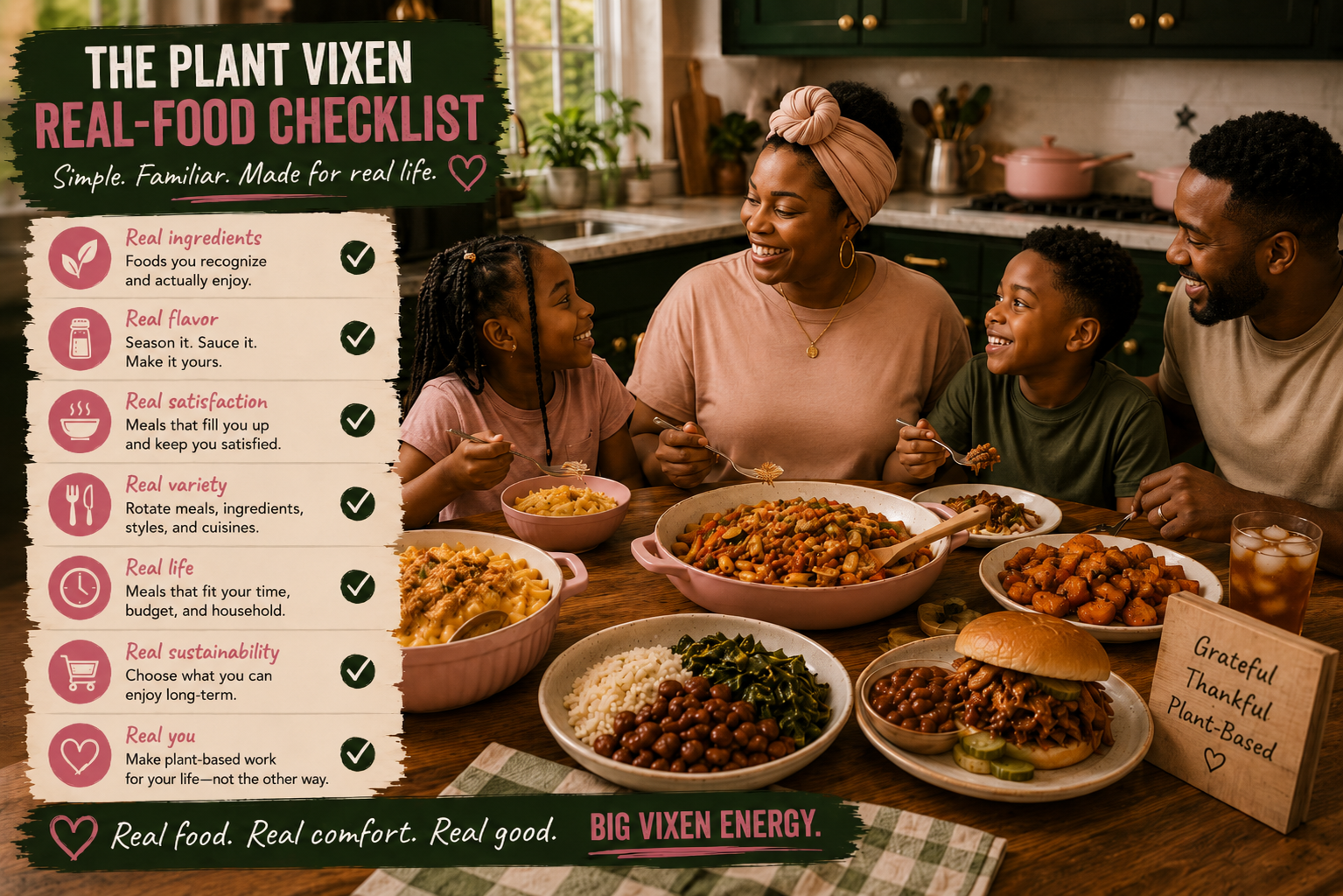
Your First-Week Checklist
- Choose two familiar meals with commercial vegan alternatives. Try tacos with meatless crumbles and burgers on a rushed evening.
- Choose two meals with another plant-based foundation. Try red beans and rice and loaded baked potatoes with seasoned beans.
- Keep one reliable emergency freezer meal. Pick burgers, nuggets, meatballs, or another backup your household will actually eat.
- Review the week before buying more. Notice taste, fullness, texture, price, convenience, and household response.
One bland bean dinner or disappointing vegan burger is information, not proof the whole plan failed. Adjust the seasoning, format, portion, or product and keep what works.
Before you buy another cart full of replacements, read What to Eat Instead of Meat for more beginner-friendly ways to build familiar meals.
The Bottom Line on Plant-Based Meat Substitutes
You don’t need commercial meat substitutes to follow a plant-based diet, and you don’t need to avoid them to prove you’re doing it the “right” way.
Sometimes crumbles save taco night. Sometimes black beans cost less and work better. Sometimes you want a burger that feels like a burger, and sometimes the meal never needed a meat centerpiece.
The goal is to build meals that taste good, satisfy your household, fit your budget, and support your nutritional needs over time. That’s what makes plant-based eating work in real life.
Frequently Asked Questions
Do Vegans Have to Eat Commercial Meat Substitutes?
No. They’re optional tools for convenience, cravings, familiarity, and certain recipes. Other plant foods can also support satisfying meals when the full meal is built well.
Can You Get Enough Protein Without Meat Substitutes?
Yes, but adequacy depends on total intake, portions, variety, and personal needs. Beans, peas, nuts, seeds, soy products, tempeh, and seitan can all contribute protein.
Is Plant-Based Meat Healthier Than Real Meat?
Not automatically. Compare the specific foods, serving sizes, protein, sodium, saturated fat, ingredients, and how each fits into your overall eating pattern.
What Are Budget-Friendly Alternatives to Plant-Based Meat?
Beans, chickpeas, potatoes, rice, and other pantry foods are often affordable. The best value is food your household will eat and can use across more than one meal.
How Do You Choose Between a Commercial Alternative and Other Plant Foods?
Choose the option that solves the meal’s real need. Use a commercial product for convenience, familiarity, or a specific texture. Use another plant food when it fits the meal, budget, and nutrition plan better.